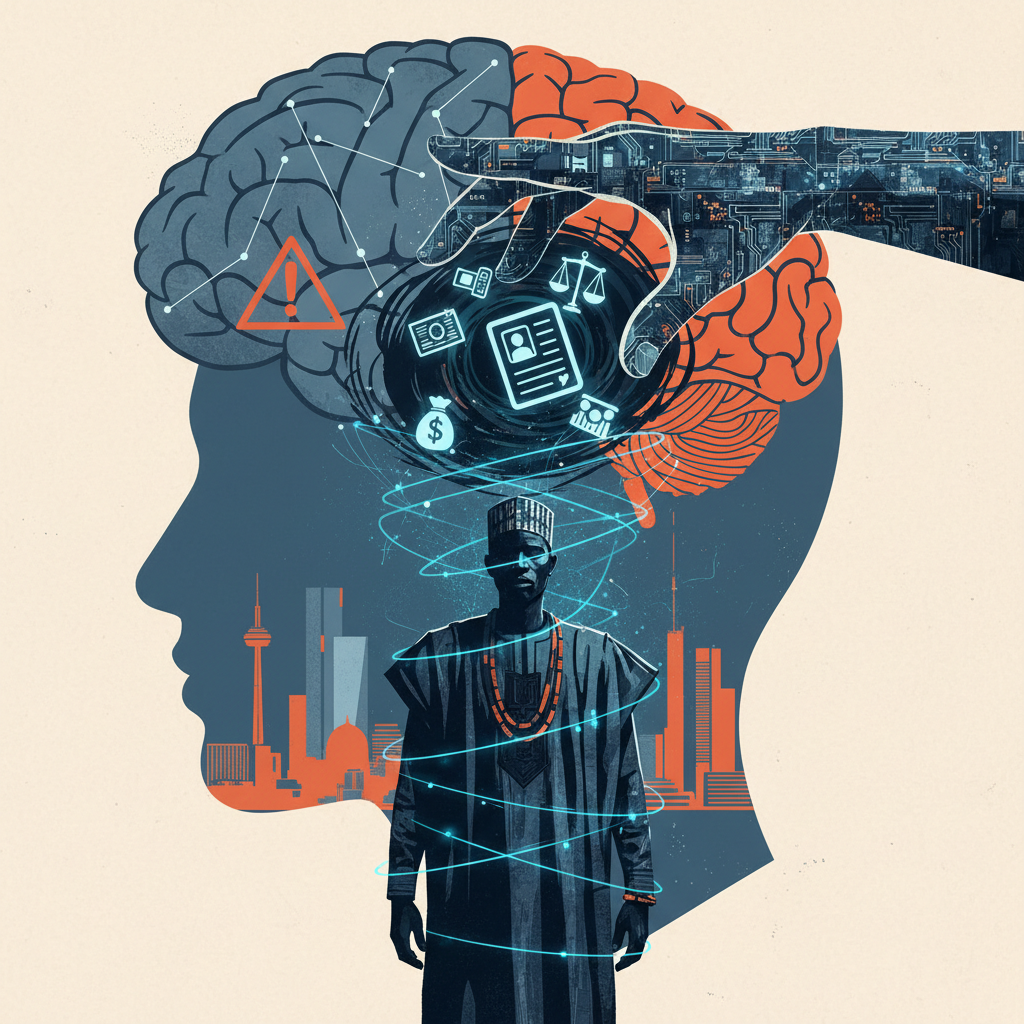
The bustling markets of Dakar, the vibrant energy of its streets, and the resilience of its people often mask a deeper vulnerability. As Senegal, and indeed the entire African continent, embraces the digital future, a new, insidious form of gatekeeping is emerging: artificial intelligence in the insurance sector. The promise is seductive: automated claims processing, hyper-efficient fraud detection, and precision risk pricing. But beneath this veneer of technological progress lies a complex web of ethical dilemmas and potential societal fractures, particularly for a nation like ours.
My investigations reveal a growing trend among both local and international insurance providers operating in Senegal. Companies like AXA Assurance Sénégal and Sunu Assurances, alongside emerging fintech startups, are quietly integrating AI systems. These systems are designed to streamline operations, reduce human error, and, crucially, cut costs. The allure of efficiency is undeniable, especially in markets where traditional insurance penetration remains low. However, the data feeding these algorithms is often imported, biased, and fundamentally unrepresentative of the Senegalese context.
Consider the scenario: a fisherman in Saint Louis, whose livelihood depends on the unpredictable Atlantic, seeks marine insurance. His claim, perhaps for a damaged vessel after an unexpected storm, is processed by an AI trained on datasets predominantly from European or North American markets. These models might flag his claim as suspicious based on patterns of fraud observed in entirely different socio economic contexts, or they might misprice his risk due to a lack of relevant historical data on local weather phenomena or traditional fishing practices. The algorithm, in its cold, detached logic, could effectively deny him coverage or deem it prohibitively expensive, not because he is a high risk, but because the system simply does not understand his reality.
Technically, these AI systems leverage machine learning techniques such as neural networks and decision trees for predictive analytics. For automated claims processing, natural language processing NLP models analyze claim documents, identify key information, and compare it against policy terms. In fraud detection, supervised learning algorithms are trained on historical data of known fraudulent and legitimate claims. Features such as claim frequency, value, geographical location, and even the language used in claim descriptions are fed into the model. The algorithm then identifies anomalies or patterns indicative of fraud. Risk pricing, perhaps the most sensitive application, uses regression models to predict the likelihood of a future event, adjusting premiums accordingly. These models ingest vast amounts of data including demographic information, health records, credit scores, and past claims history. The problem, as always, lies in the data.
Dr. Mame Diarra Bousso, a Senegalese data scientist and advocate for ethical AI at the Cheikh Anta Diop University, articulated this concern eloquently. “The foundational datasets for many of these AI models are not just incomplete for Africa, they are often actively misleading. If your fraud detection algorithm is trained on patterns from Paris or New York, it will inevitably misclassify legitimate claims from Pikine or Guediawaye. This is not just a technical glitch, it is a socio economic justice issue,” she stated during a recent conference in Dakar. Her perspective highlights the critical need for locally relevant data and culturally sensitive model development.
Expert debate on this issue is sharply divided. Proponents of AI in insurance, often represented by the global consulting firms and tech vendors, emphasize the transformative potential. “AI offers an unprecedented opportunity to expand insurance access and affordability in underserved markets,” argued Jean-Luc Dubois, a regional director for a major European insurer, speaking at a recent industry forum. “By automating mundane tasks, we can reallocate human resources to more complex cases and customer service, ultimately benefiting the consumer.” He points to the efficiency gains, citing reductions in processing times by up to 60 percent in some pilot programs. This efficiency, he contends, translates to lower operational costs, which can then be passed on to policyholders.
However, critics, including many academics and consumer protection advocates, warn of the inherent biases. Professor Oumou Diallo, an economist specializing in development at the University of Gaston Berger in Saint Louis, voiced her apprehension. “The black box nature of some advanced AI models means we cannot always understand why a decision was made. This lack of interpretability is dangerous. When an algorithm denies a claim or inflates a premium, who is accountable? How does an ordinary Senegalese citizen challenge a decision made by an opaque system?” Her concerns resonate deeply in a society where trust in institutions, though growing, can still be fragile. The documents reveal that some of these systems are proprietary, making external audits of their decision making processes exceedingly difficult.
The real-world implications for Senegal are profound. Without careful oversight, AI in insurance could exacerbate existing inequalities. Individuals in rural areas, who may lack extensive digital footprints or whose data patterns deviate from global norms, could be systematically disadvantaged. This digital redlining, though unintentional, could create a two-tiered insurance system: one for the digitally legible and another, more expensive or inaccessible one, for everyone else. This is just the tip of the iceberg. Furthermore, the reliance on external AI providers means that the intellectual property and control over these critical financial infrastructures often reside outside the continent, raising questions of digital sovereignty and data governance.
What should be done? First, there must be a concerted effort to develop and utilize local datasets. This requires investment in data collection infrastructure and expertise within Senegal. Collaboration between government agencies, local universities, and insurance companies is crucial to build representative and unbiased data repositories. Second, regulatory frameworks must evolve rapidly. Senegal's insurance regulator, the Direction des Assurances, needs to develop clear guidelines for the ethical deployment of AI, focusing on transparency, fairness, and accountability. This could include mandatory impact assessments for AI systems, requiring insurers to explain algorithmic decisions, and establishing clear appeal mechanisms for consumers.
Third, there is a pressing need for interpretability in AI models. Insurers should prioritize explainable AI XAI approaches, allowing for human understanding of how algorithms arrive at their conclusions. This not only builds trust but also enables correction of biases. Finally, consumer education is paramount. The average Senegalese citizen must be made aware of their rights in an AI-driven insurance landscape and empowered to challenge unfair decisions. Organizations like the Association des Consommateurs du Sénégal have a vital role to play in this advocacy.
The promise of AI for efficiency and inclusion is real, but its deployment must be guided by a deep understanding of local contexts and a commitment to justice. As we stand at this digital crossroads, Senegal has an opportunity to shape a future where technology serves all its citizens, not just a privileged few. Ignoring these risks would be a profound disservice to the very people AI is supposed to benefit. My sources tell me that without proactive measures, the digital divide will only widen, creating new forms of exclusion that are harder to see, and even harder to dismantle. For a deeper dive into the ethical considerations of AI, one might look to analyses published by Wired or MIT Technology Review. The path forward demands vigilance and a firm hand in guiding these powerful technologies. For more on how AI is impacting financial sectors globally, Bloomberg Technology often provides insightful coverage.