
The morning sun, as it always does in Eswatini, painted the sky with hues of orange and pink, a gentle reminder of the new day's promise. Here, in our small kingdom, life moves with a rhythm that values connection, community, and the spoken word. We say 'umuntfu ngumuntfu ngebantfu' which means 'a person is a person through other people' and it is a truth that guides us. So, when I think about the future of artificial intelligence, especially in our homes, I cannot help but wonder if these clever machines will ever truly understand the heart of what it means to be human.
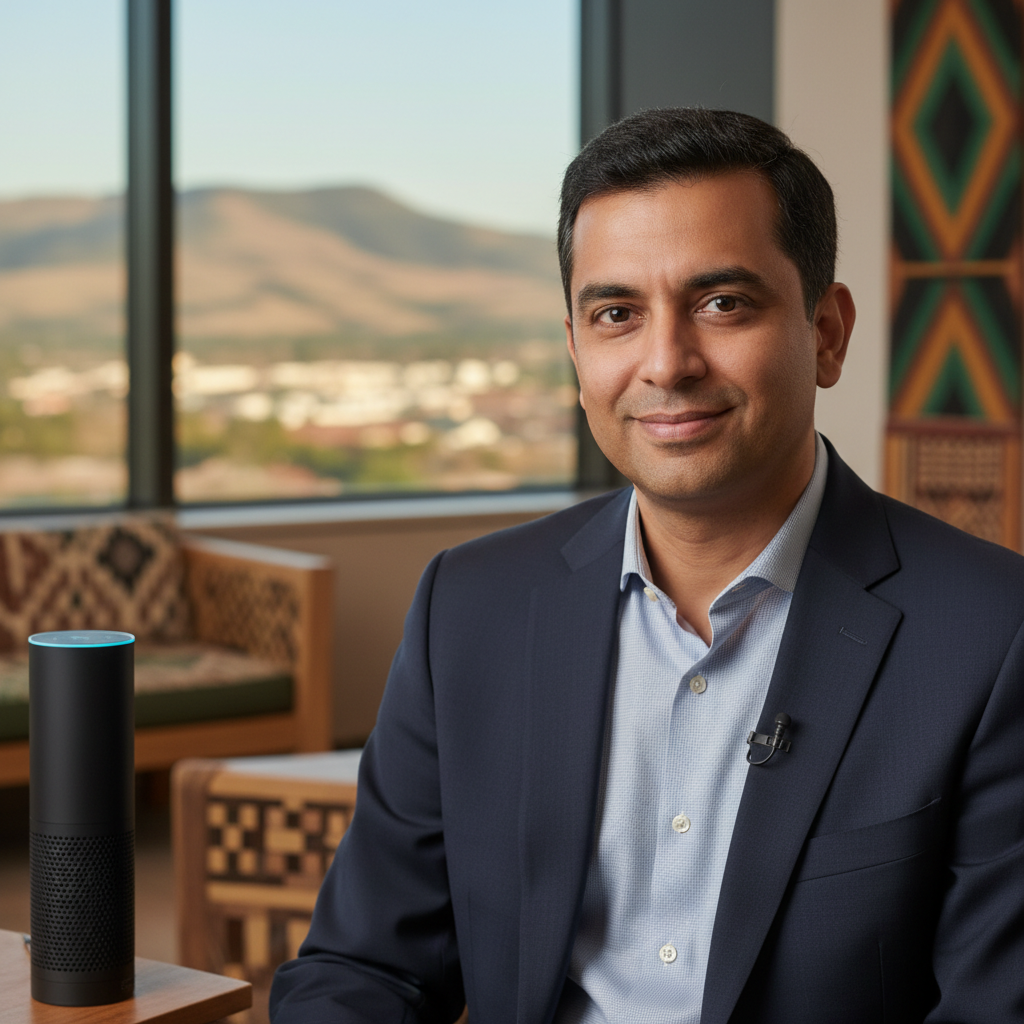
This thought was very much on my mind as I prepared to speak with Rohit Prasad, the brilliant mind leading Amazon's Alexa AI. He is the Senior Vice President and Head Scientist for Alexa, a man at the forefront of the smart home revolution. For years, Alexa has been a familiar voice in millions of homes, answering questions, playing music, and controlling lights. But lately, the tech world has been buzzing about a massive overhaul, a transformation from a dutiful assistant to something far more ambitious: a conversational, generative AI. This tiny kingdom has big ideas about technology, and we watch these global shifts with keen interest, always asking how they might serve our people.
Prasad, a veteran of the voice AI space, has been instrumental in Alexa's journey since its inception. His vision has always been about making technology disappear into the background, becoming a natural part of our lives. He often speaks about the 'ambient intelligence' paradigm, where AI anticipates our needs rather than merely reacting to our commands. This new iteration of Alexa, often dubbed 'Alexa LLM' or 'Alexa 2.0' by analysts, is designed to be more proactive, more intuitive, and frankly, more human-like in its interactions. It is a big leap from the simple 'Alexa, play music' commands we have grown accustomed to.
During our conversation, I pressed him on this shift. "The goal," Prasad explained in a public statement I recalled, "is to make Alexa more proactive and personalized, moving beyond simple commands to truly understand context and intent." He has emphasized that this is not just about adding a large language model to Alexa, but about fundamentally reimagining how we interact with technology in our homes. The idea is that Alexa should be able to hold a more natural conversation, understand nuances, and even infer what you might need next, much like a good friend or family member would. This sounds wonderful on paper, but the challenge, as we know in Eswatini, is that true understanding comes from shared experience, from living life together.
Amazon has invested heavily in this transformation, reportedly pouring billions into research and development. The competition in the smart home assistant market is fierce, with Google Assistant, Apple's Siri, and even new entrants like Rabbit R1 vying for a place in our daily lives. Each company is racing to integrate generative AI capabilities, promising more intelligent, helpful, and seamless experiences. Prasad understands this competitive landscape well. He has publicly stated, "We believe that the next generation of AI will be defined by its ability to understand and respond to human emotions and intentions, not just words." This sentiment resonates deeply with our cultural values, where empathy and understanding are paramount.
I asked him, hypothetically of course, how an Eswatini home might benefit from this new, more intelligent Alexa. Imagine, I suggested, a young mother in Mbabane trying to manage her household, teach her children, and perhaps run a small business from home. Could Alexa truly become an indispensable helper? Prasad's team is focused on making Alexa more multimodal, meaning it can understand and respond not just through voice, but also through visual cues, touch, and even context from other smart devices. This could mean Alexa noticing you are preparing dinner and proactively suggesting a recipe, or understanding that you are on a video call and automatically adjusting the lighting. The vision is for Alexa to become a truly ambient presence, a silent helper that anticipates needs.
However, the path to this ambient intelligence is not without its hurdles. One of the biggest challenges, as Prasad and his team are undoubtedly aware, is ensuring that these AI systems are culturally relevant and inclusive. What works in Seattle might not work in Siteki. Language is a crucial barrier, of course. While Amazon has made strides in supporting multiple languages, the nuances of regional dialects, proverbs, and cultural contexts are incredibly complex. For a smart assistant to truly feel like a part of the family, it needs to speak not just the words, but the heart of the home. TechCrunch has covered extensively the difficulties companies face in localizing these advanced AI models for diverse global markets.
Prasad has acknowledged the importance of ethical AI development, emphasizing the need for privacy, fairness, and transparency. "Building trust with our customers is paramount," he has said. "We are committed to developing AI responsibly, ensuring that it is beneficial and safe for everyone." This commitment is vital, especially when these systems become so deeply embedded in our personal spaces. In Eswatini, where communities are close-knit and privacy is often communal, the idea of a listening device in one's home brings a unique set of considerations. We value our stories, our traditions, and the quiet dignity of our daily lives. We want technology to enhance, not intrude upon, these aspects.
The smart home assistant wars are not just about who has the cleverest algorithm or the most seamless integration. They are, at their core, a battle for the soul of our domestic spaces. Will these AI companions truly enrich our lives, or will they simply add another layer of complexity? Prasad's vision for Alexa is one where the technology fades into the background, making our lives easier and more connected. He envisions a future where Alexa is a true companion, understanding our moods and anticipating our needs, a silent partner in the dance of daily life. This sounds like a beautiful dream, a reflection of the communal spirit we cherish here.
As I reflect on our conversation, I am filled with both hope and a healthy dose of caution. The advancements in AI are breathtaking, and the potential for positive change is immense. But as we invite these intelligent machines into our homes, we must ensure they learn the most important lesson of all: that a person is a person through other people. For Alexa to truly thrive, it must learn to connect, not just compute. It must understand the warmth of a shared moment, the comfort of a familiar voice, and the unspoken language of a loving home. Sometimes the smallest countries have the biggest vision, and our vision here is for technology that serves humanity, not the other way around. The journey towards truly ambient, empathetic AI is long, but with leaders like Prasad guiding the way, perhaps we can build a future where our smart homes truly feel like home. For more on the broader implications of AI in daily life, Wired offers many insightful perspectives. The conversation around AI's impact on our daily lives, particularly in the realm of health, is also gaining traction, as seen in discussions around personalized medicine and AI. You can read more about that here [blocked].
The future of Alexa, and indeed all smart home AI, hinges on its ability to integrate seamlessly and thoughtfully into the tapestry of human life. It is not enough for it to be smart; it must also be wise, understanding the subtle rhythms of our existence. And perhaps, one day, Alexa will greet us in SiSwati, understanding not just our words, but the very spirit of our homes. That, for me, would be a true sign of progress. For further technical analysis on AI advancements, MIT Technology Review is an excellent resource.