Picture this: a small, brightly lit laboratory, tucked away in a quiet corner of the Félix Houphouët-Boigny University Hospital in Abidjan. The air hums not just with the whir of centrifuges, but with a palpable sense of hope. This isn't just any lab; it is where the future, powered by artificial intelligence, is being meticulously pieced together, one DNA strand at a time. I am talking about 'GenEditX Africa,' a new AI-powered gene editing platform that promises to revolutionize how we approach diseases that have long plagued our communities. It is a product of a collaboration between a local Ivorian biotech startup, BioGenius CI, and a research arm of Google's DeepMind, a pairing that has many here both excited and a little wary.
My first impression of GenEditX Africa was not from a glossy brochure, but from the eyes of Dr. Aminata Diallo, a brilliant geneticist leading the project. She greeted me with a warm smile, her lab coat crisp, her determination evident. 'Aïssatà,' she began, her voice soft but firm, 'we are not just talking about science here, we are talking about lives, about families, about a future where a child born with sickle cell disease in Bouaké has the same chance at a healthy life as one in Boston.' This is the human element, the beating heart of the technology, that always draws me in.
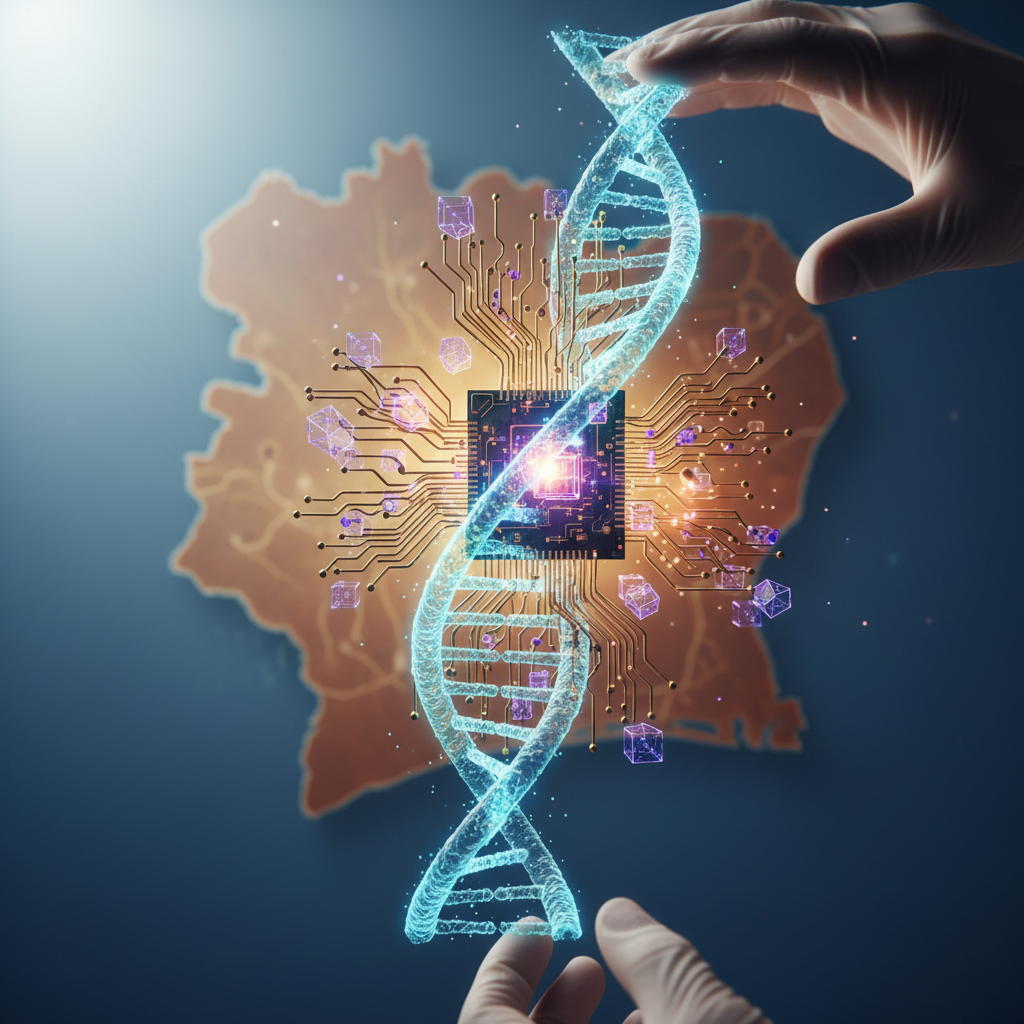
GenEditX Africa is essentially a sophisticated software suite that integrates machine learning algorithms with CRISPR-Cas9 gene editing technology. Its core promise is precision. Traditional Crispr methods, while revolutionary, can sometimes lead to 'off-target' edits, like a skilled tailor accidentally snipping the wrong part of a precious fabric. GenEditX Africa aims to minimize these errors by using AI to predict and optimize guide RNA sequences, ensuring the Crispr 'scissors' cut exactly where they are supposed to. The platform also boasts a massive database of genomic data, much of it sourced ethically and with consent from diverse African populations, which is crucial for understanding genetic variations unique to our continent.
Key Features Deep Dive: What Makes GenEditX Africa Stand Out?
At its heart, GenEditX Africa leverages several key AI components. First, it uses deep learning models, trained on vast datasets of genomic sequences and known Crispr outcomes, to design highly specific guide RNAs. This is a game-changer because it drastically reduces the trial-and-error often associated with gene editing experiments. Dr. Diallo showed me a simulation, a vibrant 3D rendering on a large screen, where the AI meticulously mapped out potential edit sites, highlighting the most efficient and safest options. 'Think of it like a GPS for your genes,' she explained, 'guiding us to the exact street, house, and even room we need to fix.'
Another crucial feature is its predictive analytics for potential immunogenicity. One major challenge in gene therapy is the body's immune response to the viral vectors used to deliver the Crispr machinery. GenEditX Africa employs AI to analyze the protein sequences of these vectors and predict how likely they are to trigger an immune reaction, allowing researchers to select safer delivery mechanisms. This is particularly vital in regions where access to advanced immunosuppressants might be limited.
Finally, the platform includes a robust data management and collaboration module. Researchers across different institutions in Africa, from Dakar to Nairobi, can securely share anonymized patient data, research findings, and protocols, accelerating discovery. This collaborative spirit, reminiscent of our own community bonds, is something I deeply appreciate. It is not about one lab, but about a collective effort to uplift a continent.
What Works Brilliantly: A Beacon of Hope for the Neglected
The most brilliant aspect of GenEditX Africa is its potential to address diseases disproportionately affecting African populations. Sickle cell anemia, for instance, is a devastating genetic disorder prevalent across sub-Saharan Africa. Current treatments are often palliative or require complex bone marrow transplants, which are expensive and inaccessible for many. GenEditX Africa offers a pathway to a one-time, curative treatment. I met a young mother, Adjoa, whose daughter, Aya, suffers from sickle cell. Adjoa told me something I'll never forget: 'Every crisis Aya has, it is like a piece of my heart breaks. If this technology can give her a normal life, what more could a mother ask for?' Her words echoed in my mind long after we parted.
The AI's ability to process and learn from diverse genomic data is also a significant advantage. For too long, genetic research has been heavily biased towards European populations, leaving vast gaps in our understanding of diseases in other ethnic groups. GenEditX Africa's focus on African genomic diversity means the solutions it develops are more likely to be effective and safe for our people. This is not just good science; it is equitable science.
Furthermore, the platform's user interface, while complex at its core, is surprisingly intuitive for trained biologists. BioGenius CI has invested heavily in training programs for local scientists, ensuring that the technology is not just imported but truly integrated and mastered by Ivorian talent. This commitment to local capacity building is commendable and essential for long-term sustainability.
What Falls Short: The Road Ahead Is Paved with Challenges
Despite its promise, GenEditX Africa is not without its hurdles. The most immediate challenge is the sheer cost. While the software itself is developed with an eye towards affordability for African research institutions, the underlying infrastructure, including high-performance computing necessary for the AI's operations and the specialized lab equipment for gene editing, remains prohibitively expensive for many. 'We need significant investment, both public and private, to scale this beyond a few pilot projects,' stated Dr. Marc Kouamé, an economist from the National Institute of Public Health, during a recent panel discussion. 'The technology is here, but the financial backbone is still fragile.'
Another concern is the regulatory landscape. Gene editing is a powerful tool, and its ethical implications are profound. Côte d'Ivoire, like many African nations, is still developing comprehensive regulatory frameworks for such advanced biotechnologies. This is the story they don't want you to hear: the rapid pace of technological innovation often outstrips the ability of governments to create appropriate oversight. Without clear guidelines, there is a risk of misuse or, conversely, a stifling of legitimate research due to overly cautious or unclear regulations. According to a recent report on AI governance in emerging economies by MIT Technology Review, this regulatory lag is a global issue, but it is particularly acute in developing nations.
Finally, there is the issue of public perception and education. Gene editing can sound like something out of science fiction, raising fears and misunderstandings. Building trust within communities, explaining the science in accessible ways, and addressing ethical concerns openly are paramount. Without community buy-in, even the most groundbreaking technology will struggle to find acceptance.
Comparison to Alternatives: A Unique African Focus
Globally, several companies are exploring AI in gene editing. Companies like Verily (an Alphabet subsidiary) and BenevolentAI are using machine learning for drug discovery and target identification, but GenEditX Africa's unique selling proposition lies in its explicit focus on African genomic diversity and diseases. While NVIDIA's powerful GPUs are foundational to running many of these complex AI models, GenEditX Africa has optimized its algorithms to run efficiently even on more modest computing clusters, a practical consideration for many African research centers. Unlike some Western platforms that might treat African data as an afterthought, GenEditX Africa has embedded this focus from its inception, making it a truly 'made for Africa' solution.
There are also open-source Crispr design tools available, but they often lack the sophisticated AI-driven predictive capabilities and the curated African genomic databases that GenEditX Africa offers. This means while alternatives exist, none provide the tailored, precision-focused approach that this platform aims to deliver for our continent.
Verdict: A Promising Dawn, But Not Yet the Full Sun
GenEditX Africa is more than just a product; it is a statement. It is a testament to African ingenuity and the power of collaborative science. The integration of AI with Crispr holds immense promise for tackling some of the most stubborn health challenges facing Côte d'Ivoire and the wider continent. It offers a glimmer of hope for millions, a chance to rewrite narratives of suffering and replace them with stories of health and vitality.
However, its success hinges on overcoming significant financial, regulatory, and societal hurdles. It needs sustained investment, clear ethical guidelines, and widespread public education to truly flourish. As Dr. Diallo eloquently put it, 'The AI can show us the path, but we, as humans, must walk it together.' The journey towards precision medicine for all is long, but with tools like GenEditX Africa, the first steps are being taken with intelligence and heart. For more insights into the broader applications of AI in healthcare, you can explore articles on TechCrunch's AI section. This platform, while still in its early stages of deployment beyond pilot programs, represents a critical step forward, and one that I, as an Ivorian, watch with immense pride and cautious optimism.