
The wind whips across the steppe, a constant reminder that even the most sophisticated systems can be humbled by nature's raw power. Here in Mongolia, we understand resilience and the unexpected. So when I see the talk about AI transforming Wall Street, with its algorithmic trading, risk assessment models, and robo-advisors, my first thought isn't about the billions made. It's about the unseen risks, the potential for a digital blizzard that could sweep across markets far beyond New York or London, touching even our distant, developing economy.
Wall Street's love affair with AI is no secret. Firms like JPMorgan Chase, Goldman Sachs, and BlackRock are pouring billions into developing and deploying advanced AI systems. It is not just about speed anymore. It is about predictive power, about identifying patterns in market data that no human could ever hope to process, and executing trades in milliseconds. The promise is clear: greater efficiency, higher returns, and more precise risk management. But the reality is far more complex.
The Risk Scenario: A Digital Herd Mentality
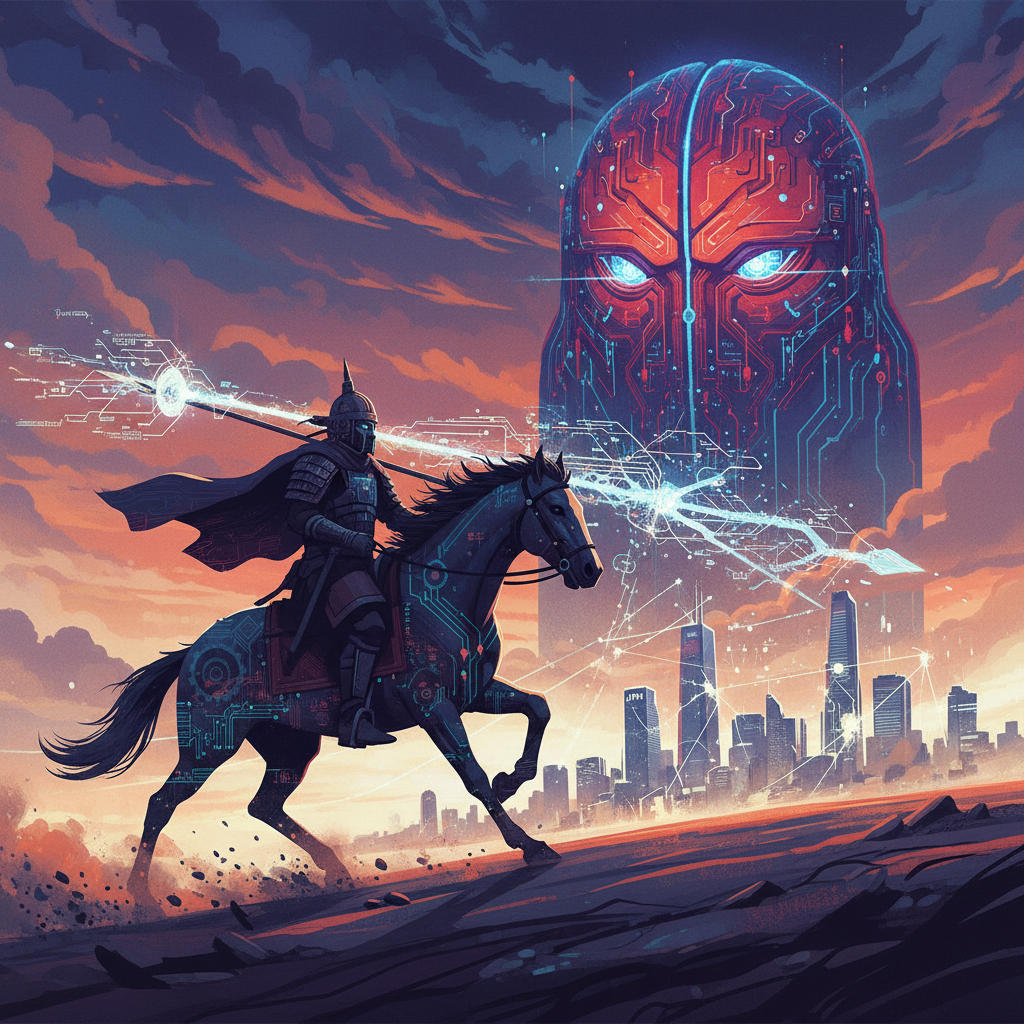
Imagine a scenario where a sophisticated algorithmic trading system, perhaps one developed by a major player like JPMorgan, detects a subtle shift in global sentiment. This system, trained on decades of market data, identifies a pattern suggesting an imminent downturn in a specific asset class. It initiates a rapid sell-off. Other AI systems, from rival firms, detect this initial movement, interpret it as a signal, and follow suit, amplifying the selling pressure. This isn't just human panic; it is machine-driven, hyper-accelerated panic. The market plunges, not because of a fundamental economic shift, but because a cascade of algorithms decided it should.
This isn't theoretical. We have seen glimpses of this before, like the 'flash crash' of May 6, 2010, when the Dow Jones Industrial Average plummeted by over 1,000 points in minutes, only to recover much of it just as quickly. While not purely AI-driven, it highlighted the fragility of interconnected, high-frequency trading systems. Today's AI, with its capacity for autonomous decision-making and learning, introduces new layers of unpredictability. As Dr. Andrew Ng, a leading AI researcher and founder of Landing AI, often emphasizes, 'AI is not magic. It is just software, and software has bugs.' When those bugs are in systems controlling trillions of dollars, the consequences can be severe.
Technical Explanation: The Black Box Problem
At the heart of this risk lies the 'black box' problem. Many of the most powerful AI models, particularly deep learning networks, are incredibly complex. They learn through vast datasets, identifying correlations and patterns that are not explicitly programmed by humans. This makes them incredibly effective, but also opaque. We can see their inputs and their outputs, but understanding the precise reasoning behind a specific decision can be incredibly difficult, sometimes impossible. This lack of interpretability is a significant concern for regulators and financial institutions.
Algorithmic trading systems use AI to analyze market sentiment from news articles, social media, and economic reports, predict price movements, and execute trades. Risk assessment models employ AI to evaluate creditworthiness, detect fraud, and forecast market volatility. Robo-advisors use AI to build and manage investment portfolios for individual clients based on their risk tolerance and financial goals. Each of these applications, while beneficial, carries inherent risks. A bias in the training data, for instance, could lead a risk assessment model to unfairly discriminate against certain demographics, or a robo-advisor to recommend suboptimal strategies under specific market conditions. The sheer speed of these systems means that errors can propagate globally before human intervention is even possible. Bloomberg Technology frequently covers these rapid developments and their market impact.
Expert Debate: Efficiency Versus Stability
The debate among experts is sharp. On one side, proponents argue that AI brings unparalleled efficiency and democratizes access to sophisticated financial advice. 'AI can process information and identify opportunities far beyond human capability,' says David Siegel, co-founder of Two Sigma, a quantitative hedge fund. 'The benefits in terms of market efficiency and liquidity are undeniable.' They point to AI's ability to diversify portfolios, reduce human error, and provide personalized financial planning at scale, making it accessible to a broader population who might not otherwise afford traditional financial advisors.
On the other side, skeptics, including many regulators, worry about systemic risk. 'The interconnectedness of these AI systems, especially in times of stress, could lead to unforeseen consequences,' warns Rostin Behnam, Chairman of the Commodity Futures Trading Commission (cftc). 'We need robust frameworks for oversight and transparency, not just for individual algorithms, but for their interactions.' There is a growing call for 'explainable AI' or XAI, which aims to make AI decisions more transparent, allowing humans to understand the rationale behind an algorithm's output. However, achieving true explainability for complex deep learning models remains a significant research challenge. MIT Technology Review has published extensively on the challenges of XAI in critical applications.
Real-World Implications for Mongolia
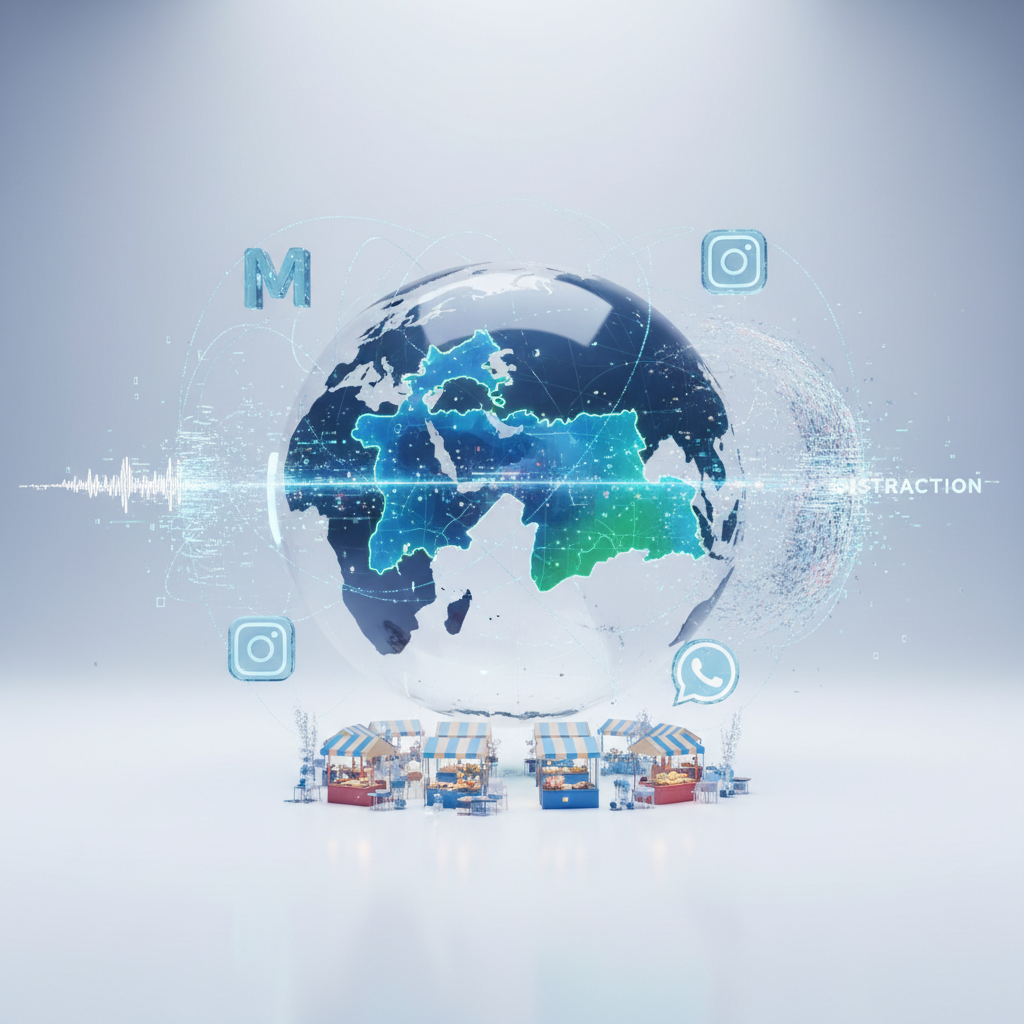
For a country like Mongolia, with its relatively small and developing financial market, the implications are particularly acute. We are not Wall Street, but we are connected to the global financial system. A major market disruption originating from AI-driven trading could send ripples that affect our nascent stock exchange, our currency, and the foreign investment that is crucial for our development. Our institutions, while growing, may not have the sophisticated tools or regulatory frameworks to withstand or even fully comprehend such a shock.
Consider the impact of robo-advisors. While they might offer low-cost investment options, if these algorithms are primarily trained on Western market data and investor behaviors, they might not be optimized for the unique economic conditions and risk profiles prevalent in emerging Asian markets. A sudden shift in global capital flows, amplified by AI, could disproportionately affect smaller economies. Mongolia's challenges are unique and so are its solutions, but we cannot isolate ourselves from global financial currents.
What Should Be Done: Practical Innovation and Prudent Oversight
The path forward requires a blend of practical innovation and prudent oversight. First, greater transparency in AI models used in finance is paramount. Regulators need the tools and expertise to audit these systems, understanding not just what they do, but how they do it. This means investing in AI literacy within regulatory bodies and fostering collaboration between industry and government to develop common standards for explainability and robustness.
Second, financial institutions must prioritize stress testing their AI systems against extreme, unforeseen market conditions, not just historical data. This includes 'adversarial testing,' where AI models are deliberately challenged with unusual or manipulated data to expose vulnerabilities. We need to build resilience into these systems, much like a ger is built to withstand the harshest steppe winds.
Third, for countries like Mongolia, it means building our own capacity. We need to invest in financial technology infrastructure, train local experts in AI and data science, and develop regulatory frameworks that are tailored to our market while remaining globally compatible. This isn't about blocking progress; it is about ensuring that progress serves everyone, not just the powerful few. The steppe meets the server farm, and we must ensure the server farm is built on solid ground.
Finally, international cooperation is essential. Financial markets are global, and so are the risks posed by AI. Organizations like the Financial Stability Board and the International Organization of Securities Commissions must work together to establish global best practices and coordinate regulatory responses. The goal is not to stifle innovation, but to harness its power responsibly, ensuring that the digital tools shaping our financial future are robust, transparent, and ultimately, safe for all. We must approach this with the same careful consideration a herder gives to their flock, understanding that a single misstep can have wide-ranging consequences. We need to embrace practical innovation, but always with an eye on the horizon for potential storms. TechCrunch regularly reports on the intersection of AI innovation and regulatory challenges, highlighting the ongoing tension.