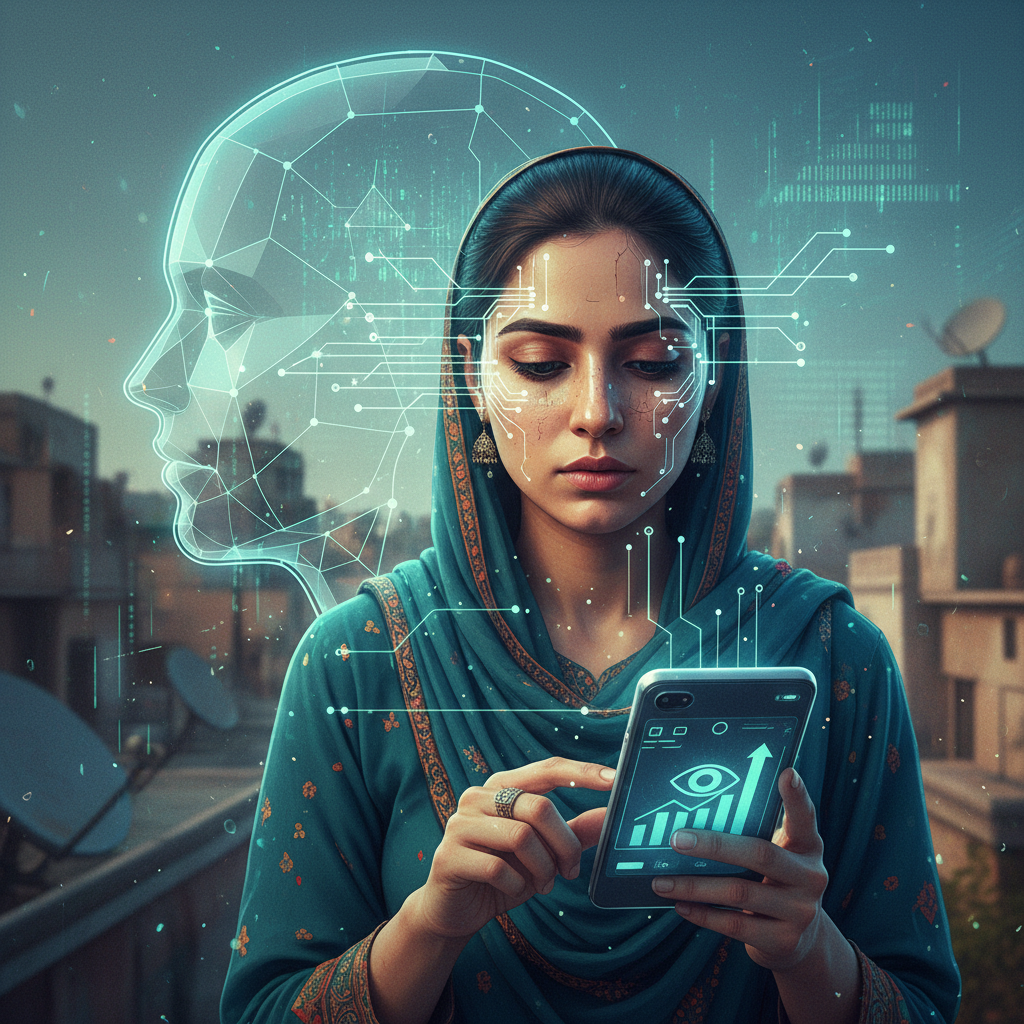

The scent of street food, the roar of motorbikes, and the ever-present hum of creativity. That's Bangkok for you, a city that never sleeps and always inspires. But lately, there's a new kind of hum, a digital one, and it's got artists, authors, and musicians around the world clutching their pearls, or perhaps, their lawyers. We're talking about the great AI copyright war, a battle royale between the titans of tech and the creators whose life's work often becomes the unwitting fuel for these new digital brains.
While the big lawsuits rage in the West, with names like OpenAI, Google, and Meta facing down angry artists and authors, a quiet revolution is brewing right here in Southeast Asia. And it’s not about suing, it’s about protecting. Meet MusiGenie, a Thai-born startup that's stepping into this chaotic ring with a very Thai-style innovation: a digital guardian for musical intellectual property. They're not just watching the fight, they're building the armor.
The Maestro Behind the Machine: From Khao San Road to Copyright Code
Every great story needs a hero, or at least a very smart person with a good idea. For MusiGenie, that's Dr. Preecha Somsak, a man whose journey began not in a sterile Silicon Valley lab, but amidst the vibrant, sometimes cacophonous, music scene of Bangkok. Dr. Preecha, a classically trained musician turned computer scientist, spent his early career working on digital signal processing for various Thai media companies. He saw firsthand the struggles of local artists, from indie bands playing on Khao San Road to traditional luk thung singers, trying to protect their work in a rapidly digitizing world.
His 'aha moment' wasn't a sudden flash, but a slow burn. "I was at a music festival, a small one up north, and this young artist was pouring his heart out on stage," Dr. Preecha told me over a plate of pad see ew at his favorite street stall. "Later, I saw a snippet of his song, slightly altered, used in an advertisement without his knowledge. It broke my heart. Then, with the rise of generative AI, I realized this problem was about to become a tsunami. How do you protect a melody, a rhythm, when AI can churn out a million variations in seconds?" He knew then that the traditional legal frameworks, slow and cumbersome, wouldn't stand a chance against the speed of AI. He needed a technological solution.
The Problem: When AI Learns to Plagiarize Without Knowing It
The core of the AI copyright war is deceptively simple: large language models and generative AI systems are trained on vast datasets, often scraped from the internet without explicit permission or compensation to the creators. When these AIs then generate new content, be it text, images, or music, there's a very real risk of it inadvertently reproducing or being heavily influenced by copyrighted material. For musicians, this is particularly thorny. A melody, a chord progression, a unique vocal timbre, these are the lifeblood of their art. If an AI can mimic it, or worse, generate something eerily similar, who owns the new creation? And how do you prove infringement when the 'thief' is an algorithm?
"The current legal battles are focused on the past, on what's already been scraped," explains Professor Anya Sharma, an expert in intellectual property law from Chulalongkorn University, during a recent online panel. "But the real challenge is moving forward. How do we ensure future AI models are trained ethically, and how do we give creators tools to track and protect their work in an AI-generated world?" This is precisely the gap MusiGenie aims to fill.
The Technology: A Digital Fingerprint for Every Beat
MusiGenie's technology is a fascinating blend of audio forensics and blockchain. At its heart is a proprietary audio fingerprinting algorithm that Dr. Preecha's team developed. Imagine it like a unique digital DNA for every piece of music. When an artist uploads their original track to MusiGenie's platform, the system analyzes it, extracting intricate patterns of melody, harmony, rhythm, and timbre. This isn't just a simple Shazam-like identification; it's a deep, multi-layered analysis that creates an immutable, cryptographically secure fingerprint.
This fingerprint is then recorded on a private, permissioned blockchain. "Why blockchain?" Dr. Preecha asks, anticipating my question. "Because it provides an unalterable, transparent record of ownership and creation. It's like having a notary public for every single note you compose, but one that operates at the speed of light." This timestamped, verifiable record establishes indisputable proof of creation and ownership.
But the real magic happens next. MusiGenie's system continuously scans publicly available AI-generated music databases and even monitors popular generative AI platforms. When it detects a piece of music that shares a high degree of similarity with a registered fingerprint, it flags it. The system then provides the original artist with a detailed report, highlighting the similarities and providing the blockchain-verified proof of their original work. It's like having a highly sophisticated, always-on detective for your music.
The Market Opportunity: Asia's Creative Goldmine Needs a Guard Dog
The market for such a solution, especially in Asia, is enormous. The music industry in Southeast Asia alone is projected to reach over $1 billion by 2027, according to recent reports, with a significant portion driven by independent artists and digital consumption. From the K-Pop powerhouses to the burgeoning indie scenes in Thailand, Vietnam, and Indonesia, there's a vast pool of creators who are digitally savvy but often lack the resources to fight legal battles against powerful entities. Only in Bangkok, and indeed across Asia, are artists increasingly aware of their digital rights.
"We're not just looking at major labels," says Nattaya Wongchai, MusiGenie's Head of Business Development. "Our target is the individual musician, the small studio, the independent composer. They are the most vulnerable. They create incredible content, but they don't have a team of lawyers on retainer. We offer them an affordable, proactive defense." MusiGenie operates on a subscription model, with tiered pricing designed to be accessible to artists at various stages of their careers. They also offer enterprise solutions for larger record labels and music publishers who want to monitor their entire catalogs.
The Competitive Landscape: A Different Kind of Fight
The competitive landscape for AI copyright protection is still nascent, largely dominated by legal firms and reactive solutions. While there are companies offering digital rights management (DRM) and content ID systems, these are often designed for traditional piracy detection, not the subtle, generative mimicry of AI. "Most existing solutions are like trying to catch a fish with a net designed for elephants," Dr. Preecha quips. "AI is a different kind of beast, it requires a different kind of trap."
Globally, some startups are exploring similar spaces, but MusiGenie's focus on blockchain-verified immutable proof and its proactive scanning capabilities set it apart. Its Asian base also gives it a unique advantage, understanding the specific needs and cultural nuances of the region's diverse music scenes. They're not just translating a Western solution; they're building one from the ground up, tailored for a market that's hungry for protection.
What's Next: Expanding the Digital Fortress
MusiGenie recently closed a seed funding round of approximately $3.5 million, led by a consortium of regional venture capitalists and a prominent Thai media conglomerate. This funding is earmarked for expanding their engineering team, enhancing their AI detection algorithms, and, crucially, building out their sales and marketing efforts across Southeast Asia. They're also exploring partnerships with music streaming platforms and digital distributors to integrate their fingerprinting technology directly into the upload process.
"Our vision isn't just about protection, it's about empowerment," Dr. Preecha states, his eyes bright with conviction. "We want artists to feel confident creating, knowing their work has a digital guardian. We want to foster a future where AI and human creativity can coexist, where technology serves the artist, not cannibalizes their livelihood." It's a bold vision, one that seeks to rewrite the narrative of the AI copyright war from one of conflict to one of co-existence, all from the bustling heart of Bangkok. The Land of Smiles might just teach the world how to protect its creative soul in the age of AI. For more on the evolving landscape of AI and intellectual property, you can check out coverage on TechCrunch or Wired.

As the world grapples with the ethical implications of generative AI, MusiGenie offers a glimmer of hope, a pragmatic solution born from a deep understanding of both technology and the artistic spirit. It reminds us that innovation isn't just about building bigger, faster models, but also about building smarter, fairer tools. And sometimes, the most impactful ideas emerge not from the usual suspects, but from places like Bangkok, where creativity flows as freely as the Chao Phraya River, and where a musician turned scientist decided to stand up for the melodies that move us all. The copyright battles will continue, but with startups like MusiGenie, artists might just find their digital anthem of defiance.