The sun was just beginning to warm the cobblestones of Cusco as I sat with Mama Rosa, a respected elder from a small Quechua community high in the Sacred Valley. We were sipping mate de coca, the steam rising gently into the crisp Andean air, and she was telling me about the ayllu, the ancient communal system of reciprocity and shared responsibility that has sustained her people for centuries. It is a way of life built on dialogue, on listening, and on resolving conflicts face to face, with respect for every voice. She showed me something that changed my understanding of how communities thrive: true freedom of expression, she explained, is not just about speaking, but about being heard and understood within the context of one's own culture.
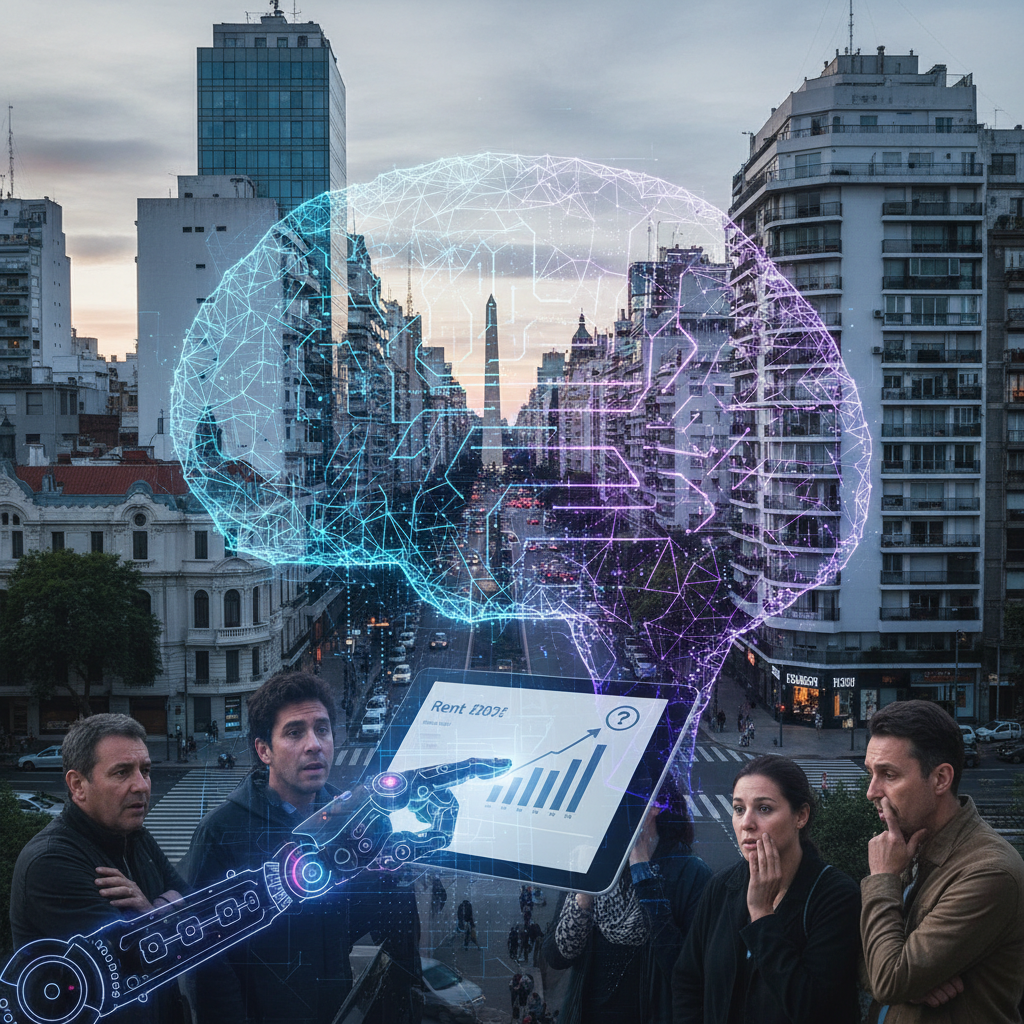
Today, in April 2026, Mama Rosa's wisdom feels more urgent than ever, even as we navigate a world increasingly shaped by algorithms. The conversation about AI and freedom of speech, content moderation, censorship, and platform power is not just a Silicon Valley debate, it is a global one, and it is landing with particular weight here in Peru and across South America. Giants like Meta, Google, and OpenAI are deploying increasingly sophisticated AI systems to police the vast oceans of content shared on their platforms. While the stated goal is often to combat misinformation, hate speech, and harmful content, the reality on the ground, especially in culturally diverse regions like ours, is far more complex.
Consider the case of a local activist in Puno, who recently found his Facebook posts about a mining dispute repeatedly flagged and removed. His language, rich with local idioms and historical references, was deemed 'incendiary' by an AI moderator, despite being perfectly understood and accepted within his community. This is not an isolated incident. Across Latin America, there are growing concerns that AI driven content moderation, often trained on data sets predominantly reflecting Western cultural norms and languages, struggles to understand the nuances of local dialects, political discourse, and indigenous expressions. What is considered offensive in one context might be a legitimate form of protest or cultural expression in another.
“The problem is not just translation, it is cultural interpretation,” explained Dr. Elena Vargas, a leading researcher in AI ethics at the Pontificia Universidad Católica del Perú in Lima. “An algorithm might detect keywords or patterns associated with hate speech in English, but those patterns do not necessarily translate to Quechua, Aymara, or even Peruvian Spanish. We risk silencing marginalized voices under the guise of moderation.” Dr. Vargas recently published a paper highlighting how AI models often misinterpret satire, irony, and culturally specific forms of dissent, leading to what she calls 'algorithmic censorship by proxy.' Her research suggests that a significant percentage of content removals in non-English speaking regions are later overturned upon human review, indicating a systemic flaw in current AI moderation practices.
The power wielded by these platforms is immense. Meta alone, with its billions of users worldwide, including a substantial presence in Peru, effectively acts as a global public square. Its decisions on what content is allowed or removed can shape public opinion, influence political discourse, and even impact social movements. The lack of transparency around how these AI systems are trained, what data they use, and who oversees their decisions is a constant source of concern for human rights advocates and digital rights organizations. “We are seeing a concentration of power in the hands of a few tech companies, and their algorithms are becoming the arbiters of global speech,” stated Renzo Luna, director of the Peruvian Digital Rights Initiative. “This is a democratic deficit that we must address collectively.”
The challenge is not simple. Platforms face immense pressure, both from governments and users, to curb harmful content, from child exploitation to terrorist propaganda. The sheer volume of content makes human-only moderation impossible. According to reports, Meta alone processes billions of pieces of content daily, making AI an indispensable tool for initial filtering. However, the current approach often feels like a blunt instrument, especially when applied to the rich tapestry of human communication.
One promising avenue is the development of more culturally aware AI models. Researchers at Google and OpenAI are reportedly exploring ways to incorporate local linguistic and cultural experts into the training and fine-tuning of their moderation algorithms. This would involve not just translating words, but providing context, explaining idioms, and helping the AI understand the social and political landscape of a region. Imagine an AI model that understands the historical significance of a specific Andean symbol or the satirical nature of a Peruvian political meme. This kind of nuanced understanding is what is desperately needed.
In the highlands of Peru, where oral traditions and community storytelling are still vibrant, the idea of an external, opaque system deciding what can and cannot be said feels profoundly alien. Our traditions emphasize consensus building, the importance of listening to all sides, and the belief that even difficult truths must be spoken to maintain balance within the ayllu. This is a story about ancient wisdom meeting modern AI, and perhaps, the way forward lies in blending these perspectives.
There is a growing movement for what some are calling 'decentralized moderation,' where local communities or trusted third-party organizations could have more input and oversight over content decisions relevant to their specific contexts. This would empower local voices and ensure that moderation reflects community values, rather than a one-size-fits-all global policy. It is a complex proposition, but one that could offer a more equitable and culturally sensitive approach to online speech. As Wired recently highlighted, the debate over who controls the narrative online is intensifying globally, and local context is becoming paramount.
The Peruvian government, through the Ministry of Culture and the Ministry of Justice and Human Rights, has also begun to engage with tech companies on these issues, advocating for greater transparency and culturally appropriate moderation policies. While progress is slow, the dialogue is crucial. The goal is not to allow harmful content to proliferate, but to ensure that legitimate expressions of culture, dissent, and identity are not inadvertently suppressed by algorithms that lack understanding.
Ultimately, the challenge of AI and freedom of speech is a human one. It requires us to look beyond the technical capabilities of algorithms and consider the profound impact they have on human connection, cultural preservation, and democratic discourse. As Mama Rosa reminded me, true communication is about understanding, not just filtering. If AI is to truly serve humanity, it must learn to listen with the same empathy and cultural awareness that we, as humans, strive for. The future of free expression, especially for diverse voices like those here in Peru, depends on it. We must demand that these powerful tools are built with a deep respect for the richness and complexity of human language and culture, ensuring that the digital ayllu can thrive with all its voices heard. For more insights into how AI is shaping justice systems, you might find this article interesting: When the Algorithm Judges: Can Peru's Ancient Justice Find Its Way in AI's New Courts? [blocked]. The conversation around AI's impact on society is only just beginning, and it is a conversation that must include voices from every corner of the world, not just the tech hubs. Reuters often covers the global implications of these technological shifts, and their reporting underscores the urgency of these discussions.