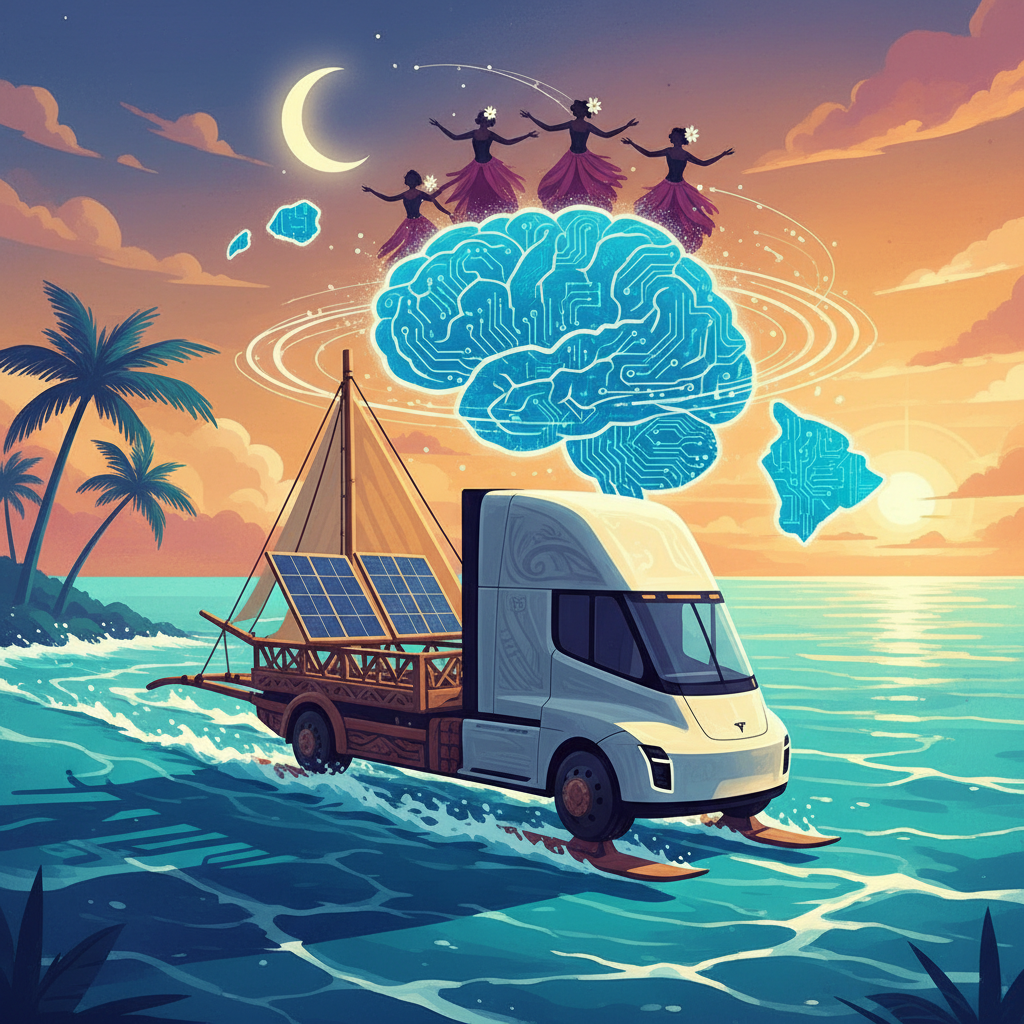

The earth beneath our feet, and the vast ocean that cradles our islands, holds secrets and sustenance. For millennia, humanity has sought to understand and utilize these resources. Now, in April 2026, the conversation is dominated by artificial intelligence, promising to unlock geological mysteries, optimize extraction, and even safeguard lives in ways we once only dreamed. From my home in Hawaii, I watch this unfold with a mixture of awe and profound apprehension. The future is being built on volcanic rock, yes, but what kind of future will it be if we forget the very ground we stand on?
Silicon Valley, with its insatiable appetite for data and disruption, sees AI as the ultimate tool for resource management. Companies like Google DeepMind and NVIDIA are pouring immense resources into developing sophisticated models that can analyze seismic data, predict mineral deposits, and even control autonomous drilling equipment. The narrative is compelling: AI will make mining safer, more efficient, and less environmentally damaging. It will pinpoint rare earth elements crucial for our digital lives, optimize energy grids, and even help us manage water resources in an era of climate change. On paper, it sounds like a win for everyone. But what happens when the algorithms, devoid of context and cultural understanding, dictate the fate of sacred lands or fragile ecosystems?
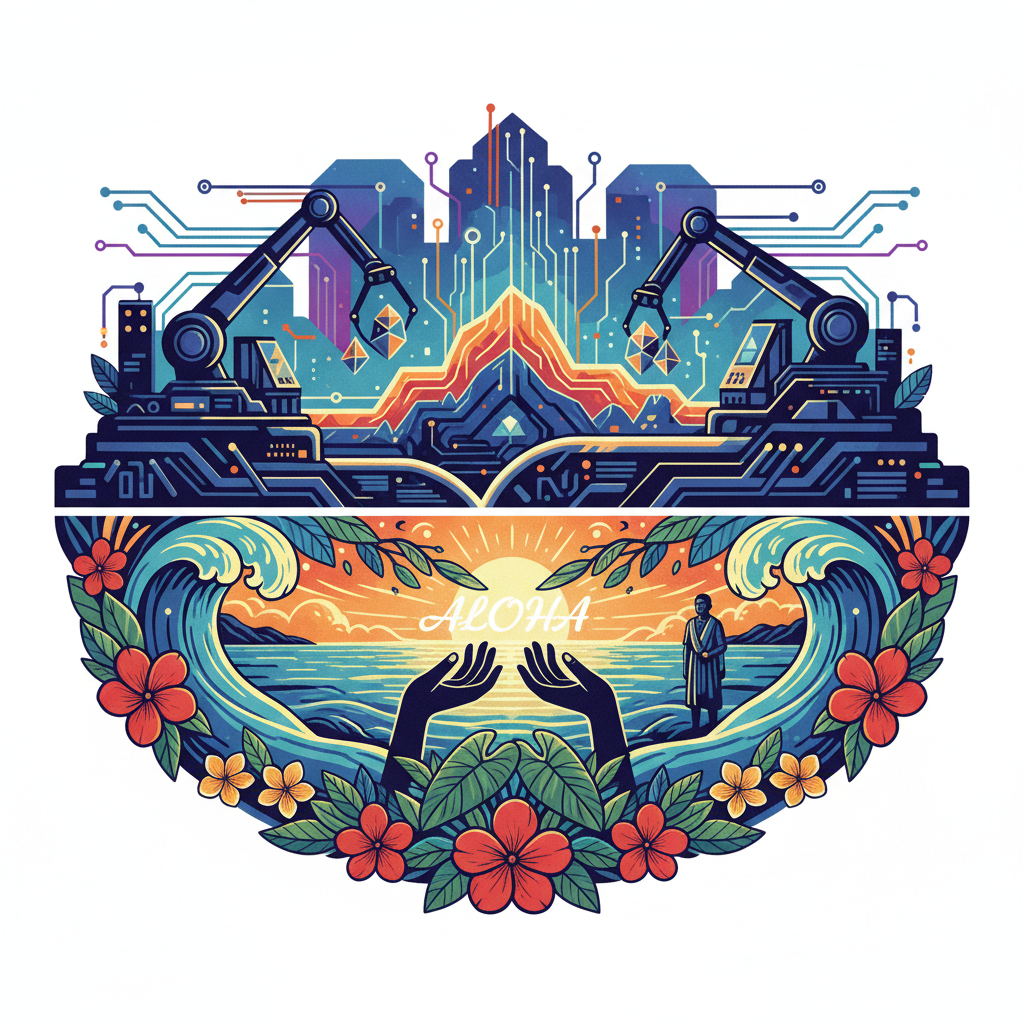
My core argument is this: without a foundational shift in values, AI's application in natural resource industries risks becoming the ultimate tool for accelerated extraction, perpetuating colonial patterns of exploitation rather than fostering genuine stewardship. We must embed principles of aloha, of interconnectedness and mutual respect, into the very fabric of these AI systems. Aloha means more than hello because it's a framework for ethical AI, demanding foresight, responsibility, and a deep understanding of impact across generations.
Consider the promises. AI powered drones can map vast territories, identifying potential mineral deposits with unprecedented accuracy, reducing the need for invasive human exploration. Predictive maintenance algorithms can keep heavy machinery running optimally, minimizing downtime and energy waste. Safety systems, leveraging computer vision and sensor data, can detect hazards in real time, preventing accidents in dangerous environments like underground mines or offshore platforms. The numbers are impressive: reports suggest that AI could reduce operational costs in mining by 10-20% and significantly improve safety records. Major players like Rio Tinto and BHP are already deploying AI solutions, from autonomous haul trucks to data analytics platforms that optimize processing plants. NVIDIA, with its powerful GPUs, is at the forefront, enabling the complex simulations and deep learning models required for these applications, as detailed in articles on TechCrunch.
Yet, the very efficiency that AI promises can be a double-edged sword. Faster exploration means faster identification of resources, which can lead to faster extraction. Optimized extraction means more material pulled from the earth, often with fewer human hands involved, raising questions about local employment and economic equity. The environmental impact, while potentially mitigated in some areas by precision, could be exacerbated in others by sheer scale. Who decides where these AI powered operations are deployed? Who benefits when a remote community's ancestral lands are deemed 'optimal' for resource extraction by an algorithm trained on purely economic metrics?
Some might argue that these concerns are overblown, that technology is neutral, and it's human intent that matters. They might say that regulatory bodies and environmental impact assessments will keep these operations in check. "AI is a tool, and like any tool, its impact depends on how we wield it," a prominent tech executive, often quoted in industry circles, might say. "Our focus is on creating efficiencies that benefit society and reduce human risk." This perspective, while superficially appealing, misses the deeper point. The very design of these AI systems, the data they are trained on, and the metrics they optimize for, are not neutral. They reflect the values and priorities of their creators, which, in the current paradigm, are overwhelmingly focused on profit and output.
My rebuttal is simple: the current framework is insufficient. We've seen countless examples where economic imperatives have overridden environmental and social concerns, even with existing regulations. AI, with its ability to process vast datasets and identify patterns beyond human comprehension, amplifies these dynamics. It can present a seemingly objective, data driven justification for actions that have profound, long lasting consequences. When an algorithm, trained on decades of market data and geological surveys, identifies a lucrative deposit under a sacred mountain, what weight will local cultural significance hold against its 'optimized' recommendation? This is where the wisdom of the Pacific, the concept of mālama 'āina caring for the land, becomes not just a cultural ideal, but a critical ethical imperative for AI development.
We need a new kind of partnership, one that transcends the traditional Silicon Valley model of 'move fast and break things.' We need AI developers, resource companies, and indigenous communities to co-create these systems. This means integrating indigenous knowledge systems, traditional ecological practices, and community values into the very design and training data of AI models. It means prioritizing long term sustainability and regenerative practices over short term gains. It means ensuring that the benefits of AI driven resource management are shared equitably, and that local communities have genuine agency in decisions that affect their ancestral lands and waters.
Consider the work being done by organizations like the Indigenous Data Governance movement, which advocates for the rights of indigenous peoples to control their own data. This is not just about privacy, it's about sovereignty. When AI models are trained on geological data from indigenous territories, who owns that data? Who controls its use? These are not abstract questions, but pressing issues that demand immediate attention. As Dr. Stephanie Russo Carroll, a leading voice in indigenous data governance, stated, "Indigenous data sovereignty is about the right of indigenous peoples to govern the collection, ownership, and application of their own data, which is crucial for self determination and well being." This principle must extend to the data generated and utilized by AI in resource management.
Hawaii sits at the crossroads of Pacific and Silicon Valley, a unique vantage point from which to observe these converging forces. Our history, our connection to the land and sea, offers a powerful lens through which to evaluate these technological advancements. We have seen firsthand the consequences of resource exploitation driven by external interests. We understand that true progress is not just about efficiency, but about balance, reciprocity, and respect for all living things.
The challenge is immense, but the opportunity is even greater. If we can infuse AI with aloha, if we can build systems that prioritize mālama 'āina, then we can truly harness this technology for a future where humanity thrives in harmony with the planet. This isn't just about avoiding harm, it's about actively building a better world. The choice is ours: will AI in natural resources be another chapter in the story of extraction, or will it be the dawn of a new era of genuine stewardship? I believe the answer lies in our willingness to look beyond the algorithms, and to listen to the wisdom of the land itself. For more on the ethical considerations of AI, I often consult publications like MIT Technology Review.
This is not a call to halt progress, but a demand to redefine it. To ensure that the innovations coming out of Silicon Valley serve the interests of the many, not just the few, and that they honor the sacred trust we hold with our planet. The time for this conversation is now, before the algorithms make decisions we can't unmake. We must ensure that the digital future, built on the very resources AI helps us find, is one that embodies aloha, for all generations to come.