I remember a time, not so long ago, when celebrity meant someone you saw on television or heard on the radio, someone who had actually, you know, done something. Maybe they sang a song, acted in a film, or kicked a football. Now, it seems, you don't even need to be real to be famous. We're talking about AI influencers, virtual personalities with millions of followers, brand deals, and even their own music careers. It's a strange new world, and frankly, it makes me wonder if we've all gone a bit mad.
Take Lil Miquela, for example. She's a computer generated character, a digital avatar, yet she boasts over three million followers on Instagram. She "collaborates" with real brands like Prada and Calvin Klein, "releases" music, and even "attends" fashion shows. Her creators, Brud, a Los Angeles based startup, have built an entire narrative around her, making her seem as human as possible. This isn't just a quirky side project anymore; it's a multi million dollar industry. Analysts at Bloomberg Technology estimate the virtual influencer market could reach several billion dollars in the next few years, driven by brands seeking new ways to connect with younger, digitally native audiences.
From my perch here in Iceland, where our sagas are filled with real heroes and challenging landscapes, this whole virtual celebrity thing feels a bit like a digital mirage. What exactly are people following? An algorithm? A carefully curated image? It’s not like they can come to Iceland and hike a glacier with Lil Miquela, can they? The appeal, however, is undeniable. These virtual entities offer a level of control and consistency that human influencers simply cannot. No scandals, no bad hair days, no demanding riders. Just pure, unadulterated brand messaging, delivered with digital perfection.
This phenomenon isn't limited to the West either. In Asia, virtual idols have been popular for years, particularly in Japan and China. Hatsune Miku, a vocaloid software persona, has been performing sold out concerts as a hologram for over a decade. Her success paved the way for more sophisticated AI driven characters. Now, companies like NetEase and Tencent are investing heavily in creating their own virtual pop stars and brand ambassadors. The technology behind these creations is advancing rapidly, leveraging advanced generative AI models for realistic visuals, voice synthesis, and even dynamic personality traits. It's a complex blend of art, engineering, and psychology.
But what does this mean for us, the actual humans? And what about smaller nations, like Iceland, trying to find our place in this digital future? On one hand, the democratisation of content creation means anyone with the right tools can potentially create a virtual star. In Iceland, we think differently about this. We value authenticity, our connection to nature, and our unique cultural heritage. Could a virtual influencer truly represent Icelandic values, or would it always feel like a pale imitation? I often wonder if the very concept of a virtual celebrity clashes with our emphasis on tangible reality and community.
Some argue that virtual influencers are simply a new form of storytelling, an evolution of animation or puppetry. "These virtual characters allow for narratives that transcend human limitations," says Dr. Anya Sharma, a digital culture researcher at the University of Amsterdam. "They can be immortal, ageless, and perfectly embody specific ideals without the baggage of human flaws. For brands, this is incredibly attractive." She noted in a recent interview that the engagement rates for top virtual influencers often surpass those of their human counterparts, sometimes by as much as three times, according to data from marketing analytics firms.
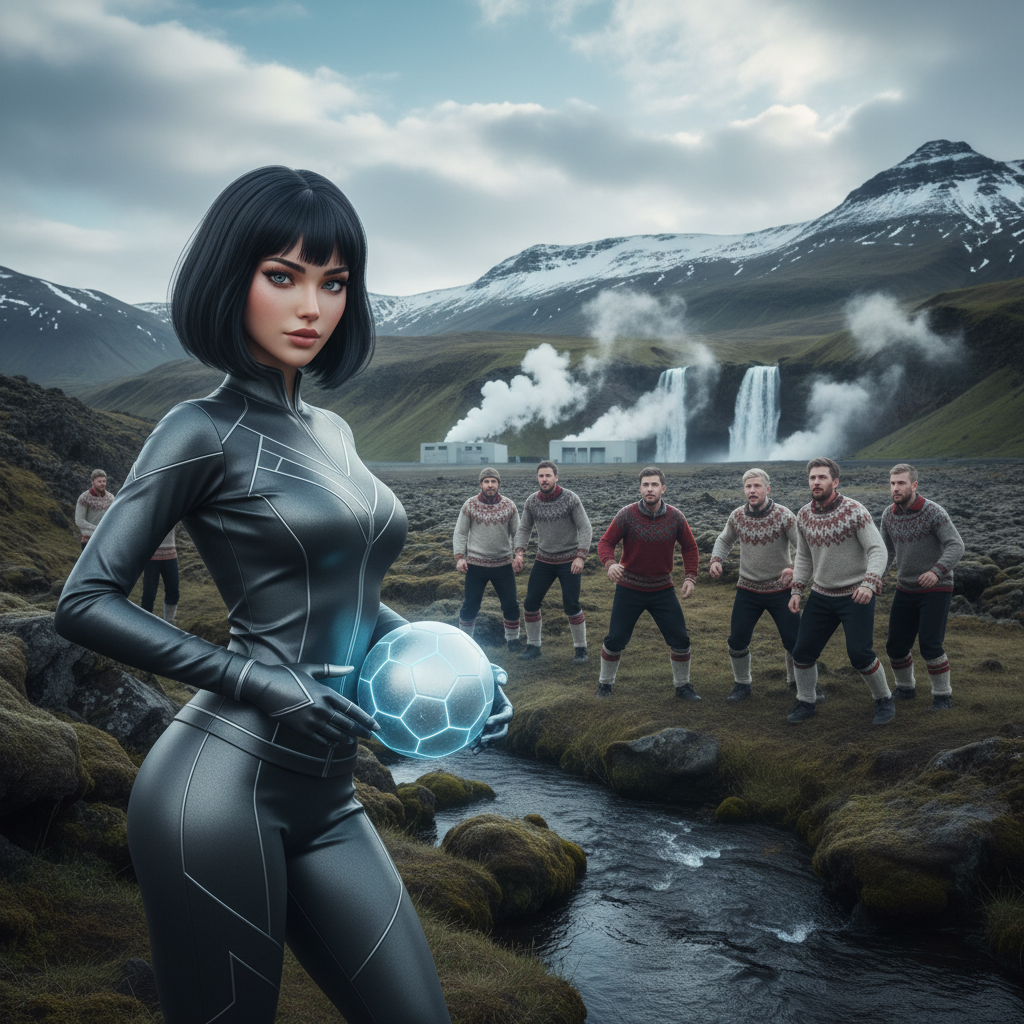
However, there are legitimate concerns. The blurring lines between reality and simulation can be disorienting, especially for younger audiences. There are ethical questions about transparency, about the potential for manipulation, and about the impact on mental health when our role models aren't even real. The very idea of an AI celebrity raises questions about what it means to be human, to have agency, and to exert influence. If an AI can be a sports star, what does that mean for the athletes who train their entire lives? The topic of AI's impact on human creativity and work is something we've touched upon before, for example, in discussions around AI in creative industries. You can read more about it here [blocked].
For a small nation like ours, the rise of virtual celebrities presents both a challenge and an opportunity. We don't have the massive population base to churn out human celebrities at the same rate as larger countries. But what if we leveraged our creative talent and unique cultural narratives to build virtual entities that genuinely reflect Icelandic values? Imagine a virtual storyteller, steeped in our folklore, sharing tales of elves and hidden people, or a virtual musician composing pieces inspired by our dramatic landscapes. This could be a powerful way to export our culture globally, without requiring our artists to constantly travel.
"The geothermal approach to computing" is something we often talk about in Iceland, referring to our sustainable energy for data centers. Perhaps we can apply a similar philosophy to digital creation: a grounded, sustainable, and authentic approach to virtual personas. Instead of chasing the latest trend for the sake of it, we could build virtual entities with purpose, with a deeper connection to our heritage and our future. It's about finding our own unique advantage, not just copying what everyone else is doing.
Even major tech players are getting involved. Meta, for instance, is heavily investing in avatar technology and the metaverse, envisioning a future where digital identities are as important as physical ones. OpenAI and Google are constantly refining their generative AI models, making it easier to create hyper realistic digital humans. The tools are becoming more accessible, and the quality is improving exponentially. This means the barrier to entry for creating compelling virtual characters is dropping, which could empower smaller creative teams.
However, the core issue remains: authenticity. Will audiences truly connect with something that isn't real, or will the novelty eventually wear off? I believe that while virtual influencers can capture attention, sustained engagement requires something deeper. It requires a story, a connection, and perhaps, a touch of human imperfection. Small nations have big advantages in AI, especially when it comes to focusing on niche markets and authentic narratives. We can choose to create virtual entities that are extensions of our culture, rather than just generic digital puppets for global brands.
Ultimately, the rise of AI influencers is a symptom of a larger shift in our digital world. It's a world where the lines between real and artificial are increasingly blurred, where algorithms shape our perceptions, and where influence can be manufactured. As we navigate this new terrain, it's crucial to ask ourselves what we truly value, what kind of digital future we want to build, and whether we're content to follow digital ghosts, or if we still prefer the company of real people, with real stories, under the northern lights. It's a question worth pondering, even if the answer isn't immediately clear. For more insights into the broader impact of AI on society, you can always check out articles on Wired's AI section. The conversation is just beginning.