The rhythmic pulse of African music, from the intricate kora melodies of Guinea to the vibrant Afrobeats of Nigeria, has long captivated the world. Yet, for countless artists across the continent, translating this cultural wealth into sustainable livelihoods remains an uphill battle. The digital age, with its promise of global reach, has often felt like a double-edged sword, offering exposure while simultaneously complicating monetization and ownership. It is against this complex backdrop that Mdundo, a music streaming and download platform, has positioned itself as a champion for African artists, now increasingly leveraging artificial intelligence to amplify its impact. But here's the catch: does this technological embrace truly empower the independent creator, or does it merely introduce new layers of algorithmic control?
Founded in 2013 in Copenhagen, Denmark, by Martin Nielsen and Francis Amisi, Mdundo's journey began with a clear mission: to provide a legal and accessible platform for African music distribution. Unlike global giants that often struggle with localized content and payment methods in emerging markets, Mdundo focused intently on the specific needs of the African music ecosystem. Their 'aha moment' was recognizing the immense potential of mobile-first consumption and the prevalence of feature phones, which necessitated a platform optimized for low data usage and offline listening. This localized approach, combined with a free, ad-supported model, allowed them to rapidly gain traction, particularly in East Africa before expanding across the continent.
Today, Mdundo boasts an impressive user base, reporting over 30 million monthly active users as of late 2025, primarily across Kenya, Tanzania, Uganda, Ghana, and Nigeria. Their catalog includes over 2.5 million songs from more than 150,000 African artists. While the company is headquartered in Denmark, its operational heart and strategic focus remain firmly planted in Africa, with significant teams on the ground in key markets. This dual identity, a European-founded company deeply embedded in the African digital landscape, offers a unique lens through which to examine the promises and perils of AI in the creator economy.
The Problem They Are Solving: Bridging the Digital Divide for Artists
For many African artists, the traditional music industry infrastructure is either non-existent or inaccessible. Piracy remains rampant, and international streaming platforms often offer unfavorable royalty rates or complex payout structures that are difficult for local artists to navigate. Mdundo aims to democratize access to distribution and monetization. By offering a platform where artists can upload their music, track downloads, and earn revenue, they address critical pain points. Their focus on mobile money and local payment solutions further lowers barriers to entry for both artists and listeners. In a continent where digital payment infrastructure is still developing, this localized financial integration is not merely a convenience, it is a necessity.
My investigations into the challenges faced by Guinean musicians, for instance, reveal a recurring theme: talent abounds, but the pathways to sustainable income are often obscured by opaque industry practices and a lack of digital literacy. Artists like Fanta Konaté, a rising star in Conakry's burgeoning Afropop scene, often rely on informal networks and live performances. The promise of a platform like Mdundo is that it could provide a direct, transparent channel to a wider audience and, crucially, a reliable income stream. However, the devil is in the details of how that income is generated and distributed, particularly as AI takes a more central role.
The Technology: AI as a Discovery Engine and Monetization Optimizer
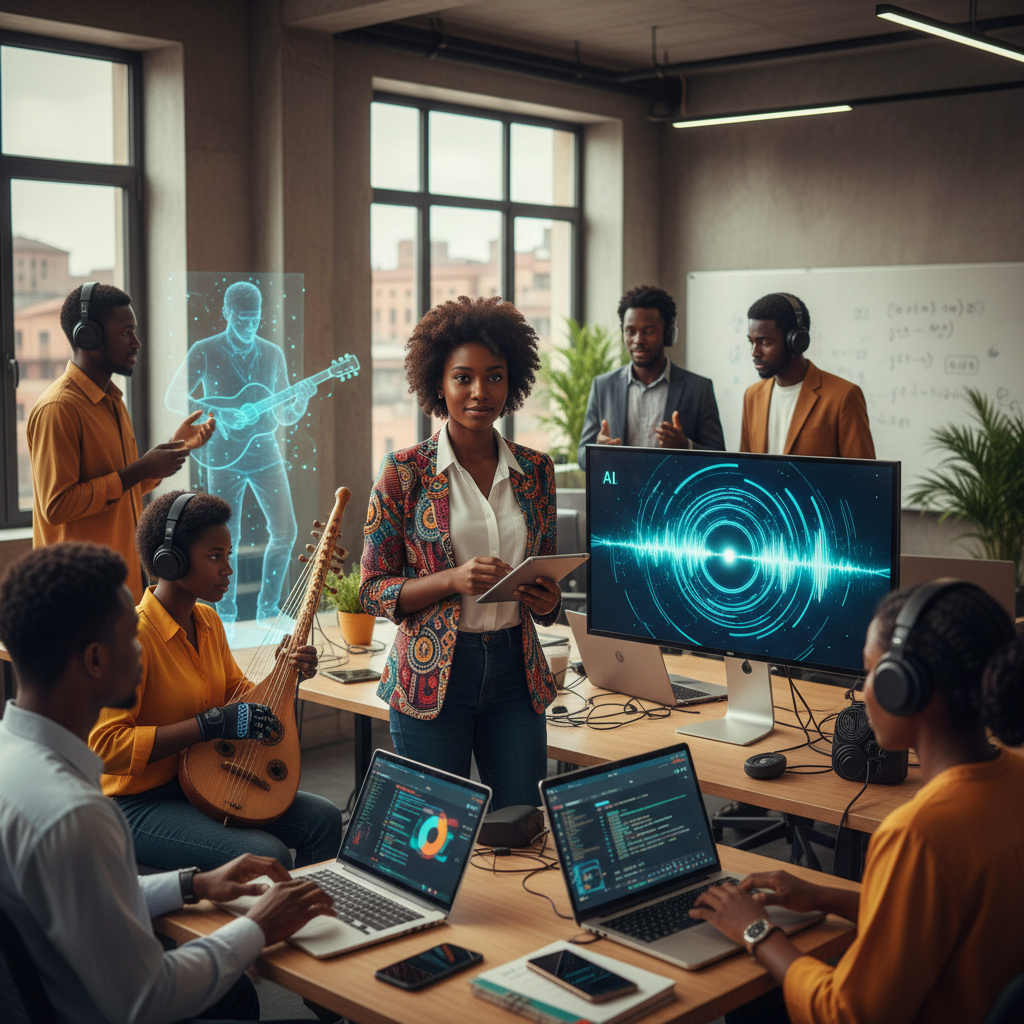
Mdundo's AI strategy centers on two primary areas: content recommendation and advertising optimization. On the content front, their algorithms analyze user listening habits, geographic location, and device type to personalize music recommendations. This is crucial in a market where data costs can be prohibitive, making efficient discovery paramount. By serving relevant music, Mdundo aims to increase engagement and, by extension, ad impressions and premium subscriptions. Their AI also plays a role in identifying trending artists and genres, feeding this data back to their artist relations teams to inform promotional strategies.
For monetization, Mdundo's AI optimizes ad placement and targeting. Given their freemium model, advertising revenue is a significant component of their business. The algorithms work to match advertisers with the most receptive audience segments, thereby maximizing ad effectiveness and, theoretically, artist payouts. They also use AI for fraud detection, a critical challenge in any large-scale digital content platform, ensuring that downloads and streams are legitimate. This is a complex undertaking, requiring sophisticated machine learning models to sift through millions of data points daily. According to a recent investor presentation, Mdundo reported a significant increase in ad revenue per user, attributing much of this efficiency to their improved AI models.
Market Opportunity: A Continent of Untapped Potential
The African music market is often cited as one of the fastest-growing globally. PwC's Entertainment and Media Outlook for 2023-2027 projects substantial growth across the continent, with music streaming leading the charge. Nigeria, South Africa, Kenya, and Ghana are particularly strong markets, but the potential extends far beyond these. With a young, tech-savvy population and increasing smartphone penetration, the addressable market for digital music platforms is enormous. Mdundo's focus on local content and accessible technology positions it well to capture a significant share of this growth.
However, the market is not without its complexities. Internet penetration, while growing, remains uneven. Data costs can still be a barrier, and the informal economy means that traditional credit card-based subscription models face significant hurdles. This is where Mdundo's localized approach, including partnerships with telecommunication companies for bundled data packages and mobile money integration, provides a distinct advantage. The opportunity lies not just in attracting new users, but in converting free users into paying subscribers, a challenge that AI-driven personalization and targeted promotions are designed to address.
Competitive Landscape: Battling Giants and Local Contenders
Mdundo operates in a fiercely competitive environment. Global behemoths like Spotify and Apple Music are making inroads into Africa, albeit with varying degrees of success in localization. Their vast catalogs and marketing budgets present a formidable challenge. However, their models are often less attuned to the specificities of African markets, such as the preference for direct downloads over pure streaming due to data costs, or the need for diverse local payment options. TechCrunch frequently reports on the struggles of global platforms to adapt to local nuances in emerging markets.
Regionally, Mdundo competes with other African-focused platforms, though few have achieved its scale. Boomplay, a Chinese-backed platform, is a significant player, particularly in West Africa, with a strong focus on local content and partnerships. Audiomack also has a substantial presence. The competitive edge for Mdundo, beyond its early mover advantage and localized strategy, increasingly rests on its ability to leverage AI to offer a superior, personalized experience and more efficient monetization for artists. The question is, as these platforms become more sophisticated, do they truly empower the artist, or do they create a new set of algorithmic gatekeepers?
What's Next: The Algorithmic Future and the Artist's Autonomy
Mdundo’s future trajectory appears to be deeply intertwined with its AI capabilities. The company has publicly stated its intention to further invest in machine learning for improved content recommendation, advertising technology, and even artist analytics, providing creators with deeper insights into their audience. This data, they argue, can help artists make more informed decisions about their music, tours, and promotional efforts. This is a compelling vision, offering artists tools that were once only available to those with major label backing.
However, I dug deeper and found something troubling. The increasing reliance on algorithms for discovery and monetization raises critical questions about artistic autonomy and cultural diversity. If AI-driven recommendations prioritize certain genres or artists based on past consumption patterns, could it inadvertently stifle emerging sounds or niche genres that do not fit neatly into algorithmic boxes? As Mr. Diallo, a cultural critic based in Conakry, often laments, “The algorithm, like the river Niger, flows where it will, but it does not always nourish every bank equally.” This sentiment resonates deeply. Who controls the algorithms that determine what music gets heard, and consequently, what music generates income? Will the algorithms become the new arbiters of taste, potentially homogenizing the rich tapestry of African music?
Furthermore, the transparency of AI-driven monetization remains a concern. Artists need clear, understandable metrics on how their work is being valued and how their earnings are calculated. As AI models become more complex, explaining these processes can become challenging, potentially eroding trust. The promise of AI is immense, offering unprecedented opportunities for efficiency and reach. Yet, as we navigate this new digital frontier, especially in a region like Guinea where digital literacy varies, we must remain vigilant. The goal should be to empower artists, not to inadvertently subject them to a new, opaque form of digital control. The true test of Mdundo's AI strategy will not just be its financial success, but its ability to genuinely uplift and diversify the voices of African music, ensuring that the algorithmic maestro serves the artist, rather than dictating their tune. The conversation around AI in the creator economy must always return to the fundamental question: who benefits, and at what cost to artistic freedom and cultural authenticity? Wired has explored similar concerns regarding AI's impact on creative industries globally, highlighting the need for ethical frameworks and transparent practices.