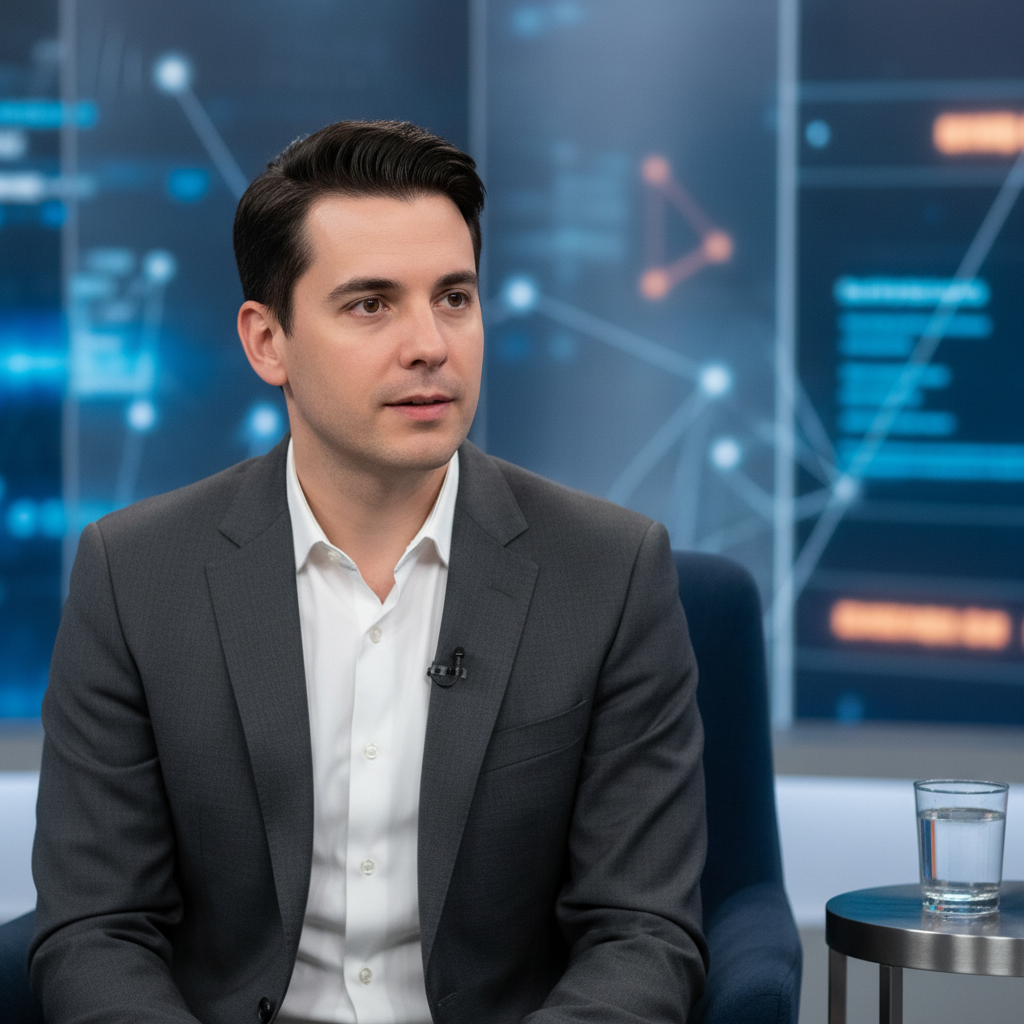

The global conversation around artificial general intelligence, or AGI, often feels like it is happening in a different universe, far removed from the daily realities of places like Fiji. Yet, the visionaries pushing these boundaries, people like Sam Altman of OpenAI, are shaping a future that will inevitably touch every corner of our planet, including our small island nations. His pursuit of AGI, coupled with OpenAI's contentious governance structure, demands a closer look, not just for the technical marvels but for the practical implications it holds for regions facing climate change and resource constraints.
In Fiji, we face the future with clear eyes. We are not just spectators to this technological revolution; we are potential beneficiaries, and also potential victims, if we do not understand its mechanisms and direct its application. The idea of AGI, a machine intelligence capable of performing any intellectual task that a human can, is both exhilarating and daunting. For developers, data scientists, and technical professionals, understanding the architectural blueprints and algorithmic ambitions behind this quest is paramount.
The Technical Challenge: Bridging the Gap to Human-Level Cognition
The core problem OpenAI and others are trying to solve is how to move beyond narrow AI, which excels at specific tasks like image recognition or language translation, to a generalized intelligence. This isn't just about scaling up existing large language models (LLMs). It involves fundamental breakthroughs in areas like reasoning, common sense, continuous learning, and multimodal understanding. The current state-of-the-art, exemplified by models like GPT-4 and its successors, are impressive pattern matchers, but they lack true understanding or the ability to generalize robustly across diverse, unseen tasks without explicit retraining.
OpenAI's approach, as gleaned from their research papers and public statements, centers on several key technical pillars. Firstly, they are pushing the limits of transformer architectures, scaling them to unprecedented sizes. Secondly, they are investing heavily in reinforcement learning from human feedback (rlhf) and related techniques to align these powerful models with human values and intentions. Thirdly, there is a clear focus on developing 'tool use' capabilities, allowing models to interact with external systems, APIs, and databases, effectively expanding their operational reach beyond pure text generation.
Architecture Overview: Beyond the Monolith
While specific AGI architectures remain proprietary and under wraps, the conceptual framework often involves a modular approach. Imagine a central 'reasoning engine' that orchestrates various specialized AI modules. This is not a single, monolithic neural network, but a sophisticated system of interconnected components, each potentially a large transformer model in itself, but designed to collaborate.
One proposed architecture involves a meta-learner that learns to compose and utilize other, more specialized models. This meta-learner could, for example, identify a complex problem, break it down into sub-problems, assign those sub-problems to appropriate expert models (e.g., a vision model for image analysis, a knowledge graph model for factual retrieval, a planning model for sequential tasks), and then synthesize their outputs. This hierarchical or compositional AI system aims to mimic how humans combine different cognitive abilities to solve novel problems.
"The sheer computational scale required for AGI development means we're talking about infrastructure that dwarfs even today's largest supercomputers," explains Dr. Ratu Meli Waqanibete, Head of Computer Science at the University of the South Pacific. "We're not just training models; we're building entire ecosystems for continuous learning and adaptation, often involving millions of GPUs and petabytes of data." This infrastructure, he notes, presents a significant barrier to entry for smaller players.
Key Algorithms and Approaches
Beyond the foundational transformer, current AGI research explores several advanced algorithmic directions:
- Self-Supervised Learning at Scale: Training models on vast, unlabeled datasets to learn rich representations of the world. OpenAI's success with GPT models is a testament to this. The next frontier involves multimodal self-supervision, learning from text, images, audio, and video simultaneously.
- Reinforcement Learning with Human Feedback (rlhf) 2.0: Moving beyond simple preference rankings to more nuanced feedback mechanisms, potentially involving active human-AI collaboration in problem-solving. This is crucial for alignment. Consider a conceptual algorithm:
 Function AGI_Alignment_Loop(model, human_feedback_system):
 While not aligned:
 Generate_Response(model)
 human_feedback = Get_Nuanced_Feedback(human_feedback_system, response)
 If human_feedback indicates misalignment:
 Update_Model_Parameters_Based_on_Feedback(model, human_feedback)
 Else if human_feedback indicates new knowledge:
 Integrate_New_Knowledge(model, human_feedback)
 Else:
 Continue # Model is performing acceptably
 Function AGI_Alignment_Loop(model, human_feedback_system):
 While not aligned:
 Generate_Response(model)
 human_feedback = Get_Nuanced_Feedback(human_feedback_system, response)
 If human_feedback indicates misalignment:
 Update_Model_Parameters_Based_on_Feedback(model, human_feedback)
 Else if human_feedback indicates new knowledge:
 Integrate_New_Knowledge(model, human_feedback)
 Else:
 Continue # Model is performing acceptably
- Constitutional AI: Pioneered by Anthropic, this approach uses AI to critique and revise its own outputs based on a set of principles, reducing reliance on direct human labeling for safety. OpenAI is exploring similar internal self-correction mechanisms.
- Generative World Models: Developing AI that can build internal, predictive models of its environment, allowing for planning, simulation, and understanding of cause and effect. This moves beyond mere pattern recognition to a deeper causal understanding.
Implementation Considerations and Trade-offs
Developing AGI is fraught with practical challenges. Computational cost is astronomical, demanding specialized hardware like NVIDIA's H100 GPUs. Data curation for multimodal learning is a monumental task. Model interpretability becomes even more critical as systems grow complex; understanding why an AGI makes a decision is vital for trust and safety. Scalability of training and inference, energy consumption, and ethical alignment are constant trade-offs. A model that is incredibly powerful but misaligned could be catastrophic.
"The energy footprint alone for training these next-gen models is staggering," says Mereoni Vakaloloma, a data center architect based in Suva. "For island nations like ours, where energy security is a constant concern, we have to ask if the benefits outweigh the environmental cost, or if we can even host such infrastructure sustainably. We need smart solutions, not just powerful ones." This highlights a critical challenge for regions with limited energy resources.
Benchmarks and Comparisons
Traditional benchmarks like Glue or SuperGLUE, designed for narrow AI tasks, are insufficient for AGI. New benchmarks are emerging, focusing on complex reasoning, multi-step problem-solving, and novel task generalization. OpenAI's own evaluations often involve highly challenging, open-ended tasks that require creativity and strategic thinking. Competitors like Google DeepMind with Gemini and Anthropic with Claude are also pushing these boundaries, often emphasizing different aspects like safety or multimodal integration.
Code-Level Insights and Real-World Use Cases
For those looking to engage with advanced AI, familiarity with frameworks like PyTorch and TensorFlow is essential. Libraries like Hugging Face Transformers provide access to state-of-the-art LLMs. For AGI-like capabilities, developers might explore agentic frameworks that allow models to chain actions and use tools. Consider using LangChain or AutoGen for orchestrating complex AI workflows, allowing models to interact with external APIs or databases. For instance, a GPT-powered agent could use a Python interpreter to run code, query a knowledge base, and then synthesize a report.
While true AGI is still aspirational, its precursors are already deployed. In Fiji, we see potential applications in:
- Climate Modeling and Prediction: Advanced AI can integrate vast datasets (satellite imagery, oceanographic data, weather patterns) to provide more accurate, localized climate predictions, crucial for disaster preparedness. The Fiji Meteorological Service could leverage models for more precise cyclone path forecasting.
- Sustainable Resource Management: AI-powered systems could optimize fishing quotas, monitor reef health, and manage agricultural yields, adapting to changing environmental conditions. Imagine an AI advising on optimal planting seasons based on real-time microclimate data.
- Healthcare Diagnostics: In remote areas, AGI could assist medical professionals by analyzing symptoms, accessing global medical knowledge, and suggesting diagnostic pathways, bridging gaps in specialized expertise. This could be transformative for rural health centers.
- Educational Personalization: Tailoring learning experiences to individual students, adapting content and pace, could address educational disparities across our scattered islands.
Gotchas and Pitfalls: Navigating the Unknown
Developing and deploying such powerful AI is not without peril. Bias amplification is a major concern; if training data reflects societal biases, the AGI will perpetuate them. Hallucinations or factual inaccuracies remain a challenge, especially in open-ended generation. Security vulnerabilities could allow malicious actors to exploit or manipulate these systems. And, of course, the existential risk of loss of control over a superintelligent system is a central part of the AGI debate.
OpenAI's governance structure, with its unique blend of a non-profit parent overseeing a capped-profit subsidiary, was ostensibly designed to mitigate some of these risks. The non-profit's mission is to ensure AGI benefits all of humanity, theoretically giving it veto power over commercial interests. However, the recent leadership turmoil and the opaque nature of its decision-making process have raised questions about its effectiveness and true independence. "The governance model is a noble experiment, but its practical implementation has shown cracks," notes Dr. Alanieta Naituku, a legal scholar specializing in AI ethics at the Pacific Community (SPC). "For small island nations, this opacity is worrying. We need transparency and accountability, especially when dealing with technologies that could reshape our very existence." This sentiment resonates deeply in a region where external forces have historically dictated terms.
Resources for Going Deeper
For those technically inclined, exploring the foundational papers on transformer networks and reinforcement learning is a good starting point. OpenAI's blog often provides detailed technical insights into their latest models and research directions OpenAI Blog. For broader discussions on AI safety and ethics, publications like MIT Technology Review offer excellent analysis. The arXiv pre-print server arXiv.org is a treasure trove of cutting-edge research. For practical implementation, delve into the documentation for PyTorch, TensorFlow, and libraries like Hugging Face. You might also find relevant discussions on how other Pacific nations are approaching AI in articles like The Reef's Guardian and Beijing's Code: Dr. Hinaarii Teihotaata on AI, Autonomy, and the Pacific's Digital Future [blocked].
Sam Altman's vision for AGI is ambitious, perhaps even audacious. OpenAI's governance is an attempt to grapple with the profound implications of that ambition. But for Fiji and other small island nations, the conversation must always circle back to practical application and ethical oversight. Small island, big challenges, smart solutions. We need AI that helps us adapt to rising sea levels, protect our marine resources, and empower our communities, not just theoretical intelligence that feels distant and uncontrollable. The Pacific way of problem-solving emphasizes community, sustainability, and foresight. These values must guide our engagement with AGI, ensuring that this powerful technology serves our real needs, rather than creating new vulnerabilities.