
Ah, the factory. For many, it conjures images of smoke stacks, repetitive tasks, and perhaps a faint whiff of oil and metal. It is a place of grit, of tangible production, far removed from the ethereal world of algorithms and data, or so one might think. But if you have been paying attention, especially here in Europe where we appreciate a good, solid piece of engineering, you would know that the factory floor is undergoing a metamorphosis, a digital awakening. And at the heart of this transformation, like a perfectly aged port wine, is Artificial Intelligence.
So, what exactly are we talking about when we speak of AI in manufacturing, encompassing predictive maintenance, quality control, and smart factories? In essence, it is about giving industrial operations a brain, or perhaps a very sophisticated nervous system, allowing machines and processes to observe, learn, anticipate, and adapt. It is the difference between a chef meticulously checking every ingredient by hand, and a smart kitchen system that knows, with uncanny accuracy, when the olive oil is running low or if the bread will be perfectly golden. It is not just automation; it is intelligent automation.
Why should you, a person who might be more concerned with the perfect pastel de nata than the inner workings of a car plant, care? Well, because these advancements touch everything. They mean fewer product recalls, safer workplaces, more efficient use of resources, and ultimately, better quality goods at potentially lower prices. Imagine your next smartphone, your car, or even the tiles on your bathroom wall. If they were made in a smart factory, they were likely produced with less waste, fewer defects, and a smaller carbon footprint. This is not just about big corporations saving money; it is about a ripple effect that benefits us all, from the consumer to the planet. It is about a more sustainable future, which, let us be honest, is something we all need to care about.
How did we get here, you ask? For decades, manufacturing has been a story of incremental improvements. Think of Henry Ford and his assembly line, a monumental leap in efficiency. Then came robotics, automating repetitive, dangerous tasks. But these were largely 'dumb' machines, following pre-programmed instructions. The real shift began with the advent of affordable sensors, the Internet of Things (IoT), and powerful computing. Suddenly, every machine could talk, generating torrents of data. The challenge was making sense of it all. This is where AI stepped in, transforming raw data into actionable insights. It is a journey from simple mechanization to complex cognition, from brute force to subtle intelligence.
How does it work in simple terms? Let us break it down. Imagine a traditional fishing boat. The captain knows the engine sounds a bit off, but he is not sure when it will fail. He might perform maintenance on a fixed schedule, whether it needs it or not, or wait until it breaks down, losing valuable fishing time. Now, imagine that boat with AI. Sensors on the engine constantly monitor vibrations, temperature, fuel consumption, and hundreds of other parameters. An AI model, trained on years of historical data from countless engines, recognizes subtle patterns that indicate an impending failure long before a human could. It tells the captain, 'Hey, that bearing will likely fail in three days. Order a new one and schedule maintenance for tomorrow afternoon.' This is predictive maintenance. It is about fixing things before they break, optimizing uptime, and saving a fortune in emergency repairs. It is like having a mechanic who can see into the future, or at least, into the near future with remarkable accuracy.
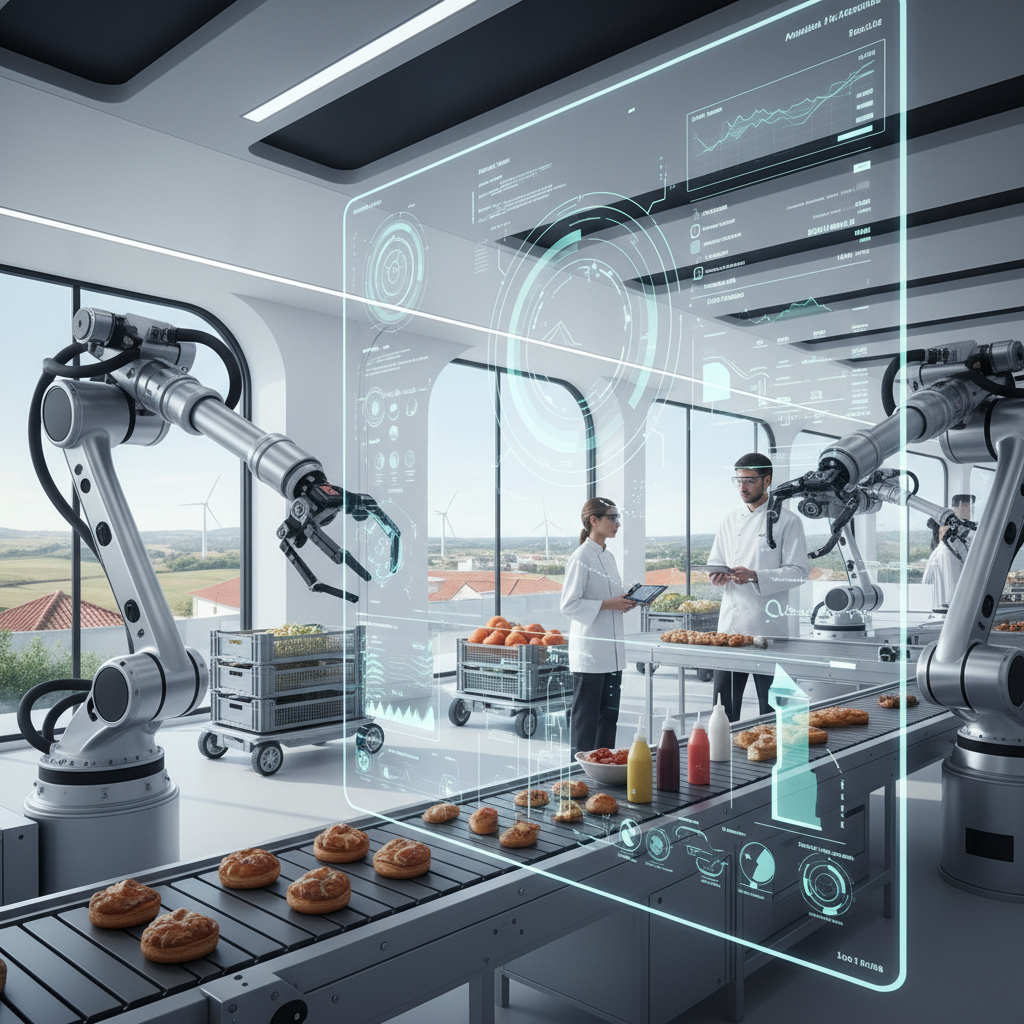
For quality control, think of a baker making a batch of traditional Portuguese bread, pão. A human baker might spot an irregularly shaped loaf or one that is not quite golden enough. But what if there are thousands of loaves? An AI-powered vision system, using high-resolution cameras and machine learning, can inspect every single loaf, identifying even minute imperfections that a human eye might miss, and doing it at lightning speed. It can ensure every pão meets the exact standard, consistency being the key to customer satisfaction. This is not just about rejecting bad products; it is about identifying the root cause of defects and adjusting the production process in real-time. It is quality assurance on steroids, ensuring that every product leaving the factory is as perfect as a freshly baked pão.
And what about the 'smart factory' itself? This is the grand orchestra where all these AI-powered instruments play in harmony. It is a factory where machines communicate with each other, where production lines dynamically adjust to demand fluctuations, where energy consumption is optimized, and where robots collaborate seamlessly with human workers. It is a factory that learns and evolves, constantly improving its own efficiency and output. It is not just a collection of smart machines; it is an intelligent ecosystem. MIT Technology Review has been covering the rise of these intelligent systems, noting how they are fundamentally reshaping industrial landscapes globally. It is truly fascinating to watch.
Let us look at some real-world examples. Siemens, a German industrial giant, has been a pioneer in this space, using AI to optimize its gas turbine production, predicting maintenance needs and improving efficiency. In the automotive sector, companies like BMW are deploying AI for quality inspection, using computer vision to detect tiny flaws in paintwork or assembly. Even here in Portugal, smaller manufacturers are beginning to embrace these technologies. I recently spoke with a textile company in Barcelos, a region known for its vibrant rooster tradition, that is using AI to monitor loom performance and predict potential breakdowns, ensuring continuous production. They told me it has reduced downtime by nearly 20 percent. This is how Portugal punches above its weight, even in traditional industries, by cleverly adopting new tech. Another example is in the food industry, where AI is used to monitor everything from crop health to food processing, ensuring safety and reducing waste. Companies like Bosch are integrating AI into their manufacturing processes, creating digital twins of their factories to simulate and optimize operations before they are even built. It is a profound shift.
Of course, there are common misconceptions. Some fear AI will lead to massive job losses. While some tasks will be automated, AI also creates new roles, requiring human oversight, data analysis, and system maintenance. It is less about replacing humans and more about augmenting human capabilities, freeing workers from dull, dirty, or dangerous tasks. Another misconception is that it is only for huge multinational corporations. While they certainly have the resources, the democratisation of AI tools means even small and medium-sized enterprises (SMEs) can now access these powerful technologies. The sardine can of European tech is actually a treasure chest, full of innovative SMEs ready to adopt these changes. Lastly, people often think AI is infallible. It is not. It is a tool, and like any tool, its effectiveness depends on the quality of data it is fed and the expertise of the people who design and manage it. It is a partnership, not a replacement.
What to watch for next? The continued integration of AI with robotics, leading to even more agile and autonomous manufacturing systems. The rise of explainable AI, making it easier for humans to understand why an AI model made a particular decision, crucial for trust and compliance. We will also see more edge AI, where processing happens directly on the factory floor, reducing latency and improving security. Furthermore, the push for sustainable manufacturing will accelerate, with AI playing a central role in optimizing energy consumption and reducing waste across the entire supply chain. Companies like NVIDIA, with their powerful GPUs, are enabling the computational muscle needed for these complex AI models, pushing the boundaries of what is possible in real-time analysis on the factory floor. The future of manufacturing will be less about brute force and more about intelligent design, constant learning, and seamless adaptation. It is a future where the factory is not just a place of production, but a living, breathing, intelligent entity, constantly striving for perfection, much like a Portuguese chef perfecting a bacalhau dish. And that, my friends, is something worth watching. For more insights into the broader applications of AI, you might find this article on AI in auditing [blocked] interesting, as it touches on how AI is impacting various enterprise functions.