
The internet, as we know it, is a sea of content. For decades, video has reigned supreme, with platforms like YouTube becoming digital empires built on human creativity and cat videos. But what happens when the creators are no longer human, or at least, not entirely? This is not some distant sci-fi fantasy; it is the immediate, chaotic reality of generative video AI, and everyone's wrong about this if they think it is just another filter.
What Exactly Is Generative Video AI?
At its core, generative video AI is a sophisticated computer program capable of producing moving images, from short clips to full-length features, based on simple text prompts, existing images, or even other videos. Think of it as a digital director, cinematographer, and editor all rolled into one, but instead of calling 'action' to human actors, it conjures entire scenes from pure data. Companies like Pika Labs, RunwayML, and OpenAI with its much-hyped Sora, are leading this charge. They are building the tools that allow anyone, from a seasoned filmmaker to a curious teenager in Gangnam, to generate complex visual narratives with unprecedented ease.
This technology leverages deep learning models, particularly variations of transformer architectures and diffusion models, which have been trained on vast datasets of video and image content. By learning patterns, styles, and movements, these AI systems can then invent entirely new sequences that often look indistinguishable from real footage. It is not just stitching together existing clips; it is synthesizing new pixels, new motion, and new worlds from scratch.
Why Should You Care?
Why should you, a discerning reader of DataGlobal Hub, care about this technological wizardry? Because it is not just about making cool videos. This technology is poised to dismantle and rebuild industries, redefine creative expression, and fundamentally alter how we consume information and entertainment. Imagine a world where every single advertisement is hyper-personalized, not just in its message but in its visual execution, generated on the fly for you. Imagine K-pop music videos, not just produced by massive entertainment agencies, but by individual fans creating their own elaborate narratives for their idols, or even generating new idols entirely. The implications are staggering.
For businesses, this means an explosion of content creation capabilities. Marketing campaigns that once took weeks and millions of won can now be iterated in hours for a fraction of the cost. For artists, it is a double-edged sword: a powerful new brush, but also a potential threat to traditional livelihoods. For consumers, it means an endless, personalized stream of visual content, raising questions about authenticity, deepfakes, and the very nature of reality. We are moving beyond a world of information overload to one of visual overload, where distinguishing the real from the AI-generated will become a daily challenge. Seoul has a different answer to many tech challenges, often focusing on hyper-connectivity and digital innovation, but even our city is not immune to these global shifts.
How Did It Develop?
The journey to generative video AI has been a rapid sprint, not a marathon. It builds upon decades of computer vision research and, more recently, the explosive advancements in generative AI for images and text. Early attempts at AI-generated video were crude, often producing glitchy, surreal, and frankly, terrifying results. Remember those early deepfakes that looked like something out of a horror movie? We have come a long way since then.
The real breakthrough came with the refinement of diffusion models, which learned to generate images by progressively denoising random pixel data. Companies like Google and Meta were early pioneers in applying these techniques to images. The leap to video, however, is significantly more complex, requiring the AI to maintain temporal consistency, meaning objects and actions must behave realistically across frames. This is where the likes of Pika Labs and RunwayML made significant strides, often starting with simpler tasks like style transfer or inpainting before tackling full video generation. OpenAI's Sora, unveiled in early 2024, shocked the world with its ability to generate high-fidelity, coherent video clips up to a minute long, showcasing a level of understanding of the physical world previously thought impossible for AI.
How Does It Work in Simple Terms?
Think of it like this: imagine you want to bake a cake. A traditional video editor is like a chef who meticulously selects ingredients, follows a recipe, and bakes the cake. Generative video AI is more like a magical oven that, when you tell it 'bake a chocolate cake with sprinkles and a cherry on top,' instantly conjures the perfect cake, without you ever touching flour or eggs. It has seen millions of cakes, understood their components, and can now invent new ones based on your description.
More technically, these AI models work by taking your text prompt, say, 'a fluffy white dog running through a field of cosmos flowers at sunset,' and translating it into a complex mathematical representation. Then, through a process of iterative refinement, often using a technique called 'diffusion,' it starts with a canvas of random noise and gradually sculpts it into a coherent video that matches your description. It is like an artist starting with a blurry sketch and slowly adding details until a masterpiece emerges, but doing it thousands of times per second across millions of pixels and frames. The AI learns not just what a dog looks like, but how it moves, how light behaves at sunset, and how cosmos flowers sway in the breeze, all from the vast ocean of data it has been trained on.
Real-World Examples
-
Marketing and Advertising: Small businesses can now create professional-grade video ads without hiring a production crew. Imagine a local Korean BBQ restaurant generating multiple versions of an ad, each tailored to a specific demographic, showcasing different dishes and atmospheres, all from a few text prompts. This is already happening, reducing costs and increasing personalization.
-
Entertainment and Media: Beyond the obvious of generating entire short films, generative video AI can create dynamic backgrounds for virtual sets, generate unique visual effects, or even produce personalized endings for interactive stories. Think of a web drama where viewers can choose different plotlines, and the AI generates the corresponding video sequences instantly. This could revolutionize the K-drama industry.
-
Education and Training: Explainer videos, simulations, and interactive learning modules can be created on demand. A medical student could request a video demonstrating a specific surgical procedure from multiple angles, or an engineering student could visualize complex mechanical processes in action. The possibilities for dynamic, visual learning are endless.
-
Gaming and Virtual Worlds: Imagine open-world games where NPCs (non-player characters) have dynamically generated backstories and their actions are rendered in real-time video, making every interaction unique. Or virtual reality environments that are not pre-rendered but generated on the fly, offering infinite exploration. This is the next frontier for companies like Nexon and NCSoft.
Common Misconceptions
One major misconception is that generative video AI will simply replace all human creatives overnight. While it will undoubtedly change the landscape, it is more likely to become a powerful tool for creatives, augmenting their abilities rather than erasing them. Just as Photoshop did not eliminate photographers, generative AI will empower artists to achieve more with less effort, focusing on conceptualization and direction rather than tedious execution.
Another myth is that it is easy to control these models perfectly. While they are incredibly powerful, achieving precise, nuanced control over every aspect of a generated video remains a significant challenge. Getting the AI to reliably produce a specific emotion on an AI-generated face, or to have a character perform a very particular, complex action, still requires significant prompting skill and often multiple attempts. It is not a magic wand, but a sophisticated instrument that requires learning to play.
Finally, some believe that the output will always be 'fake' or easily distinguishable. As models like Sora demonstrate, the fidelity is rapidly approaching photorealism. The line between real and synthetic is blurring, and soon, without clear indicators, it will be nearly impossible for the average person to tell the difference. This raises serious ethical questions about misinformation and deepfakes, issues that governments and tech companies are only beginning to grapple with.
What to Watch for Next
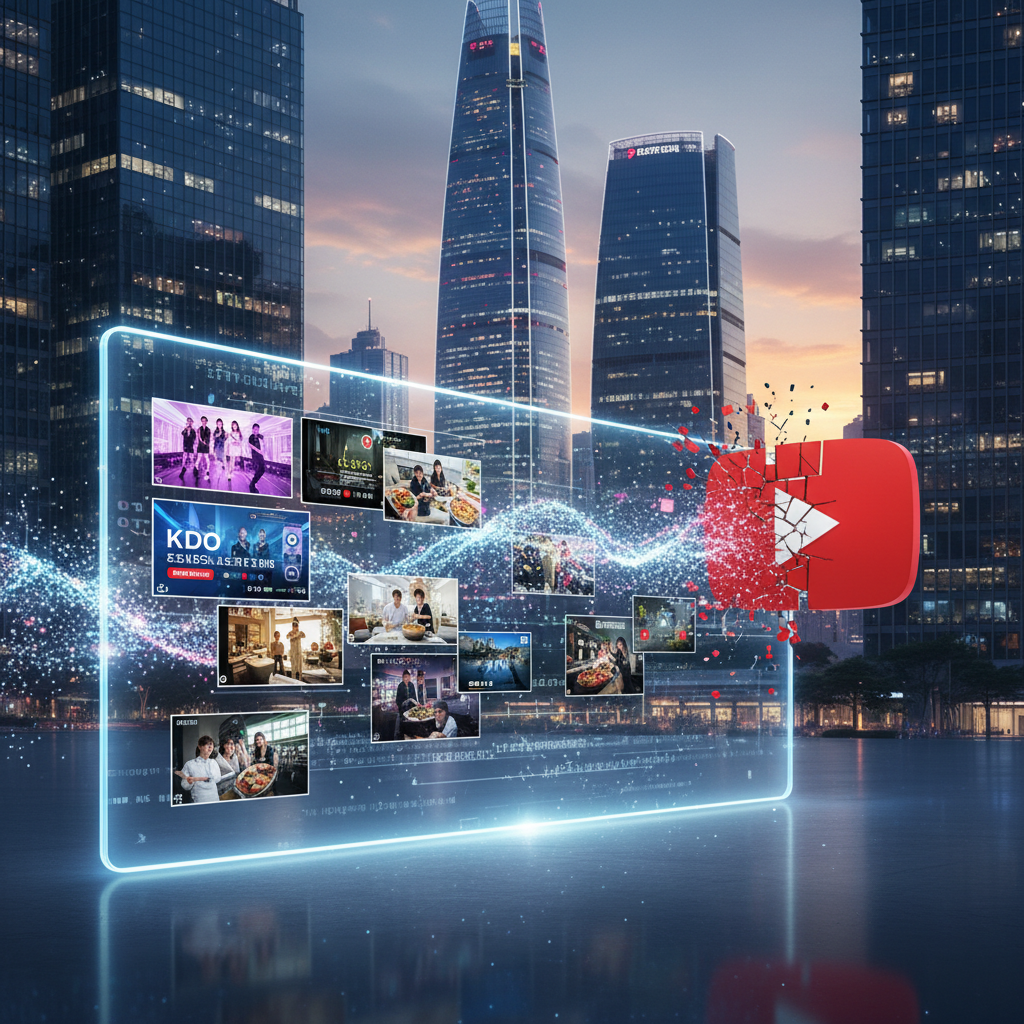
The race to build the 'YouTube of AI-generated video content' is heating up. Pika Labs, with its user-friendly interface and community focus, is making significant waves. RunwayML continues to push the boundaries of creative control. And then there is OpenAI, whose Sora model has set a new benchmark for quality and coherence. The next phase will involve several critical developments:
- Longer, More Coherent Videos: Current models are still limited in the length and narrative complexity they can consistently maintain. Expect to see rapid improvements here, moving from minute-long clips to multi-minute scenes and eventually, feature-length productions.
- Enhanced Control and Editability: Developers are working on giving users more granular control over camera angles, character emotions, specific actions, and environmental details. Imagine editing a generated video as easily as you edit text.
- Multimodal Integration: The ability to generate video from not just text, but also audio, music, and even biometric data, will unlock new creative possibilities. Imagine humming a tune and having the AI generate a music video to match.
- Ethical Frameworks and Watermarking: As the technology becomes more pervasive, the need for robust ethical guidelines, content moderation, and clear indicators for AI-generated content will become paramount. South Korea, with its strong regulatory environment and digital infrastructure, could play a leading role in developing these standards, as it often does for new technologies. MIT Technology Review often covers the ethical debates around these emerging technologies.
The future of video is not just about what we capture, but what we create. Generative video AI is not just a tool; it is a revolution in motion. It will challenge our perceptions, ignite new forms of creativity, and force us to confront what it means to be human in an increasingly synthetic world. Get ready for the ride; it is going to be exhilarating, terrifying, and utterly transformative. For more on the fast-paced world of AI startups, check out TechCrunch's AI section. The landscape is shifting faster than a K-pop dance break, and you do not want to miss a beat.