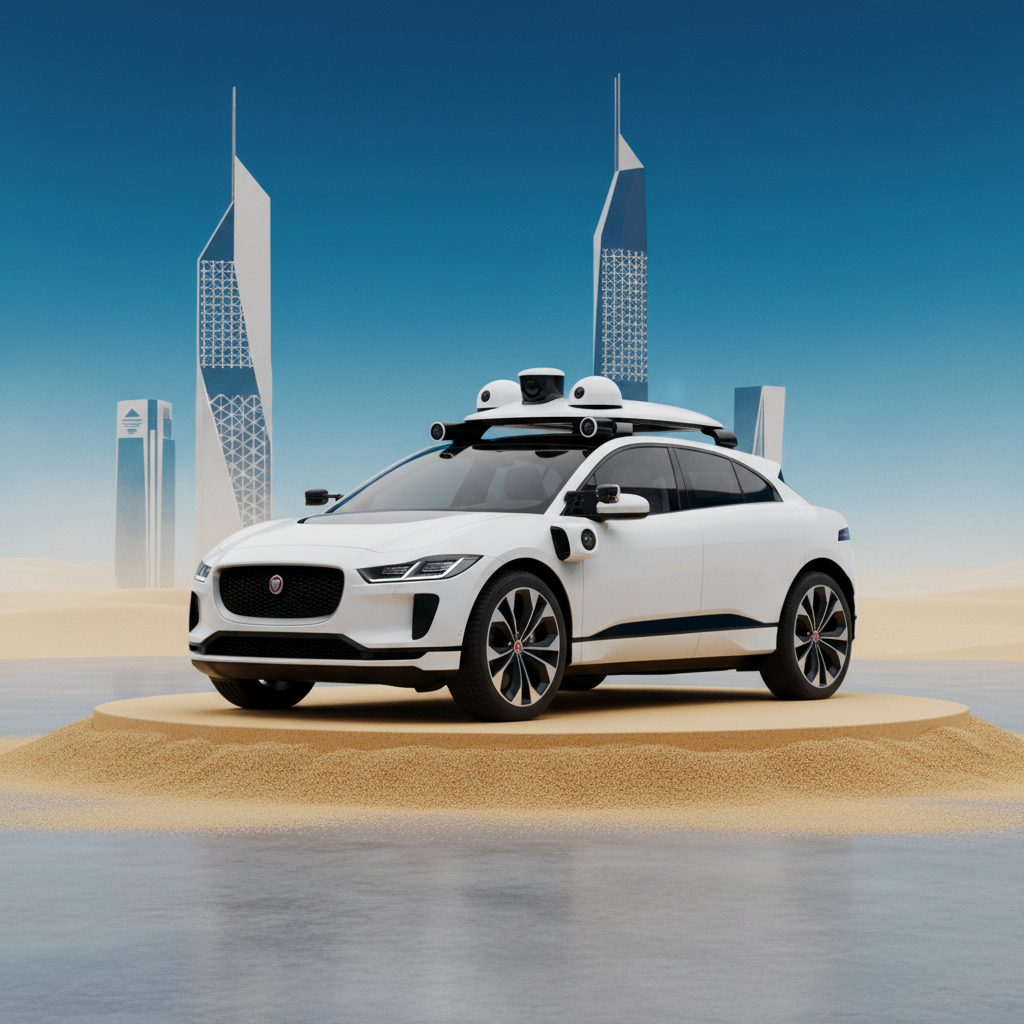
The promise of autonomous vehicles has long captivated the global imagination, a vision of seamless, driverless mobility. Google's Waymo, a pioneer in this domain, is now casting its gaze beyond its established American strongholds, signaling an intent for broader international expansion. This move naturally draws the attention of nations like Saudi Arabia, where ambitious urban development projects and a clear mandate for technological advancement create fertile ground for such innovations. However, the question remains: is Waymo truly ready for the specific challenges and high expectations of a market like ours, or is this merely another iteration of Silicon Valley's relentless optimism?
My first encounter with Waymo's service, albeit in a simulated environment replicating a future Saudi city, offered a glimpse into its operational philosophy. The user interface is intuitive, a testament to Google's design prowess. Booking a ride, selecting a destination, and monitoring the journey felt as straightforward as using any ride-hailing application. The vehicle itself, a modified electric SUV, presented a clean, minimalist interior, devoid of the usual clutter one might associate with a human-driven taxi. The absence of a driver, of course, is the defining feature, and it immediately sets a different tone for the travel experience. There is a certain novelty, even a quiet apprehension, that accompanies the initial moments of a truly autonomous journey.
Key Features Deep Dive: Precision, Perception, and Policy
Waymo's core strength lies in its advanced perception system, which integrates Lidar, radar, and high-resolution cameras to create a 360-degree, real-time understanding of its surroundings. This sensor suite, coupled with sophisticated AI algorithms, allows the vehicles to detect pedestrians, other vehicles, cyclists, and even smaller objects with remarkable accuracy. This is not merely about identifying obstacles, it is about predicting their movements and making split-second decisions. The system's redundancy is also a critical aspect, ensuring that multiple sensors can corroborate data, enhancing safety and reliability. For a nation investing heavily in smart infrastructure, this level of data-driven environmental awareness is compelling.
The navigation stack is equally impressive, leveraging Google Maps' extensive data alongside Waymo's proprietary high-definition maps. These maps are meticulously detailed, capturing lane markings, traffic signs, and even curb heights with centimeter-level precision. This granular data is crucial for autonomous operation, allowing the vehicle to plan its route and execute maneuvers with confidence. The ability to handle complex intersections, merge into traffic, and navigate construction zones, all without human intervention, is a testament to years of dedicated engineering and billions of kilometers of real-world and simulated driving data. As Reuters recently reported, the sheer volume of data Waymo processes daily is staggering.
Furthermore, Waymo's fleet management system is a sophisticated orchestration of logistics. It handles vehicle dispatch, charging, maintenance, and even dynamic re-routing based on real-time traffic conditions. This centralized control is vital for scaling an autonomous taxi service, ensuring optimal vehicle utilization and service availability. The Kingdom's Vision 2030 demands results, not promises, and a robust, scalable operational backbone is non-negotiable for any technology seeking to integrate into our future cities.
What Works Brilliantly: Safety and Efficiency on Controlled Roads
Where Waymo truly shines is in its demonstrated safety record within its operational design domain, primarily in well-mapped, predictable urban environments. Data from their operations in Phoenix and San Francisco consistently shows lower accident rates compared to human-driven vehicles, particularly in preventing collisions caused by driver error. This statistical advantage is a powerful argument, especially for regions prioritizing road safety and reducing human casualties. The system's unwavering adherence to traffic laws and its methodical driving style contribute significantly to this safety profile. For cities like Neom, designed from the ground up for smart mobility, such predictable and data-driven operation is highly desirable.
The efficiency gains are also notable. Optimized routing, reduced idling times, and the potential for higher vehicle utilization rates could translate into significant operational cost savings over time. This efficiency extends beyond just the vehicle itself, impacting urban planning by potentially reducing the need for extensive parking infrastructure in dense areas. The concept of 'oil money meets machine learning' is not merely a slogan here, it is a strategic imperative to diversify and optimize our national assets through technological adoption.
What Falls Short: The Nuances of Unpredictability and Cultural Integration
Despite its technical prowess, Waymo's current iteration still faces considerable limitations, particularly when considering its application in diverse global cities. The system struggles with truly novel, unpredictable scenarios that are common outside of its meticulously mapped and controlled operational areas. Unforeseen construction, erratic pedestrian behavior common in bustling souqs, or even the unique driving styles prevalent in some regions can present significant challenges. The system, by design, prioritizes safety above all else, which often translates into overly cautious driving, sometimes to the point of being disruptive in fluid traffic conditions. This conservative approach, while understandable, can hinder efficiency in dynamic urban settings.
Another significant hurdle is the regulatory and legal framework. The absence of a human driver introduces complex questions of liability, insurance, and public acceptance. While countries like Saudi Arabia are proactive in developing regulatory sandboxes for emerging technologies, the path to widespread deployment requires robust legal clarity and public trust. Furthermore, the reliance on high-definition maps means that expansion into new, unmapped territories is a slow and resource-intensive process. Building out this infrastructure for every street in every new city is a monumental undertaking, and the cost implications are substantial.
From a cultural perspective, the transition to driverless vehicles may encounter resistance. For many, driving is not merely transportation, it is a social activity, a symbol of independence, or even a profession. The displacement of human drivers, while potentially leading to new job creation in maintenance and oversight, is a socioeconomic consideration that cannot be overlooked. As one senior official from the Saudi Public Transport Authority, Dr. Fahad Al-Qahtani, commented to me, "Our focus is on enhancing the quality of life for our citizens, and that includes ensuring new technologies are integrated thoughtfully, considering both economic impact and societal acceptance. This is not just about technology, it is about people."
Comparison to Alternatives: Tesla, Cruise, and Local Initiatives
When evaluating Waymo, it is essential to consider its competitors. Tesla's Full Self-Driving (FSD) system, while widely available to consumers, operates on a fundamentally different approach. Tesla relies heavily on camera-only vision and end-to-end neural networks, aiming for a more generalized AI solution that learns from vast amounts of data. While impressive in its ambition, FSD is currently a driver-assist system requiring constant human supervision, not a fully autonomous taxi service. Its unpredictable behavior and occasional errors make it unsuitable for unmonitored commercial deployment in its current form. As Professor Aisha Al-Mansoori, an AI ethics researcher at King Abdullah University of Science and Technology, noted, "The distinction between Level 2 driver assistance and true Level 4 autonomy is critical. Waymo, despite its limitations, operates within a defined safety envelope for Level 4, while Tesla's FSD is still evolving in a less constrained, and arguably riskier, public beta."
General Motors' Cruise, another significant player, shares Waymo's strategy of deploying fully autonomous robotaxis in geofenced areas. Cruise has faced its own set of challenges, including recent incidents that led to temporary suspension of its operations in some cities, highlighting the fragility of public trust and the stringent demands of regulatory bodies. These setbacks underscore that even with significant investment and advanced technology, the path to widespread autonomous deployment is fraught with complexities. The desert is blooming with data centers, but the regulatory landscape for autonomous vehicles is still very much under construction.
Locally, Saudi Arabia is also exploring its own initiatives and partnerships. The Saudi Company for Artificial Intelligence (scai) and various entities involved in Neom are actively engaging with global leaders and fostering local talent to develop bespoke solutions. While not directly competing with Waymo's current offerings, these initiatives represent a strategic long-term vision to cultivate indigenous capabilities and ensure technological sovereignty. "We are not merely consumers of technology, we are partners in its development," stated Eng. Khalid bin Abdullah, CEO of Scai. "Our investments are geared towards creating a vibrant AI ecosystem that addresses our unique needs and contributes to global innovation."
Verdict: A Promising Foundation, But Prudence is Paramount
Google's Waymo represents a pinnacle of current autonomous driving technology. Its safety record in controlled environments and its sophisticated perception and navigation systems are undeniable strengths. For specific, well-defined applications within Saudi Arabia's upcoming smart cities, particularly in areas like Neom or the King Abdullah Financial District, Waymo could offer a valuable, efficient, and safe mobility solution. Its data-driven approach aligns well with our national strategy for digital transformation.
However, it is crucial to approach its global expansion with a pragmatic lens. The challenges of adapting to diverse driving cultures, navigating complex regulatory landscapes, and managing public perception are substantial. Waymo is not a universal panacea for urban mobility, nor is it a plug-and-play solution for every city. Its deployment will require careful consideration, phased implementation, and continuous adaptation. For Saudi Arabia, the potential benefits are significant, but they must be weighed against the practicalities of integration and the need for solutions that are truly robust and culturally resonant. The journey towards fully autonomous mobility is a marathon, not a sprint, and while Waymo has made impressive strides, the finish line is still some distance away, particularly when considering the diverse terrains of global cities. The Kingdom will continue to observe, evaluate, and invest, ensuring that any adopted technology serves our strategic objectives and the well-being of our people. For more insights into AI's impact on urban development, one might consult articles on MIT Technology Review.
Ultimately, Waymo offers a glimpse into a future of transportation that is safer and more efficient, but its path to widespread adoption, especially in new and challenging markets, demands a level of scrutiny that goes beyond the initial hype. It is a powerful tool, but like any sophisticated instrument, its true value is realized only when wielded with precision and an understanding of its inherent limitations.