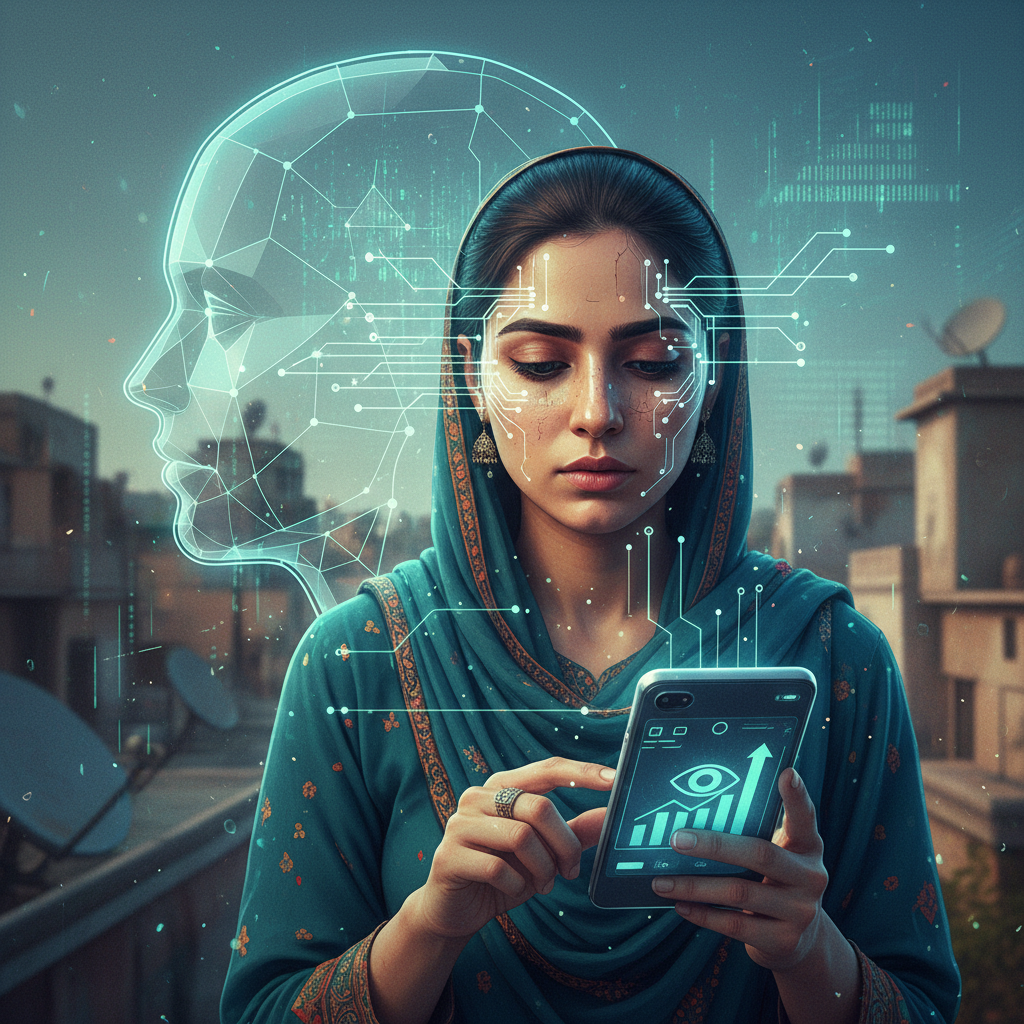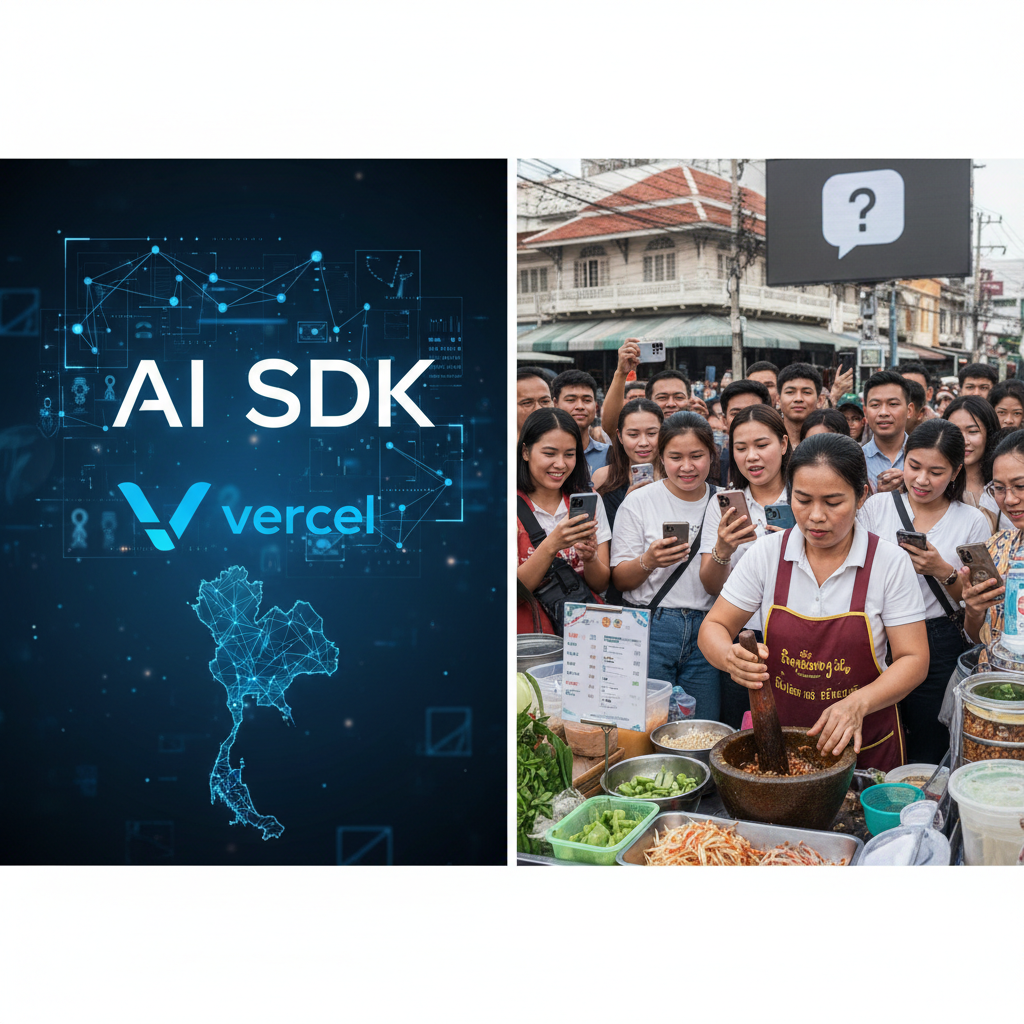

The internet, bless its digital heart, has always been a bit like a bustling Bangkok market. Full of noise, full of choices, and sometimes, full of things you never knew you needed until you saw them. Now, Vercel, the company that makes web development feel almost as easy as ordering pad krapow gai, has thrown a new ingredient into the mix: the AI SDK. It is a fancy way of saying they want to make it ridiculously simple for developers to bake AI directly into their websites, turning every static page into a chatty, intelligent entity.
And let me tell you, the tech world is buzzing like a beehive after a sugar rush. The big bet here, the one Vercel is laying down serious chips on, is that soon, every single website will have an AI layer. Not just a chatbot in the corner, mind you, but an embedded intelligence that understands context, anticipates needs, and perhaps even helps you decide if that new pair of elephant pants will truly suit your next beach holiday. It is a bold vision, one that suggests our digital interactions are about to get a whole lot more conversational, and dare I say, personal.
For us here in Thailand, this isn't just some abstract Silicon Valley daydream. We are a country that loves to communicate, to connect, and to find the most efficient way to get things done, especially if it involves food delivery. The Land of Smiles has a new expression because it's called 'disruption,' and AI is certainly bringing it. We have seen how quickly QR codes became ubiquitous, how mobile payments became second nature, and how Line became more than just a messaging app, it is practically a way of life. So, the idea of every website having an AI brain? It is not as far-fetched as it might sound.
Consider the tourism sector, a cornerstone of our economy. Imagine a small guesthouse in Chiang Mai. Instead of a static 'About Us' page, a Vercel-powered AI could chat with potential guests in real time, answering questions about local attractions, suggesting activities based on their preferences, and even helping them book a cooking class for khao soi. This is not just customer service, it is hyper-personalized hospitality, Thai-style innovation at its best. According to a recent report by Reuters, global investment in AI-driven customer experience solutions is projected to reach over $30 billion by 2028, a significant jump from current figures. Thailand, with its service-oriented economy, stands to gain immensely.
But let us not get ahead of ourselves. There are always two sides to a moo ping skewer. While the potential is enormous, the practicalities in a market like Thailand are, shall we say, sanuk (fun) to navigate. Language, for one. While English is widely spoken in tourist areas, the vast majority of online interactions for local businesses are in Thai. The AI models need to be robust in Thai, understand our nuances, our slang, and our cultural context. A literal translation often falls flatter than a roti without condensed milk.
Dr. Prapasiri Pornprasert, a leading AI ethicist at Chulalongkorn University, shared her thoughts with me over a strong cup of oliang. "The Vercel AI SDK offers incredible power to developers, but with great power comes great responsibility, especially in a culturally rich nation like ours," she said. "We must ensure these AI layers are trained on diverse, representative Thai data, not just generic global datasets. Otherwise, we risk alienating users or, worse, perpetuating biases. The 'Thai-ness' of the AI will be crucial for adoption." Her point is well taken. We have seen how algorithms can misinterpret cultural cues, and that is something we absolutely want to avoid when our digital storefronts start talking.
Then there is the sheer volume of small and medium-sized enterprises (SMEs) that make up the backbone of our economy. Will a small noodle shop owner in Phitsanulok really have the time or technical know-how to integrate an AI SDK into their website? Vercel's promise is simplicity, but simplicity for a developer is not always simplicity for a small business owner who is juggling orders and trying to find good nam pla. The ecosystem of web developers and agencies in Thailand will need to adapt quickly to offer these services at an affordable price point.
However, the tech giants are certainly making it easier. OpenAI, with its ever-evolving GPT models, and Google, with its Gemini family, are pushing the boundaries of what these AI systems can do. The tools Vercel is providing essentially act as a bridge, allowing developers to tap into these powerful models with less friction. It is like giving every chef in the market access to a high-tech blender, even if they are still using traditional recipes. The results can be surprisingly delicious.
Consider the creative economy. Artists, designers, and artisans, many of whom operate online, could use AI to help customers visualize custom orders, answer questions about their craft, or even generate new design ideas. It is an exciting prospect for a country known for its artistic flair. "We are already seeing Thai startups experimenting with generative AI for fashion design and digital art," noted Mr. Chatchai Panyarachun, CEO of a Bangkok-based e-commerce platform. "Vercel's SDK could democratize this further, allowing even solo creators to leverage advanced AI without needing a team of engineers." This kind of empowerment could unlock a new wave of digital entrepreneurship. You can find more insights on such developments on TechCrunch.
Of course, the elephant in the room, or perhaps the tuk-tuk on the soi, is data privacy. When every website becomes a conversational partner, it means more data is being exchanged. Thai users are increasingly aware of their digital rights, and any widespread adoption of AI layers will need to come with clear, transparent policies about how personal data is collected, used, and protected. Trust is paramount, especially when you are asking a digital entity to understand your preferences for tom yum goong.
Only in Bangkok, where tradition meets relentless innovation, can you truly appreciate the duality of this tech shift. We are a nation that reveres ancient temples and embraces the latest smartphone with equal enthusiasm. Vercel’s AI SDK is not just a technical offering, it is an invitation to redefine how we interact with the digital world. Will every website become an intelligent agent? Perhaps. But for it to truly resonate here, it needs to understand the rhythm of our lives, the warmth of our hospitality, and maybe, just maybe, how to recommend the perfect street food vendor. If it can do that, then it is not just an AI layer, it is a digital sanook experience, and that, my friends, is something we can all get behind.