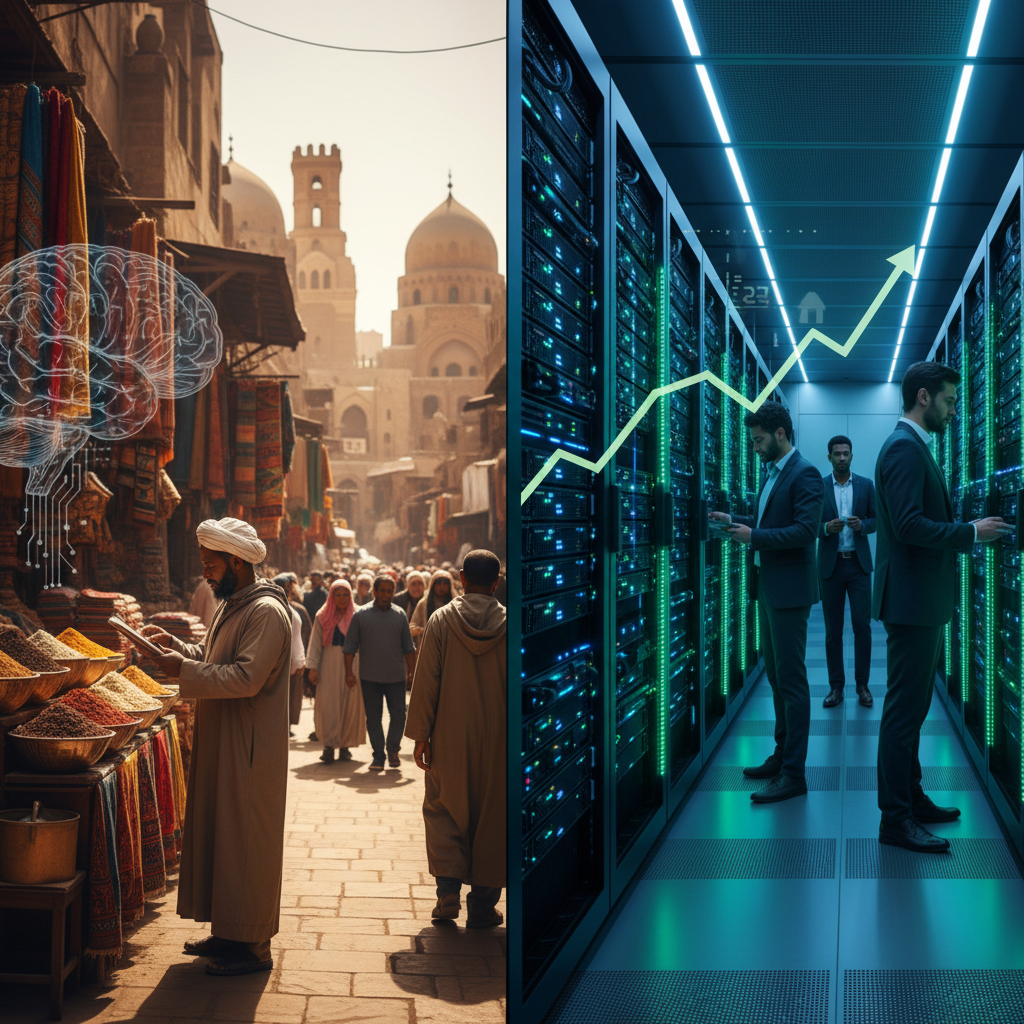

Let me tell you, the air in Harare is buzzing, not just with the usual street vendors and the distant thrum of kombis, but with a quiet anticipation for what this AI revolution truly means for us. We see the big tech players, the Googles, the Metas, the OpenAIs, all racing to gobble up data, to build bigger, faster, more 'intelligent' systems. It's a gold rush, but the gold they're digging for is often our personal information, our digital footprints, our very thoughts. And then there's Apple, doing what Apple does: marching to the beat of its own drum, or rather, the quiet hum of privacy.
Tim Cook and his team are making a very deliberate bet, and I'm calling it now: this privacy-first approach to AI isn't just a marketing slogan; it's a fundamental shift that could reshape the entire industry for the next two decades. While others are training their gargantuan models on the entire internet, Apple is focusing on on-device processing, federated learning, and a commitment to keeping your data, well, yours. They're not just talking the talk; they're walking it, with features like Private Compute Cloud and differential privacy techniques that are designed to ensure your personal queries and interactions stay local, or are anonymized beyond recognition when they do touch the cloud.
This isn't some abstract Silicon Valley debate for us. In places like Zimbabwe, where digital literacy is growing rapidly but trust in large, often opaque, foreign tech entities can be fragile, Apple's stance resonates deeply. We've seen how data can be misused, how information can be weaponized, how digital footprints can become chains. The idea that my phone, my device, can process my AI requests without sending my deepest thoughts to a server farm halfway across the world, that's powerful. It's about sovereignty, not just for nations, but for individuals.
Consider the implications for creative AI, a topic close to my heart. Imagine an artist in Mbare, using AI tools on their iPhone to generate intricate Shona patterns for a digital textile design. If that AI is processing their unique artistic style and cultural references locally, without sending it off to a central server that might then use it to train a generic model for someone else, that's preservation. That's empowerment. It means our cultural heritage, our unique expressions, remain ours. As Wired often highlights, the cultural impact of AI is immense, and privacy plays a critical role in who benefits from that impact.
Now, I know what some of you are thinking. "Zinhlée, that's naive. Apple is still a massive corporation. They're just doing this for market differentiation, to sell more expensive phones." And yes, there's always a commercial angle. Of course, Apple wants to sell more devices. Their business model has always been about selling premium hardware and services, not about monetizing user data in the same way Google or Meta do. That fundamental difference in their revenue model gives them a unique incentive to prioritize privacy. It's not altruism, perhaps, but it aligns their profit motive with user benefit in a way that is rare in the current AI landscape.
Others might argue that on-device AI is inherently less powerful, less capable than cloud-based behemoths. They'll point to the sheer scale of models like OpenAI's GPT-4 or Google's Gemini, trained on trillions of parameters, requiring massive data centers. And they're not wrong about the current state of play. Apple's on-device models, while impressive, might not always match the raw generative power of their cloud-based counterparts for every single task. However, the gap is closing rapidly. With advancements in neural engines and efficient model architectures, what seemed impossible on a phone just a few years ago is now commonplace. The trade-off between raw power and privacy is becoming less stark, and for many, the privacy advantage far outweighs a marginal difference in output quality.
This isn't just about protecting secrets; it's about fostering trust. When users know their interactions are private, they are more likely to engage more deeply, to experiment, to integrate AI into their daily lives in meaningful ways. This trust is the bedrock upon which truly transformative AI experiences will be built. Without it, we risk a future where people are hesitant to use AI for anything truly personal or sensitive, limiting its potential.
Consider the words of Apple CEO Tim Cook himself, who has consistently championed privacy. He once stated, "Privacy is a fundamental human right." This isn't just rhetoric; it's a guiding principle that has shaped Apple's product development for years, and it's now front and center in their AI strategy. This commitment, while sometimes criticized for creating a more closed ecosystem, offers a sanctuary in a data-hungry world. It's a stark contrast to the 'move fast and break things' mentality that has often characterized the tech industry, a mentality that has too often broken user trust along the way. For more on the industry's broader movements, TechCrunch provides excellent daily coverage.
My hope is that Apple's approach will force other industry players to rethink their strategies. If a significant portion of the market starts demanding privacy-preserving AI, then the tide will turn. It could lead to a future where AI is not just powerful, but also respectful, where innovation doesn't come at the cost of personal autonomy. This is crucial for emerging economies like ours, where we are often the testing grounds for technologies developed elsewhere. We need to ensure that the tools we adopt are built with our interests, our rights, and our cultural nuances in mind.
Watch this space. The future is African, and a future where our digital lives are private, secure, and empowering is one we are actively building. Apple's privacy-first AI might just be one of the unexpected catalysts for that future, a quiet revolution starting from the very device in your hand. It's a vision that, frankly, excites me more than any grand, centralized AI ever could. It's about making AI work for us, not the other way around. For more on how AI is impacting various regions, you might find this article on AI in Latin America [blocked] insightful, as it touches on similar themes of local impact and adaptation. The conversation about AI's ethical implications, especially regarding data and privacy, is a global one, and Apple's move is a significant chapter in that ongoing story. We need to keep pushing for AI that respects our humanity, not just our data points.