The morning sun in Dar es Salaam hits different, you know? It's not just light, it's energy, a promise of a day filled with the familiar cacophony of dala-dalas, street vendors, and the vibrant chatter of Swahili. But lately, amidst this beautiful chaos, there's a new kind of buzz, a digital hum emanating from unexpected corners. It's the sound of AI, not just arriving, but speaking our language. And I'm not talking about some half-baked Google Translate job. I'm talking about SwahiliGPT.
Now, if you've been following the tech circus, you've heard of Cohere, right? They're one of the big dogs in the enterprise large language model (LLM) space, battling it out with the likes of OpenAI and Anthropic for corporate dollars. Their pitch is simple: powerful AI that understands your business data, helps automate tasks, and generally makes life easier for the suits. But here’s the rub, my friends: how much of that enterprise AI actually speaks, truly understands, and reflects the nuances of a market like Tanzania, or Kenya, or Rwanda? Not much, until now.
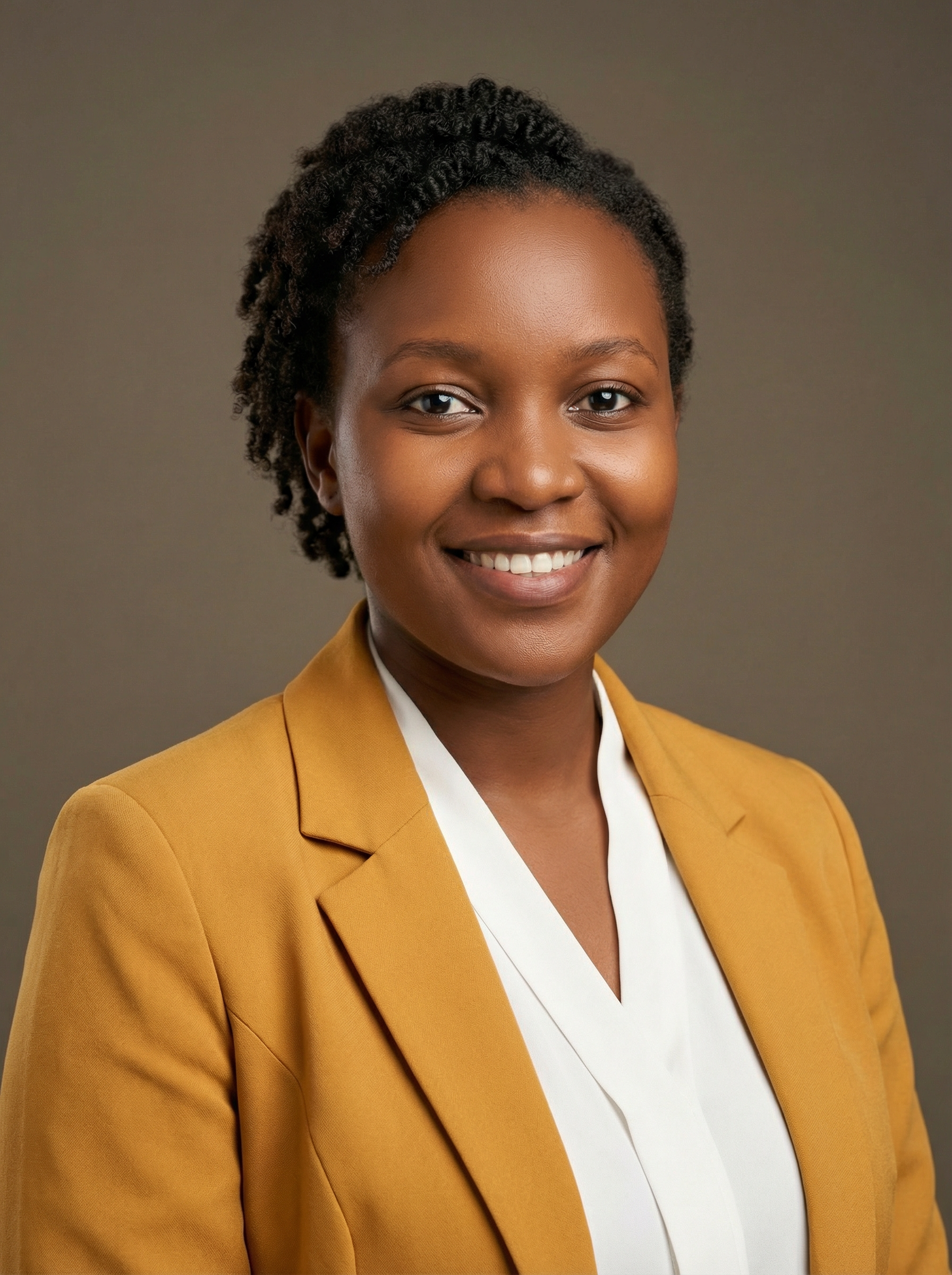
Enter Zawadi Mchunga, a name that means 'gift' in Swahili, and truly, she is one to our tech landscape. I met her in a surprisingly quiet co-working space just off Samora Avenue, a stark contrast to the lively street outside. Zawadi, a former data scientist who cut her teeth in Nairobi's burgeoning tech scene, has a glint in her eye that tells you she's seen things, understood things, that others haven't. Her 'aha moment' wasn't in a gleaming Silicon Valley lab, but in a dusty government office in Dodoma. She was consulting on a project to digitize citizen feedback, and the sheer volume of unstructured data, much of it in Swahili, was overwhelming. Existing AI tools, even the 'enterprise-grade' ones, choked on the colloquialisms, the regional dialects, the uniquely East African turns of phrase. They were trying to fit a square peg into a round, very African, hole.
“It was infuriating, frankly,” Zawadi told me, sipping her strong Tanzanian coffee. “These global models, they’re brilliant for English, for French, for German. But for Swahili, they were like a mzungu trying to haggle at Kariakoo Market without knowing a single word of our language. They got the gist, maybe, but missed the soul, the context. And in enterprise, context is everything.” She saw the gaping chasm between the global AI giants and the local reality. That's when the seed for SwahiliGPT was planted, a startup determined to build an LLM that was not just for Swahili speakers, but built by them, from the ground up.
The problem they're solving is deceptively simple: language. But it's more than just translation. It's about cultural understanding, local data sovereignty, and unlocking economic potential. Imagine a bank in Dar es Salaam trying to automate customer service using an LLM trained predominantly on English data. It would be a disaster, a comedy of errors, or worse, a source of deep frustration for customers. SwahiliGPT is building models that understand the specific financial jargon used in Tanzanian banking, the common queries, even the polite forms of address that are crucial in our culture. They are creating a bridge between the global power of LLMs and the local specificity of our markets.
Their technology isn't reinventing the transformer architecture, no need to. Instead, they're focused on meticulous, culturally sensitive data curation and fine-tuning. They've assembled a team of linguists, data scientists, and cultural experts from across East Africa. They're sourcing massive datasets of Swahili text, not just from news articles, but from government documents, local literature, social media, and even transcribed oral histories. This rich, diverse dataset is then used to train and fine-tune open-source LLMs, making them uniquely proficient in Swahili. They're also developing proprietary embeddings that capture the semantic nuances of the language far better than generic multilingual models. “We’re not just translating words,” Zawadi explained, “we’re translating meaning, intent, and culture. That’s the secret sauce.”
The market opportunity here, my friends, is colossal. East Africa is a region of over 170 million people, with Swahili as a lingua franca for many. Businesses, governments, and NGOs are all grappling with vast amounts of data, much of it in local languages. From automating customer support for telecom giants like Vodacom Tanzania to streamlining bureaucratic processes in government ministries, the applications are endless. According to a recent report by Reuters, the African AI market is projected to grow significantly, with a particular demand for localized solutions. SwahiliGPT is positioning itself as the go-to provider for any enterprise operating in a Swahili-speaking environment that wants to leverage the power of LLMs without losing local context. They are targeting sectors like finance, healthcare, education, and public administration, all of which are ripe for AI-driven efficiency gains.
The competitive landscape is interesting. On one hand, you have the global behemoths like Cohere, OpenAI, and Google with their massive resources. They offer powerful, general-purpose LLMs, but their Swahili capabilities are often an afterthought, a multilingual layer rather than a native understanding. On the other hand, there are smaller, local players, but few have the technical depth and strategic vision of SwahiliGPT. Zawadi’s team isn't trying to out-compute Google; they're out-localizing them. Their competitive edge lies in their deep cultural understanding and their specialized, high-quality Swahili datasets. They’re also exploring partnerships, not just competition. Imagine Cohere, with its enterprise-grade infrastructure, integrating SwahiliGPT’s localized models. That’s a win-win, isn’t it?
“The big players, they’re starting to notice, you know,” Zawadi said with a wry smile. “They see the numbers, the sheer size of the market they’re missing out on. We’re not just a niche; we’re the gateway to a continent.” SwahiliGPT reportedly raised a seed round of approximately $2.5 million from a mix of local and international venture capital firms, including a prominent Nairobi-based fund and a UK-based impact investor focused on African tech. This funding is fueling their data acquisition efforts and expanding their engineering team.
What’s next for SwahiliGPT? They’re not just stopping at Swahili. Zawadi envisions a future where their methodology can be replicated for other underserved African languages. “This is just the beginning,” she declared, her voice firm. “We’re proving that local context isn’t a barrier to AI innovation; it’s the fuel for it. We want to empower businesses and governments across Africa to use AI that truly speaks to their people.”
It’s a bold vision, one that challenges the prevailing narrative that AI innovation must always flow from North to South. SwahiliGPT is flipping the script, showing that deep local understanding can create technology that even the global giants need. You can't make this stuff up, folks. Welcome to the future, because it's weird, and it's speaking Swahili. And frankly, it's about time. For more on how AI is shaping global markets, you might want to check out reports from TechCrunch. The world is changing, and sometimes, the most impactful changes start right here, where the sun rises first. Only in East Africa, indeed.