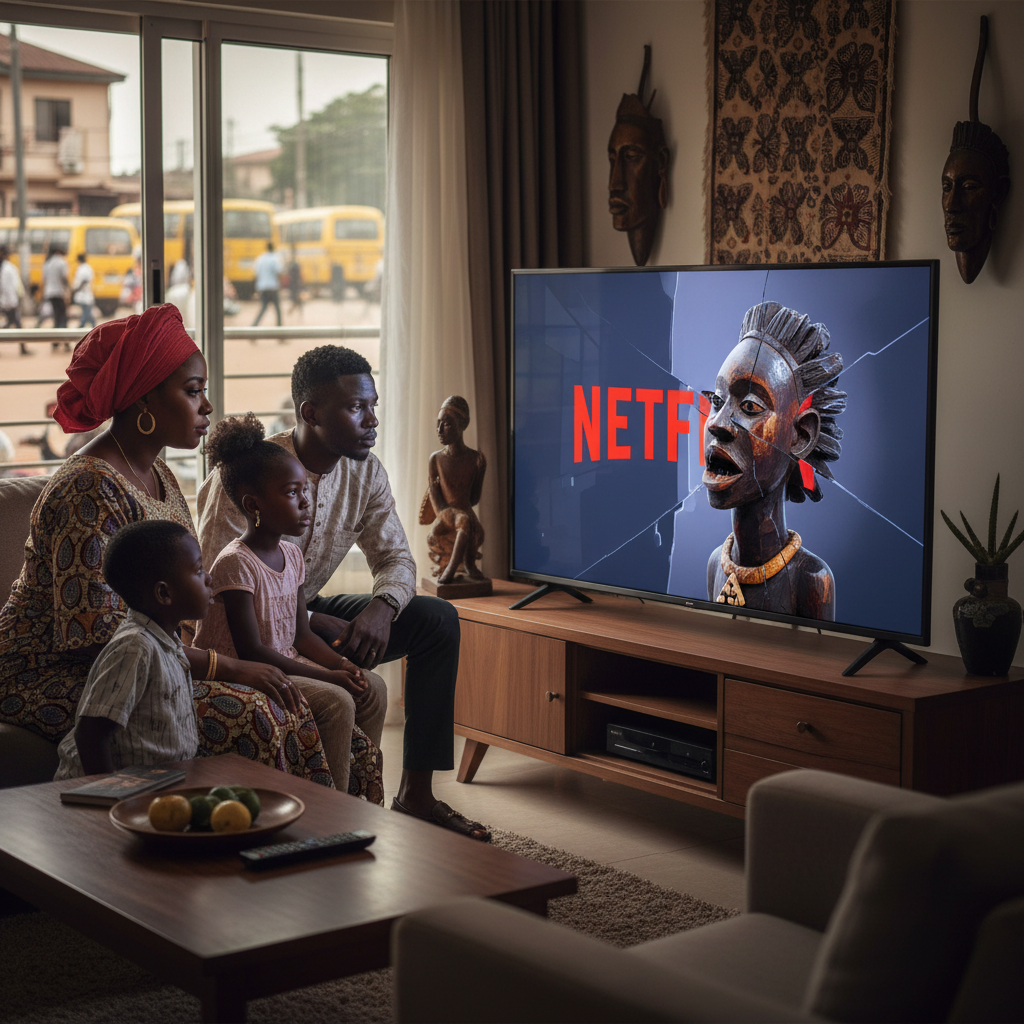
The Lagos sun beats down, a familiar rhythm. Inside countless homes across this vibrant city, and indeed, across the entire continent, another rhythm plays out: the familiar ka-thunk of the Netflix interface loading. We settle in, remote in hand, ready for the evening's entertainment. But what we choose to watch, or rather, what Netflix’s powerful algorithms suggest we watch, is far from a simple act of personal preference. It is a carefully orchestrated dance, a digital griot whispering tales into our ears, and in Nigeria, that griot’s accent sometimes feels a little too foreign.
For years, Netflix has championed its recommendation engine as a cornerstone of its success. It is a marvel of machine learning, a sophisticated beast that chews through billions of data points: what you watched, how long you watched it, what you skipped, what you replayed, even the time of day you prefer thrillers over comedies. This intricate web of data points is designed to keep you glued to the screen, to reduce churn, and to make sure you always find something you might like. Globally, this strategy has paid off handsomely, transforming Netflix from a DVD rental service into a streaming behemoth with hundreds of millions of subscribers worldwide. Their AI is not just a feature, it is the product.
But here in Nigeria, and across Africa, the narrative around Netflix's algorithmic prowess takes on a different hue. We are not just passive consumers; we are creators, storytellers, and a rapidly growing market. Netflix has made significant investments in African content, commissioning local originals like Blood Sisters, King of Boys: The Return of the King, and Young, Famous & African. These are commendable steps, bringing Nigerian and African narratives to a global audience. Yet, the question remains: is the algorithm truly serving these stories, or is it still fundamentally biased towards the global North's viewing habits and content structures?
“The challenge for any global platform like Netflix is balancing personalization with cultural relevance,” explains Dr. Ngozi Okonjo-Iweala, Director-General of the World Trade Organization, speaking recently about digital trade and cultural exchange. “Algorithms are powerful, but they are built on data, and if that data is skewed, the recommendations will reflect that bias. For emerging markets, ensuring local content gets its fair share of algorithmic visibility is crucial for cultural preservation and economic growth.” Her words resonate deeply here. We have seen how algorithms can shape perceptions, and we must ask if Netflix’s AI is truly seeing us, or just a reflection of its own data.
My concern is this: while Netflix invests in producing local content, the recommendation engine, the very gatekeeper to what gets seen, might not be optimized for its discovery by local audiences, let alone global ones. Imagine an algorithm trained predominantly on Western viewing patterns, on pacing, on narrative arcs that might differ from Nollywood's unique cadence. Will it truly understand the subtle nuances of a Yoruba proverb woven into dialogue, or the significance of a specific cultural celebration? Or will it simply categorize it as