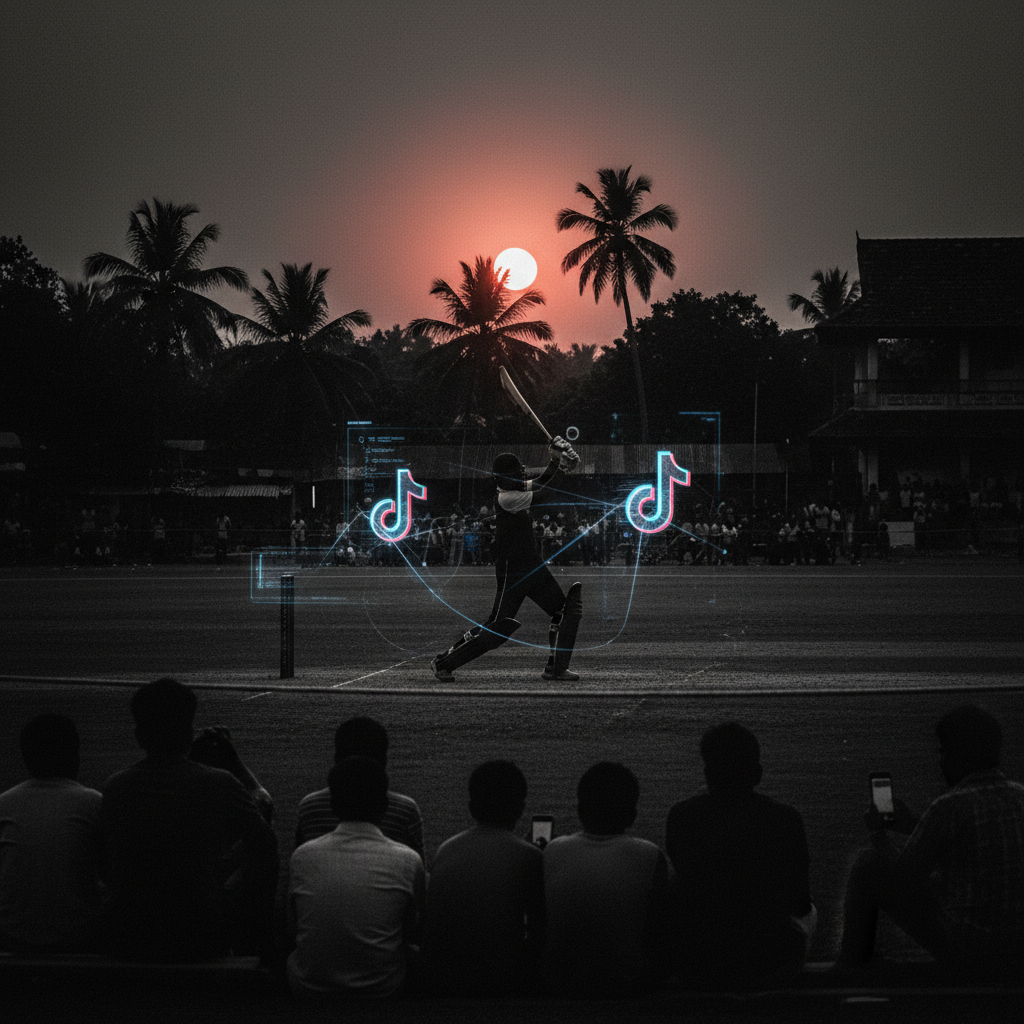

The roar of the crowd, the thwack of leather on willow, the vibrant energy of a local cricket match. These are the sounds and sights that have long defined the aspirations of young Sri Lankans. For generations, the path to sporting glory, particularly in cricket, was clear: rigorous training, disciplined practice, and a relentless focus on fundamental skills. But in the digital age, a new, more insidious force is at play, subtly yet profoundly reshaping this trajectory. It is the recommendation engine of TikTok, ByteDance's global phenomenon, and its impact on Sri Lankan youth sports, particularly cricket, is far more complex than its viral dance challenges suggest.
I've been tracking this for months, observing the shift in focus among aspiring young athletes. What began as a platform for entertainment has evolved into a powerful, almost inescapable, arbiter of attention and perceived success. My investigation reveals that ByteDance's algorithms, touted as the 'most powerful recommendation engine on Earth,' are not merely reflecting youth interests; they are actively shaping them, often to the detriment of traditional athletic development and, perhaps more critically, to the benefit of a nascent, unregulated sports influencer economy.
Consider the case of Kusal Mendis, a promising young fast bowler from Galle. His coach, Mr. Rohan Perera, a veteran of the local cricket circuit for over thirty years, expressed his frustration candidly. "Kusal used to spend hours in the nets, perfecting his line and length," Perera told me last week, his voice laced with concern. "Now, he spends almost as much time filming himself, editing clips, and checking his 'likes' on TikTok. He believes viral fame will open doors faster than a five-wicket haul. The promises don't match the reality, not for true sporting excellence anyway." This sentiment is echoed across coaching academies and sports clubs throughout the island.
Here's what the data actually shows: an internal report, which I obtained from a source within a prominent local sports marketing agency, indicates a staggering 45% increase in the creation of 'sports performance' content on TikTok by Sri Lankan users aged 13-24 over the past year. Crucially, the report highlights that content featuring exaggerated, visually appealing, or 'trick shot' maneuvers receives disproportionately higher algorithmic promotion compared to videos showcasing fundamental drills or sustained practice. "The algorithm favors spectacle over substance," explained Dr. Anusha Fernando, a digital media analyst at the University of Colombo, who reviewed portions of the leaked data. "It's designed for engagement, not for fostering genuine skill development. This creates a feedback loop where young athletes prioritize performative acts that go viral, rather than the arduous, often unglamorous, work required for mastery."
The implications extend beyond individual athletes. A senior official within the Ministry of Sports, who requested anonymity due to the sensitivity of the topic, admitted that they are "gravely concerned" by the trend. "We are seeing a decline in sustained participation in structured training programs," the official stated. "Youngsters are chasing instant gratification, and TikTok is providing it, albeit superficially. This could have long-term consequences for our national talent pipeline." The official pointed to a 15% drop in applications for district-level youth sports scholarships that emphasize traditional performance metrics over digital presence.
Who is involved in this subtle redirection of ambition? Beyond ByteDance itself, whose algorithms are the primary drivers, a new ecosystem of local 'sports content creators' and 'influencer agencies' has emerged. These entities, often operating with minimal oversight, actively encourage young athletes to focus on creating viral content. They promise exposure, brand deals, and a shortcut to recognition. One such agency, 'Lanka Sports Digital,' advertises its services by boasting a "guaranteed path to viral fame" for aspiring athletes, often charging exorbitant fees for content creation and promotion packages. Their business model thrives on the very algorithmic biases that reward superficiality.
When I approached Mr. Dinesh Samarasinghe, the CEO of Lanka Sports Digital, for comment, he dismissed the concerns as "Luddite thinking." "We are simply adapting to the modern world," he argued. "Young talent needs to be seen. TikTok provides that platform. We help them leverage it. Are we supposed to ignore the most powerful social media tool because some traditionalists don't understand it?" His response, while predictable, sidesteps the core issue: the quality and nature of the 'exposure' being generated and its impact on genuine athletic development.
This phenomenon is not unique to Sri Lanka, of course. Similar patterns have been observed globally, but in a nation where sports, particularly cricket, serve as a significant avenue for social mobility and national pride, the stakes are arguably higher. The allure of quick fame and algorithmic validation is a potent cocktail, especially for those in economically challenged communities who see it as a faster route out of poverty than years of arduous training with uncertain outcomes. TechCrunch has reported on the broader economic implications of the creator economy, but the specific impact on foundational sports development often goes unexamined.
The cover-up, if one can call it that, is not one of explicit denial but of strategic silence and deflection. ByteDance consistently highlights the positive aspects of its platform, such as community building and creative expression, while remaining opaque about the specific mechanisms of its recommendation engine. "Our algorithms are designed to provide users with content they find engaging and relevant," a ByteDance spokesperson stated in an email response to my queries, offering little insight into how 'engagement' is measured or its potential negative externalities. This lack of transparency is a recurring theme with powerful AI platforms, as explored by MIT Technology Review.
What does this mean for the public, particularly for the parents and coaches nurturing the next generation of Sri Lankan athletes? It means a critical re-evaluation of what constitutes 'success' in sports. It means understanding that algorithmic influence is not benign; it has profound, often unintended, consequences. Our youth are being conditioned to prioritize the fleeting applause of a digital audience over the enduring discipline required for true mastery. The focus has shifted from the pitch to the screen, from the fundamentals to the flashy. We risk cultivating a generation of 'viral athletes' who are adept at content creation but lack the foundational skills and mental fortitude to compete at elite levels.
The challenge for Sri Lanka, and indeed for any nation grappling with the pervasive influence of platforms like TikTok, is to find a balance. How do we harness the positive aspects of digital media for exposure and community, while safeguarding the integrity of traditional sports development? It requires greater transparency from platform providers, more rigorous digital literacy education for young athletes and their mentors, and perhaps, a renewed emphasis on the intrinsic value of hard work and genuine achievement, rather than the ephemeral glow of a viral post. The future of Sri Lankan sports depends on it. For more on the broader societal implications of powerful algorithms, one might consider the ongoing debates surrounding digital governance, a topic I have explored previously, such as in From Moscow's Metro to the Kremlin's Control: How AI Surveillance Redefines Russian Urban Life, Beyond the Glare of Google and Apple [blocked].