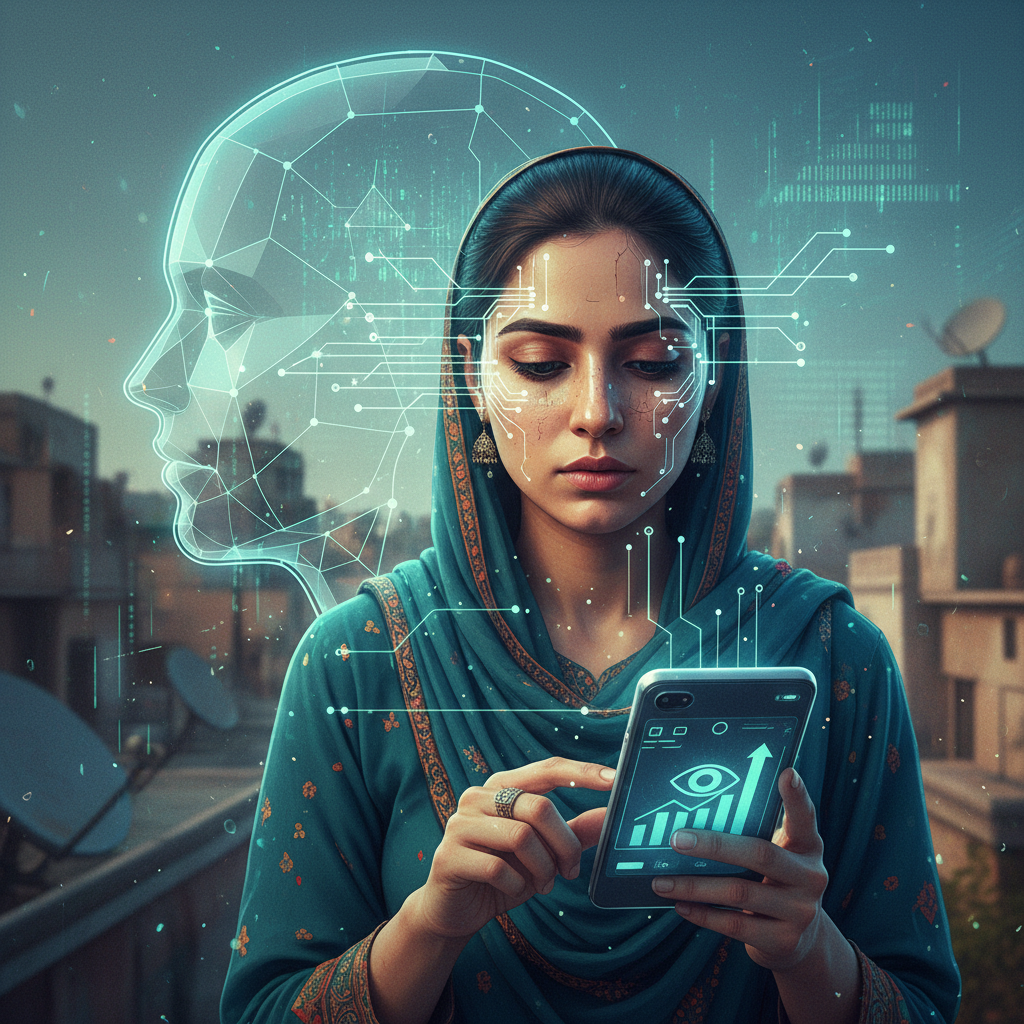

Namaste, fellow tech enthusiasts! Rajèsh Krishnàn here, beaming from the heart of Bangalore, where the coffee is strong, the traffic is legendary, and the innovation is absolutely electric. We are living through an exhilarating time, aren't we? Every day, it feels like a new AI marvel is unveiled, a fresh algorithm is spun, or a startup is born with the potential to change everything. But even in this whirlwind of progress, there is a shadow, a rather persistent one, that keeps popping up like an uninvited guest at a big fat Indian wedding: the global semiconductor shortage.
Oh, the chips, the glorious, tiny brains of our digital world! From your smartphone to the supercomputers powering the next big AI model, they are everywhere. And right now, getting enough of them feels like trying to find a quiet spot in Mumbai on Diwali night: nearly impossible. This is not just a hiccup, my friends, it is a full-blown global challenge, and it is hitting our beloved AI development right where it hurts: its very foundation. But here in India, we are not just wringing our hands. We are seeing this as a chance to bat harder, to innovate smarter, and to show the world what we are truly made of.
Let us be honest, the global chip shortage is a bit like a slow-motion car crash for the tech industry. It has been rumbling for a while, exacerbated by everything from geopolitical tensions to unexpected surges in demand. The numbers are frankly quite startling. Reports from industry analysts suggest that the lead times for certain critical chips, especially those used in AI accelerators and high-performance computing, have stretched from weeks to over a year. Imagine waiting that long for the crucial component that powers your next-generation large language model or your groundbreaking medical diagnostic AI! It is a test of patience, and more importantly, a test of strategic planning.
But India, my dear readers, is having its moment. We are not just an outsourcing hub anymore, we are a powerhouse of innovation, a hotbed of AI talent, and a country with a vision. The government, industry leaders, and even our vibrant startup ecosystem are all rallying to tackle this silicon crunch head-on. "The current semiconductor scarcity is undoubtedly a bottleneck, but it has also ignited a fierce drive for self-reliance and indigenous innovation within India," says Dr. Priya Sharma, a leading expert in semiconductor manufacturing at the Indian Institute of Science, Bangalore. "We are seeing unprecedented collaboration between academia and industry to develop domestic capabilities, from design to fabrication." Her optimism is infectious, just like the energy you feel walking through the corridors of a Bangalore tech park.
One of the most exciting developments is the push for local semiconductor manufacturing. For years, India has been a global leader in chip design, with companies like Intel, Qualcomm, and NVIDIA having massive design centers here. But manufacturing, the actual making of the chips, has largely been offshore. Not anymore! The Indian government has rolled out ambitious incentive schemes, like the Semicon India program, offering billions of dollars to attract global players to set up fabrication units. "We are aiming to establish at least two advanced semiconductor fabrication facilities and two display fabs within the next five years," announced Mr. Rajesh Kumar, Secretary of the Ministry of Electronics and Information Technology, during a recent press conference. "This is not just about economic growth, it is about strategic autonomy in the digital age." This is a massive undertaking, a true moonshot, but if anyone can pull it off, it is us.
What does this mean for AI development specifically? Well, if you cannot get the chips you need, you either wait, or you get creative. Many Indian AI startups are doing the latter. They are optimizing their algorithms to run more efficiently on existing or less powerful hardware. They are exploring alternative architectures, even venturing into neuromorphic computing and quantum AI, which might rely on different types of processing units. It is like a cricket team, short on star batsmen, training their all-rounders to step up and deliver. The ingenuity is truly inspiring.
Consider the case of 'CognitoAI', a Bangalore-based startup specializing in AI for agricultural yield prediction. "Initially, we designed our models for the latest NVIDIA A100 GPUs, but with the shortage, we had to pivot," explains Anjali Singh, CEO of CognitoAI. "Our team re-engineered our deep learning models to be highly efficient on older generation GPUs and even custom-designed FPGAs. The result? Slightly slower training times, perhaps, but a much more robust and adaptable solution that is not beholden to supply chain whims." This kind of adaptive thinking is what will define the next era of AI innovation.
The global chip shortage has also highlighted the critical importance of open-source hardware and software. Projects like Risc-v, an open-standard instruction set architecture, are gaining significant traction. Indian companies and research institutions are actively contributing to and adopting Risc-v, seeing it as a path to reduce dependence on proprietary technologies and foster a more diverse and resilient chip ecosystem. This is just the beginning of a truly decentralized approach to hardware, and it is thrilling to watch unfold.
Furthermore, the shortage is pushing AI developers to focus on 'AI frugality.' Instead of throwing more compute at a problem, they are asking: How can we achieve the same or better results with less? This means more efficient model architectures, better data curation, and innovative training techniques. It is a paradigm shift, moving from brute-force computation to elegant, optimized solutions. According to a recent report by MIT Technology Review, this focus on efficiency could lead to a new wave of breakthroughs, making AI more accessible and sustainable in the long run.
Of course, the road ahead is not without its bumps. Setting up advanced semiconductor fabs is incredibly capital-intensive and requires highly specialized expertise. It is a long game, not a T20 match. But the commitment is there, the talent pool is growing, and the strategic imperative is clear. We are not just building chips, we are building a future where India plays a pivotal role in shaping global AI. The scale is mind-boggling, but so is the ambition.
This isn't just about India, though. The global AI community is watching, and learning. The lessons learned here, in adapting to scarcity and fostering domestic capabilities, will resonate worldwide. We are seeing similar initiatives in Europe and the US, all driven by the same realization: relying on a single geographic region for critical components is a risky business. Diversification and resilience are the new mantras.
As I look out at the bustling streets of Bangalore, I see the future taking shape, brick by silicon brick. The global semiconductor shortage is a challenge, no doubt, but it is also a catalyst. It is pushing us to be more innovative, more self-reliant, and more collaborative. We are not just waiting for the next shipment of chips; we are building the foundries of tomorrow, right here, right now. The AI revolution is far from over, and India is ready to lead the charge, even if it means batting on a tricky pitch. This, my friends, is just the beginning, and I cannot wait to see what incredible innings we play next. For more on how global tech is adapting, check out Reuters Technology. You can also dive deeper into AI developments on The Verge.
And for those of you curious about the foundational concepts that power these incredible AI models, you might find this article on machine learning basics [blocked] quite insightful. It is all connected, you see!