
The gentle bow, the whispered 'irasshaimase' welcoming you into a shop, the meticulous packaging of even the smallest purchase. These are not mere transactions in Japan; they are rituals, imbued with a profound respect for the customer. So, when I see the relentless march of AI into customer experience, promising efficiency and optimization, I cannot help but feel a tremor of unease. Are we, in our pursuit of seamless digital interactions, inadvertently sacrificing the very essence of what makes Japanese service so revered, so human?
My argument is clear: the current trajectory of AI-powered customer experience, particularly as it is being implemented in Japan, risks creating a sterile, transactional landscape devoid of genuine empathy and understanding. We are trading the warmth of human interaction for the cold logic of algorithms, and the cost, I fear, will be far greater than any efficiency gains. We are not just customers; we are people with stories, with nuanced needs, and sometimes, with a simple desire to be heard by another human being.
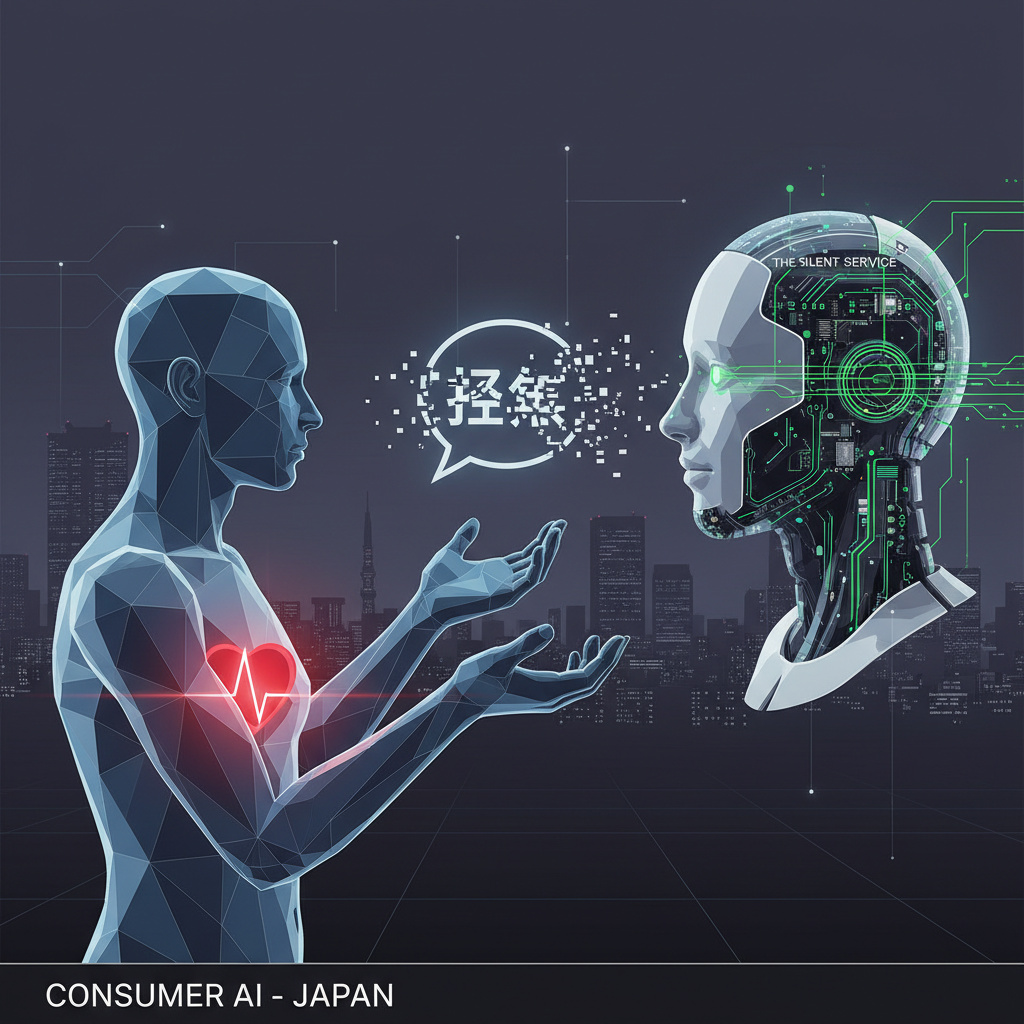
Consider the ubiquitous chatbots that now greet us on websites and apps. They are designed to answer questions quickly, to route us to the right department, to handle routine inquiries. And yes, they are often very good at that. But what happens when your query is unusual, when your frustration is mounting, or when you are simply feeling vulnerable? A chatbot, no matter how sophisticated, cannot offer a reassuring sigh, a knowing glance, or the subtle shift in tone that signals true comprehension. It cannot offer the 'omotenashi' that defines our service culture.
I remember a conversation I had recently with Mr. Kenji Tanaka, a veteran customer service manager at a major telecommunications company in Tokyo. "We have seen a 40% reduction in call wait times since implementing our new AI system," he told me, his voice tinged with pride. "Our customer satisfaction scores for simple inquiries have actually gone up by 15%." He presented compelling data, numbers that would make any business leader nod in approval. Yet, as he spoke, I couldn't shake the feeling that something was being lost. I asked him about the more complex cases, the customers who called not just for a technical fix, but for reassurance, for a human voice in a moment of digital confusion. He paused, then admitted, "Those cases still require human intervention, of course. And sometimes, the AI has actually made them more frustrated before they reach us." It was a quiet admission, but one that changed my perspective.
This isn't to say that AI has no place in customer experience. Far from it. AI can be a powerful tool when used thoughtfully, as an enhancement to human service, not a replacement. Imagine AI that can analyze a customer's tone of voice to alert a human agent that this person needs extra care, or AI that can instantly pull up a customer's entire history, allowing a human agent to offer personalized solutions without fumbling through databases. This is the human side of the machine, where technology serves to amplify our innate capacity for connection, not diminish it.
However, the current trend, driven by a relentless pursuit of cost reduction and scalability, often overlooks this crucial distinction. Companies are rushing to automate, to deflect, to minimize human contact, often under the guise of 'customer convenience'. But convenience without connection can feel isolating. A recent study by a Japanese consumer advocacy group found that while 60% of younger consumers (under 35) preferred interacting with AI for simple tasks, over 75% of consumers aged 50 and above expressed a strong preference for human interaction, especially when dealing with sensitive issues or complex problems. Japan, with its rapidly aging population, cannot afford to ignore this demographic reality.
Some might argue that this is simply the inevitable march of progress, that younger generations are more comfortable with digital interactions, and that businesses must adapt or be left behind. They might point to the global trend of digital transformation, citing figures from Reuters showing massive investments in AI for customer service worldwide. They might say that human agents are expensive, prone to error, and limited by time zones and language barriers, while AI offers 24/7, multilingual support at a fraction of the cost. They might even suggest that my perspective is overly sentimental, clinging to an idealized past that is no longer sustainable in a globalized, hyper-efficient world.
I understand these arguments. I truly do. The economic pressures are undeniable. But I believe they miss a fundamental point about the unique value proposition of service in Japan. Our culture places immense value on the quality of interaction, on the unspoken understanding, on the mutual respect exchanged between provider and recipient. This is not easily quantifiable by KPIs or cost-benefit analyses. It is an intrinsic part of our societal fabric. When a customer feels truly seen and understood, when their problem is handled with genuine care, that builds loyalty far deeper than any algorithm can achieve. It creates a bond, a sense of trust that transcends the transaction itself.
In a quiet Tokyo lab, I once met Dr. Akiko Sato, a leading researcher in human-computer interaction at Keio University. She whispered something that changed my perspective on this. "The goal of AI should not be to replace humanity, but to allow humanity to flourish," she said softly. "When we design AI for customer experience, we must ask ourselves: does this technology free our human agents to focus on the truly complex, empathetic interactions, or does it simply put a digital barrier between people?" Her words resonated deeply with me. The true innovation lies not in how much we can automate, but in how intelligently we can integrate AI to elevate the human experience.
We have an opportunity, here in Japan, to pioneer a different path. Instead of blindly following the global trend of automation for automation's sake, we can leverage AI to enhance our renowned omotenashi. We can use AI to empower our human service professionals, giving them better tools, deeper insights, and more time to dedicate to those moments that truly require a human touch. We can train AI models not just on data, but on the nuances of Japanese politeness, indirect communication, and the art of anticipating needs. Imagine an AI that can identify a customer's emotional state and gently suggest, "Perhaps you would prefer to speak with a human agent about this." This is not a weakness; it is a strength, a recognition of the limits of technology and the boundless capacity of human connection.
We must demand more from our AI-powered customer experiences. We must insist that technology serves our values, rather than dictating them. The future of customer service in Japan should not be one where we are left talking to an unfeeling machine, but one where AI intelligently supports and amplifies the warmth, empathy, and meticulous care that define our nation's approach to service. Otherwise, we risk losing a precious part of our cultural identity, one quiet interaction at a time. The human heart of service, once lost, is incredibly difficult to retrieve. Let us not allow the silent service of AI to become a silent farewell to our humanity. For further reading on the broader implications of AI in society, you might find this article on AI companions [blocked] insightful, as it touches on similar themes of human connection and technology. Additionally, for a global perspective on AI's impact on culture, Wired's AI section offers diverse viewpoints.