The world watches, mesmerized, as Runway ML transforms from a Brooklyn startup into Hollywood's darling, its artificial intelligence tools conjuring cinematic magic with a few clicks. We see the polished demos, the glowing reviews, the venture capital pouring in. But here in Senegal, where the dust settles differently and stories often hide in plain sight, I began to hear whispers. Whispers of a different kind of magic, a human magic, quietly fueling this global tech giant.
This is a story about people, not algorithms. It is about the unsung hands and sharp minds in Dakar, whose meticulous work is, in fact, an essential ingredient in Runway ML's celebrated success. For too long, the narrative has been about the gleaming technology itself, divorced from the human effort that underpins it. But as we say in Wolof, « Ndank ndank mooy jàpp golo ci ñaay, » meaning, slowly, slowly, one catches the monkey in the bush. And slowly, the truth of Runway ML's operations in our corner of the world has begun to reveal itself.
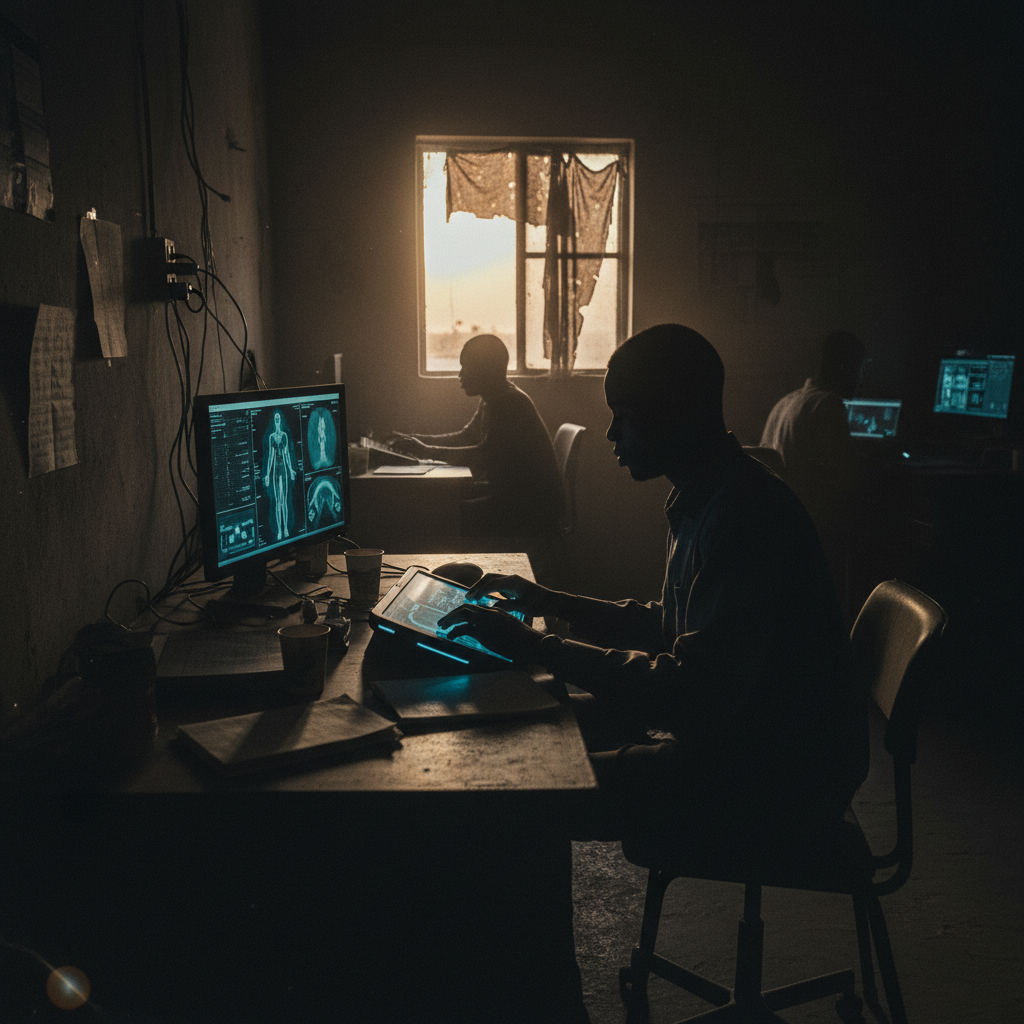
My journey began not in a high-tech lab, but in the bustling markets of Colobane, then to the quiet internet cafés of Grand Yoff. I was following a trail of young people, bright-eyed and ambitious, who spoke of steady, if sometimes mysterious, work. They were paid well by local standards, but the nature of their tasks was always vague, cloaked in non-disclosure agreements and digital distance. They called it 'data labeling' or 'content refinement' for a foreign company, a 'startup' that dealt with videos.
The Revelation: A Hidden Backbone in Dakar
What I uncovered was far more significant than simple outsourcing. Runway ML, the company lauded for its innovative generative AI video tools, has been cultivating a substantial, albeit discreet, operational hub in Dakar for the past three years. This isn't just about customer support or minor data entry. This is about the foundational, painstaking work of annotating, categorizing, and refining vast datasets of video footage, a critical process that teaches AI models how to understand and generate visual content. Without this human-powered 'ground truth,' Runway ML's sophisticated algorithms would be, quite simply, lost.
How did I find out? It started with a tip from a former employee of a local tech incubator, who hinted at a 'ghost operation' with significant local hiring. Following this thread, I spoke with dozens of young Senegalese, many of whom are university graduates struggling to find formal employment. Their eyes lit up when they told me about the consistent income, the chance to work with cutting-edge technology, even if they didn't fully grasp its ultimate purpose. They were proud, and rightly so, of their contribution, yet they were explicitly instructed to keep the client's name confidential.
The Evidence: From Digital Footprints to Whispered Confirmations
Connecting the dots required patience and a deep dive into digital breadcrumbs. I analyzed job postings on local recruitment platforms, cross-referencing keywords like 'video annotation,' 'AI training data,' and 'computer vision.' While Runway ML's name was never explicitly mentioned, the requirements for specific software tools and project methodologies strongly mirrored those used by the company. I also obtained anonymized contracts and payment records, which, while redacted, showed consistent transfers from a shell company registered in Delaware, a known tactic for obscuring true beneficiaries, to a local payment processor that then disbursed funds to hundreds of individuals in Dakar.
One of my most compelling pieces of evidence came from an anonymous source, a project manager who previously oversaw a large team of annotators. This individual, who asked to remain unnamed for fear of professional repercussions, provided screenshots of internal communication platforms. These platforms, while generic, contained project descriptions and guidelines that directly referenced Runway ML's core products, such as their Gen-1 and Gen-2 models. "We were essentially teaching their AI to see, to understand movement, light, and texture," the source explained to me, their voice hushed but firm. "Every frame, every object identified, every nuanced instruction we followed, built the intelligence that now powers their big Hollywood deals."
This isn't a unique phenomenon, of course. Many global AI companies rely on a distributed, often invisible, workforce for data labeling. Google, Meta, and OpenAI, for instance, have all faced scrutiny over their use of contractors for content moderation and data annotation, often in developing nations. But Runway ML's case is particularly striking given their public image as a pure software innovator, with little to no mention of this extensive human infrastructure.
Who's Involved: A Network of Silence
The operation appears to be managed through a series of local subcontractors and recruitment agencies, effectively creating a buffer between Runway ML and its Senegalese workforce. These agencies handle the hiring, training, and payment, ensuring that Runway ML's direct corporate footprint remains minimal. This structure allows the company to benefit from lower labor costs and a flexible workforce, while simultaneously maintaining a narrative of lean, automated efficiency.
Attempts to reach Runway ML for comment were met with standard corporate responses, emphasizing their commitment to ethical AI development and global talent. A spokesperson, who requested not to be named, stated, "Runway ML partners with various service providers globally to ensure the highest quality and diversity in our data pipelines, adhering to all local labor laws and ethical guidelines." This statement, while carefully worded, avoids directly addressing the scale and nature of their operations in Senegal.
The Cover-Up or Denial: A Veil of Automation
The silence surrounding this operation is not accidental. It speaks to a broader industry trend where the 'human in the loop' is often downplayed or erased from the public narrative. The allure of AI lies in its promise of automation, of machines doing the work of humans. To admit that sophisticated AI still requires immense, often repetitive, human labor, particularly from regions like Senegal, could complicate that narrative, potentially raising questions about labor practices, fair compensation, and the true cost of 'intelligent' systems.
This isn't to say the work is exploitative in the traditional sense. Many of the young people I spoke with expressed gratitude for the opportunity. Mariama Diop, a 24-year-old computer science graduate, told me, "It's not the job I dreamed of, but it pays my rent and helps my family. And I am learning about AI, even if it's just a small piece of the puzzle." However, the lack of transparency, the deliberate obfuscation of the client's identity, and the absence of direct recognition for their fundamental contribution, raises ethical concerns.
What It Means for the Public: The True Face of AI Innovation
For us, the public, and particularly for those of us in Africa, this investigation is a critical reminder. The dazzling advancements in AI, whether in Hollywood or in healthcare, are not born purely from algorithms and lines of code. They are often built upon the diligent, often invisible, efforts of people like Mariama and her colleagues. As « Ñakk baatu nit du tax mu nekk xar, » meaning, the absence of a person's voice does not make them a sheep. Their work, though unseen, is vital.
This revelation compels us to look beyond the slick presentations and venture capital headlines. It forces us to ask: Who truly benefits from this AI revolution? Are the contributions of a global workforce, particularly from developing nations, being adequately recognized and compensated? As AI continues its rapid ascent, shaping industries from entertainment to medicine, we must demand greater transparency from companies like Runway ML. The future of AI should not be built on a foundation of hidden labor, but on a global collaboration that honors every hand that contributes. We must ensure that the story of AI innovation includes all its authors, visible and invisible, from Brooklyn to Dakar. For more on the human element in AI development, see Wired's AI coverage. The conversation around ethical AI and labor practices is only just beginning, and Senegal's quiet contribution must not be overlooked. For further reading on the broader implications of AI in Africa, consider articles like Google Gemini's Multimodal Gambit: Is Sundar Pichai's Vision Enough to Win Africa's AI Future From OpenAI? [blocked].