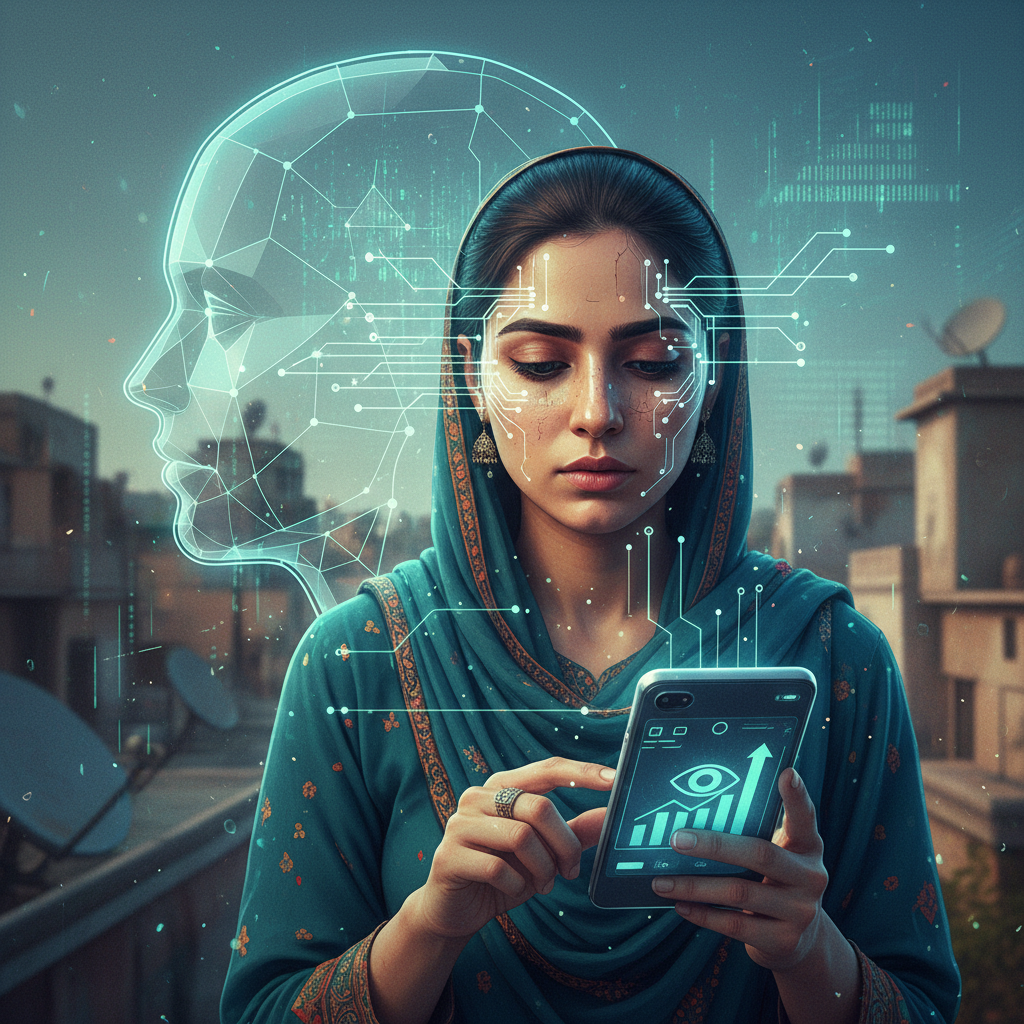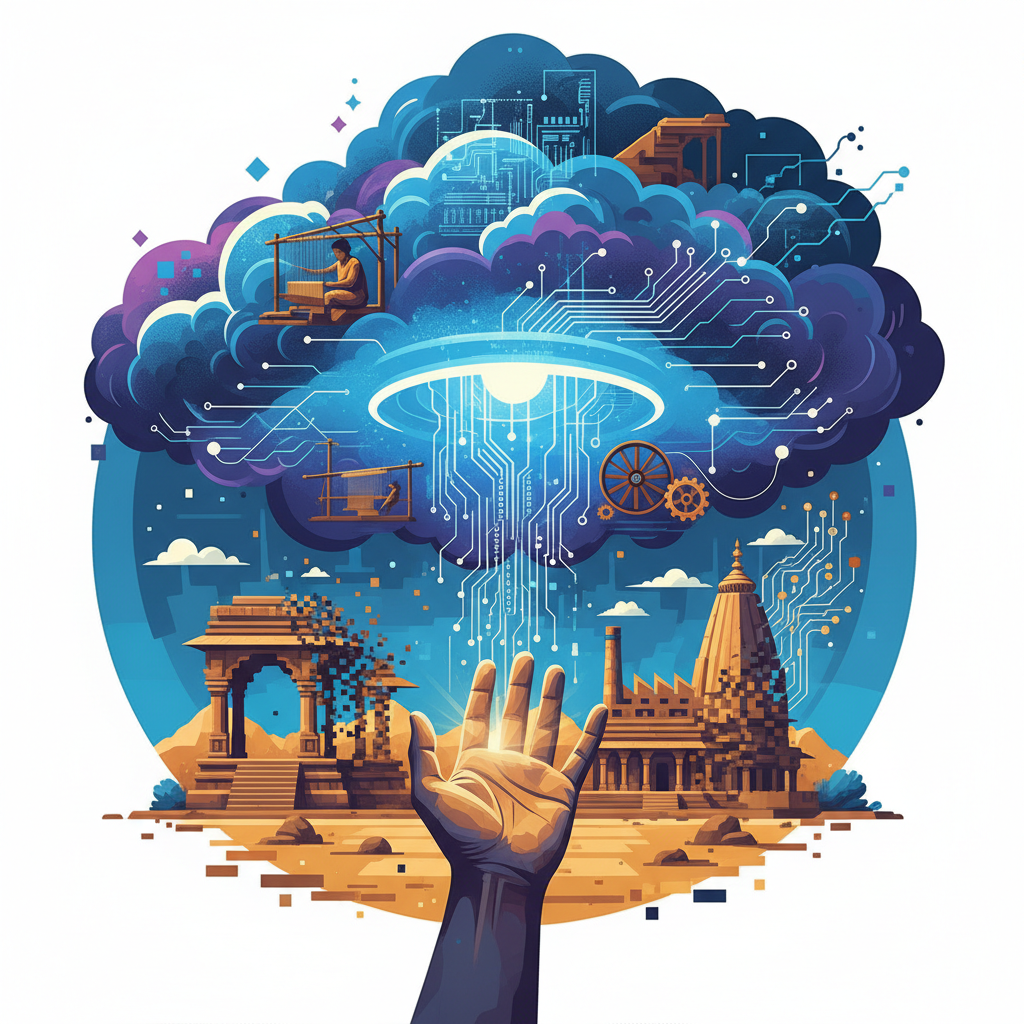

Let us be brutally honest with ourselves: the world is changing faster than a Mumbai local train during rush hour, and if you are not paying attention, you will be left behind at the station. We talk a lot about AI in the shiny new tech hubs, the gleaming skyscrapers of Bengaluru and Hyderabad, but the true seismic shift, the one that will define India's economic destiny for the next fifty years, is happening in our most traditional industries. This is not some distant future fantasy, this is the inflection point, and it is unfolding right now, from the paddy fields of Punjab to the textile mills of Ahmedabad.
For too long, the narrative around AI has been dominated by Western perspectives, focusing on self-driving cars or digital assistants. While those are certainly impressive, they miss the profound, ground-level impact AI is having in a country like India, where traditional sectors employ hundreds of millions. I am talking about agriculture, manufacturing, logistics, and even our age-old craft industries. These are the backbone of Bharat, and AI is not just optimizing them, it is fundamentally reimagining them.
Take agriculture, for instance. For millennia, farming in India has been a dance with the monsoon, a gamble against pests, and a battle for yield. Now, AI is stepping in as a digital deity. Drones equipped with AI cameras are surveying fields, detecting nutrient deficiencies and pest infestations with pinpoint accuracy, telling farmers exactly where and how much pesticide or fertilizer to apply. Predictive analytics, fed by satellite imagery and local weather data, are advising on optimal planting times and irrigation schedules. “We have seen a 20 percent increase in yield and a 15 percent reduction in water usage in pilot projects across Maharashtra and Karnataka,” says Dr. Anjali Sharma, head of agricultural AI initiatives at the Indian Council of Agricultural Research. “This is not just about profit; it is about food security for 1.4 billion people.”
This is not a theoretical exercise; it is happening. Companies like Cropin and Fasal are already deploying these solutions, empowering farmers, many of whom are smallholders, with data-driven insights previously available only to industrial giants. The trickle-down effect is immense, improving livelihoods and strengthening rural economies. This is the kind of deep tech innovation that truly matters, not just another app for urban dwellers.
Then there is manufacturing. India's manufacturing sector, while growing, has often struggled with efficiency and quality control compared to global leaders. AI is changing that equation. Predictive maintenance systems, powered by machine learning, are monitoring machinery in textile factories and automotive plants, anticipating breakdowns before they happen, slashing downtime by up to 30 percent. Robotics, guided by AI, are taking on repetitive and hazardous tasks, improving safety and precision. “Our factory in Pune has integrated AI into every stage of production, from supply chain optimization to quality checks,” explains Rajesh Gupta, CEO of Bharat Auto Solutions. “We have reduced defects by 18 percent and increased throughput by 25 percent in the last year alone. This makes us globally competitive.” This is not just about automation displacing jobs; it is about elevating the entire manufacturing ecosystem, creating new, higher-skilled roles for our workforce.
Now, I hear the murmurs, the inevitable counterarguments. “What about job displacement, Arjùn? Are we just replacing human hands with algorithms?” This is a valid concern, one that we must address head-on. Yes, some jobs will change, some will be automated. That is the nature of progress. But to focus solely on job loss is to miss the forest for the trees. Historically, every major technological revolution, from the printing press to the internet, has created more jobs than it destroyed, albeit different ones. The key is adaptation and reskilling.
We need massive, government-backed initiatives to retrain our workforce. The National Skill Development Corporation, for instance, needs to pivot aggressively towards AI literacy and specialized training in AI-adjacent fields. Imagine a farmer, now equipped with drone operation skills, or a factory worker, now a robotics technician. These are not just new jobs; they are better jobs, safer jobs, jobs that leverage human ingenuity in new ways. The future is not about humans versus machines; it is about humans with machines. According to a recent report by Reuters, the global AI market is projected to reach over a trillion dollars by 2030, and India needs to ensure it captures a significant slice of that pie, not just as consumers, but as innovators and producers.
Another common critique is the cost. “AI implementation is expensive, especially for small and medium enterprises (SMEs) that form the backbone of our economy.” This is where innovation in India truly shines. We are not just importing solutions; we are building our own, often open source and tailored to local conditions. Startups are emerging that offer AI-as-a-service models, making sophisticated tools accessible and affordable. The government's push for digital public infrastructure, like Aadhaar and UPI, has created a fertile ground for AI adoption, lowering barriers to entry. The cost of not adopting AI, of remaining stagnant in a rapidly advancing world, will be far greater than any initial investment.
This is why I firmly believe that India will own the next decade of AI. We have the demographic dividend, a vast talent pool, and a unique set of challenges that force us to innovate with frugality and ingenuity. Our diverse data sets, from countless languages to varied agricultural practices, are a goldmine for training robust and inclusive AI models. Forget Silicon Valley, look at Hyderabad, look at Chennai, look at the burgeoning tech ecosystems in tier-2 cities. These are the hotbeds of practical, impactful AI development.
We are not just talking about incremental improvements; we are talking about a complete transformation of our economic landscape. From supply chain optimization that ensures fresh produce reaches every corner of the country, to AI-powered diagnostics in rural healthcare, the applications are limitless. This is a chance to leapfrog decades of conventional development, to build a truly resilient and prosperous Bharat.
But this future is not guaranteed. It requires bold policy decisions, massive investment in infrastructure and education, and a collective will to embrace change. We cannot afford to be complacent, to cling to old ways of thinking. The world is watching, and the opportunity is ours to seize. The time for debate is over; the time for decisive action is now. We must ensure that this technological revolution benefits everyone, from the smallest farmer to the largest industrialist, creating an India that is not just digitally advanced, but also equitable and sustainable. The future of our traditional industries, and indeed, our nation, depends on it. For more insights on the broader AI landscape, you can always check out what is happening on TechCrunch or MIT Technology Review. The conversation is global, but the action, for us, is decidedly local, right here in Bharat. The stakes are too high to look away. This is our moment. This is our revolution.