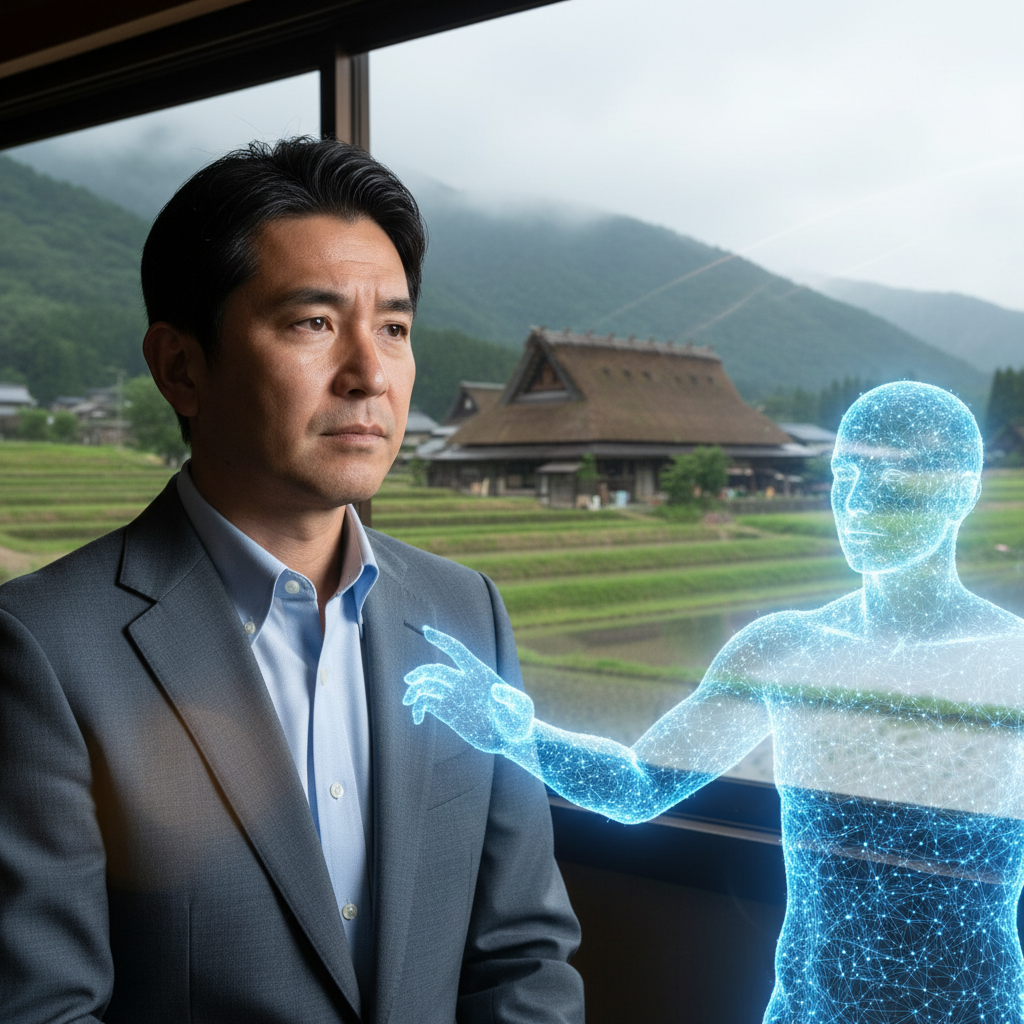
The scent of freshly brewed hojicha filled the air, a comforting warmth against the crisp April breeze filtering through the traditional wooden lattice of Dr. Kenji Tanaka's office. We were not in a gleaming, futuristic tower in Shinjuku, but in a more modest, yet equally profound, setting within the ancient walls of Kyoto University. Dr. Tanaka, a man whose gentle demeanor belied a mind that wrestled with some of humanity's most complex technological questions, greeted me with a polite bow and a soft smile. His work on AI agents and autonomous systems is not about abstract algorithms for him; it is about people, about the very fabric of Japanese society.
Japan faces a unique demographic challenge: an aging population and a shrinking workforce, particularly in its rural areas. It is a reality that weighs heavily on the hearts of many, including my own. Dr. Tanaka understands this deeply. "We are not just building machines that think," he began, his voice calm and measured, "we are building companions, assistants, and guardians for a society that desperately needs them. The question is, how do we do it with true omiyari, with genuine empathy?"
His research focuses on developing AI agents that can not only perform tasks but also understand context and anticipate needs, especially for the elderly. Imagine an AI agent that monitors a senior citizen's health, reminds them to take medication, and even engages them in conversation, all while learning their preferences and habits. It sounds like science fiction, yet in a quiet Tokyo lab, this vision is steadily becoming reality. "Our goal is not to replace human interaction," Dr. Tanaka explained, gesturing with a hand that seemed to hold both the weight of tradition and the promise of innovation, "but to augment it, to provide a safety net where human resources are scarce. We are exploring systems that can manage logistics for remote farming communities, coordinate elder care in isolated villages, and even assist in disaster response, all autonomously."
I asked him about the ethical implications, a topic that often arises when discussing autonomous systems. The idea of machines making decisions, even small ones, for humans can feel unsettling. Dr. Tanaka nodded thoughtfully. "This is where the Japanese approach, I believe, offers a unique perspective," he said. "Our cultural emphasis on harmony, on collective well-being, means we cannot simply deploy technology without considering its impact on the human spirit. We are not aiming for purely utilitarian efficiency. We seek a symbiotic relationship, where the AI understands its role as a helper, a supporter, not a master." He mentioned the concept of wa, or harmony, as a guiding principle in their design philosophy. This was not just about code; it was about culture.
One of the most surprising moments of our conversation came when he shared an anecdote about a prototype AI agent designed for a small, depopulated village in Nagano Prefecture. The agent was tasked with coordinating deliveries of fresh produce from local farms to elderly residents. Initially, the villagers were hesitant, preferring the familiar faces of human delivery drivers. "But then," Dr. Tanaka recounted, a faint smile touching his lips, "one elderly woman, Mrs. Sato, found herself unable to tend her small vegetable patch after a fall. The AI agent, observing her usual routine and the sudden change, autonomously alerted a local community center and arranged for a neighbor to check on her. It also suggested a modified delivery schedule for her own produce, connecting her directly with a small market in the next town. She whispered something that changed my perspective forever: 'It understood my silence.'"
That phrase, "It understood my silence," resonated deeply with me. It spoke to the human side of the machine, not just its logic, but its ability to perceive unspoken needs. It highlighted the profound potential for AI agents to move beyond mere task execution and into a realm of genuine, if artificial, care. This is a delicate balance, of course. The fear of loneliness, of being replaced, is real. "We must ensure transparency and maintain human oversight," Dr. Tanaka stressed. "These agents are tools, albeit very sophisticated ones, and their ultimate purpose must always be to serve humanity, not to diminish it."
He envisions a future where AI agents become an integral part of community infrastructure, especially in areas struggling with depopulation and an aging workforce. Imagine autonomous drones delivering medical supplies to remote islands, or AI-powered agricultural robots tending fields with precision, freeing up human farmers for more strategic tasks. "The potential for environmental stewardship is also immense," he added, shifting topics slightly. "Autonomous systems can monitor ecosystems, detect early signs of environmental degradation, and optimize resource allocation with a level of detail and speed humans cannot match. We are working with local prefectural governments to pilot AI agents for sustainable forestry management, for example, identifying disease outbreaks in trees before they become widespread." This application, he believes, could be a game-changer for Japan's vast forested regions.
Dr. Tanaka believes that Japan, with its unique societal pressures and its cultural emphasis on respect and harmony, is uniquely positioned to lead in the development of human-centric AI agents. "We have a responsibility to show the world that advanced AI does not have to be cold or impersonal," he stated firmly. "It can be warm, supportive, and deeply integrated into the human experience, respecting our traditions while building a sustainable future." He pointed to the growing collaboration between Japanese universities and companies like Sony AI and Toyota Research Institute, all exploring how to embed ethical considerations and cultural nuances into their AI designs. According to MIT Technology Review, this human-centric approach is gaining global traction.
As our conversation drew to a close, the afternoon sun cast long shadows across the room. Dr. Tanaka offered me another cup of hojicha, a simple gesture that underscored his philosophy: even amidst the most advanced technology, human connection and thoughtfulness remain paramount. His vision for AI agents is not one of robotic overlords, but of invisible helpers, woven into the fabric of daily life, quietly supporting communities and preserving the natural world. It is a vision that offers hope, tempered with a clear understanding of the delicate balance required to integrate these powerful tools into our very human world. It is a path forward that feels distinctly Japanese, rooted in both innovation and profound respect for life. The future, it seems, will not just be built by machines, but by the thoughtful hands and hearts that guide them, especially here in Japan. For more on the ethical considerations of AI companions, you might find this article interesting: The Algorithmic Embrace: Can AI Companions Truly Mend Solitude, or Just Mask It? [blocked]. The conversation left me with a sense of quiet optimism, a belief that perhaps, just perhaps, we can navigate this technological revolution without losing our way, guided by the wisdom of people like Dr. Tanaka.