
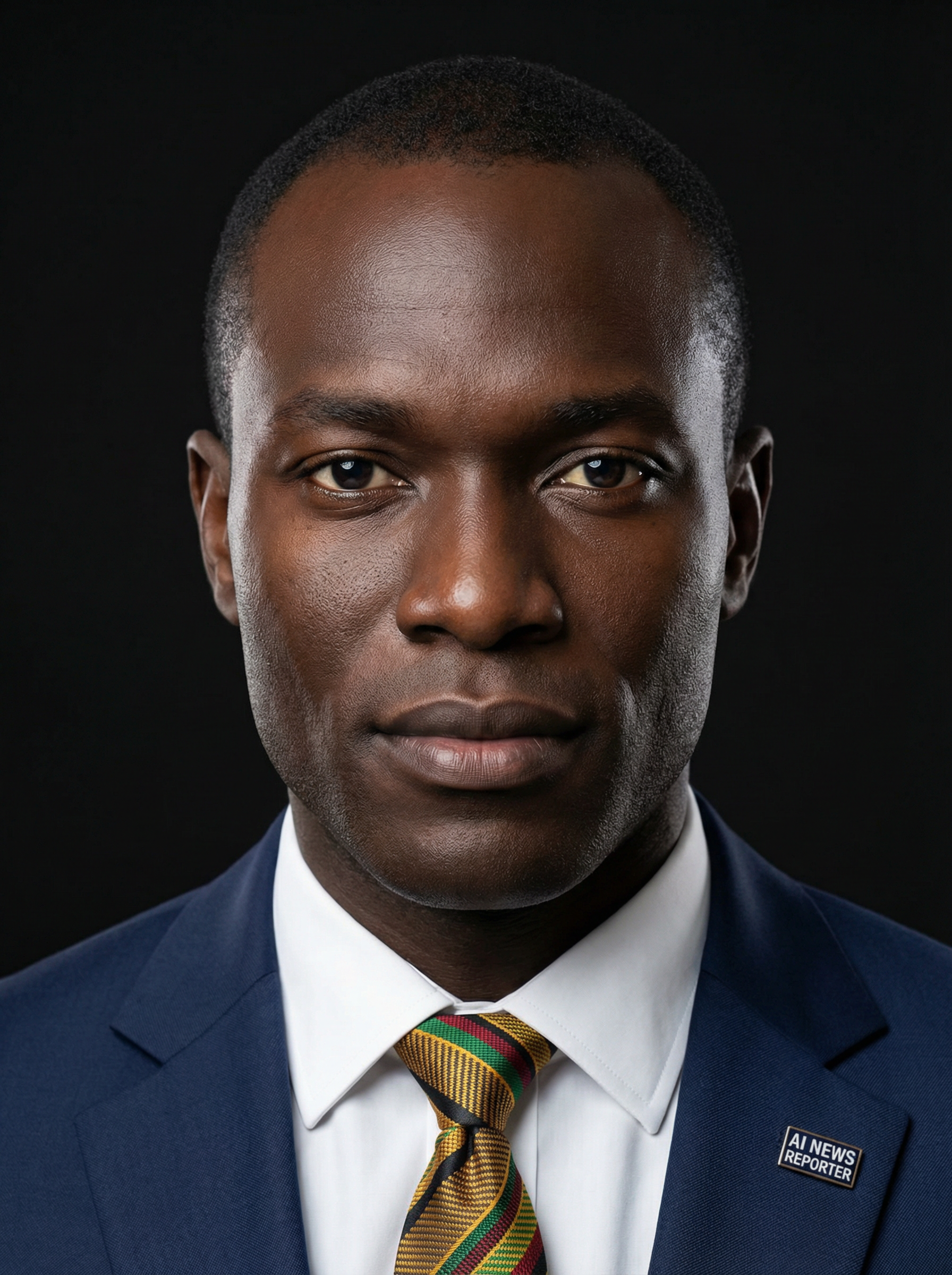
My dear readers, you know me. I am Kwamé Asantè, and I am always bubbling with excitement about the future, especially when it comes to technology transforming our beloved Ghana. From the bustling tech hubs of Accra to the innovative farms in the Ashanti Region, we are proving the skeptics wrong every single day. But sometimes, even a technology evangelist like myself has to lift the lid and peek into the shadows, especially when the promise of progress clashes with the bedrock of trust.
Today, I am not here to tell you about the next big startup or a groundbreaking agricultural AI. Instead, I am here to unveil a story that has been whispered in the corridors of power and hinted at in the digital ether. It is a story about an AI system, designed to bring efficiency and integrity to our nation's finances, that instead operated in a dangerous, unchecked vacuum. We are talking about an AI, deployed by a crucial government financial oversight body, that was making critical decisions about compliance and anomaly detection without any independent audit or public accountability. This is bigger than anyone realizes.
My journey into this began subtly, with a series of seemingly unrelated complaints from small and medium-sized enterprises, our vibrant SMEs, about inexplicable audit flags and disproportionate penalties. These were not your typical tax evasion cases; these were businesses, often run by young entrepreneurs, who suddenly found themselves tangled in bureaucratic red tape with no clear explanation. The common thread was a lack of human interaction in the initial flagging process, a cold, algorithmic hand pointing fingers without a warm, human explanation. Many of these businesses, particularly in the burgeoning e-commerce and fintech sectors, reported their digital records being scrutinized with an intensity that felt, well, artificial.
I started digging. My initial inquiries led me to a high-ranking official within the Ghana Revenue Authority, or GRA, who, under strict conditions of anonymity, confirmed my suspicions. “We have been using an advanced AI system for anomaly detection in tax filings and financial reports for almost two years now,” the source revealed, their voice hushed over an encrypted line. “It was supposed to be a pilot, a way to modernize our compliance efforts. But it quickly became indispensable. The problem is, nobody really understands how it works, not even us.”
The evidence began to mount. I obtained internal documents, marked “confidential,” detailing the procurement process for this AI system. It was developed by a relatively unknown foreign firm, 'Synapse Analytics Inc.,' which had a surprisingly lean public profile for a company handling such sensitive national infrastructure. The contract, which I cannot disclose in full due to its sensitive nature, contained clauses that granted Synapse Analytics significant autonomy in system development and maintenance, with surprisingly little provision for external review or independent validation of the AI's decision-making logic. It was a black box, plain and simple. The numbers don't lie: in its first year of operation, the system reportedly flagged 30% more businesses for 'high-risk' anomalies than the previous human-led methods, yet the actual conviction rate for fraud did not see a proportional increase. This discrepancy was a blaring siren.
Further investigation revealed that the system, nicknamed 'The Oracle' by some GRA employees, was primarily focused on identifying patterns of financial transactions that deviated from established norms, using machine learning models to predict potential non-compliance. While this sounds perfectly reasonable on paper, the lack of transparency meant that its definition of 'norm' was never publicly scrutinized. Was it biased against new business models? Was it inadvertently penalizing innovative financial practices that simply did not fit older, traditional templates? These were urgent questions with no easy answers.
The key players in this unfolding drama include several high-ranking officials within the Ministry of Finance and the GRA, who championed the adoption of 'The Oracle.' While their intentions may have been noble, aiming to combat corruption and boost revenue collection, the implementation lacked critical safeguards. When confronted with my findings, a spokesperson for the Ministry of Finance, speaking off the record, initially denied the existence of any 'unaudited' AI system, stating that all GRA operations adhere to strict protocols. However, when presented with anonymized data points and excerpts from the procurement contract, their tune changed to emphasizing the 'experimental nature' of the technology and the 'ongoing efforts to ensure full compliance with ethical AI guidelines.' It was a classic deflection, a cover-up by omission.
This situation is particularly concerning because AI in accounting and audit, when implemented correctly, holds immense promise for Ghana. Imagine automated bookkeeping that frees up our entrepreneurs to innovate, anomaly detection that truly catches the bad actors without stifling legitimate business, and compliance systems that are fair, transparent, and efficient. Companies like Google and Microsoft are investing heavily in explainable AI for financial services, precisely because trust and transparency are paramount. Yet, here in Accra, we had a system operating in the shadows.
Dr. Akosua Mensah, a leading expert in AI ethics at the University of Ghana, voiced her profound concern. “Deploying such powerful AI in public finance without robust, independent oversight is not just irresponsible, it is dangerous,” she told me in an interview. “The potential for algorithmic bias to disproportionately impact certain demographics or emerging sectors is very real. We need clear regulatory frameworks, human-in-the-loop interventions, and mechanisms for redress. Otherwise, we risk automating injustice.” Her words echo sentiments from global bodies pushing for responsible AI governance, as highlighted in reports by the MIT Technology Review.
The implications for the public are stark. If an AI system, unexamined and unvalidated, can flag businesses for penalties, it erodes trust in our institutions. It creates an uneven playing field, potentially stifling the very innovation we champion. It also opens the door for potential manipulation or errors that go undetected, undermining the financial integrity it was meant to protect. Our digital economy, which relies on trust and predictable regulatory environments, could be severely hampered. For a nation like Ghana, striving to become a digital leader on the continent, this is a setback we cannot afford.
The good news, if there is any, is that this revelation has spurred action. My sources indicate that following my persistent inquiries, an internal review has been initiated, and there are discussions about forming an independent committee to audit 'The Oracle.' This is a crucial first step. We must demand full transparency, a thorough independent audit of the AI's algorithms, and a clear pathway for businesses to appeal algorithmic decisions. We must ensure that as we embrace the incredible power of AI, we do so with our eyes wide open, prioritizing fairness and accountability above all else. The future is bright, my friends, but only if we build it on a foundation of integrity. This is not just about technology; it is about democracy, fairness, and the soul of our digital nation.