The scent of freshly baked waffles, a familiar comfort in the bustling streets of Ghent, belies a growing unease within Belgium’s vibrant creative sector. Here, where centuries of artistic innovation meet modern digital prowess, a new technological wave is crashing: generative artificial intelligence. It promises to democratize creation, yet many fear it simultaneously devalues the very human ingenuity it purports to assist. The question is not merely academic, it is economic, and it is deeply personal for the thousands of independent creators who form the backbone of our cultural landscape.
Consider the case of a small graphic design studio in Antwerp, a city long synonymous with artistic flair. For years, they thrived on bespoke branding projects, each logo and campaign a testament to their unique human touch. Now, clients increasingly inquire about AI-generated concepts, often citing the speed and perceived cost-effectiveness. This is not an isolated incident. A recent report by Reuters indicated that over 60 percent of European marketing agencies are experimenting with generative AI for content creation, from ad copy to visual assets, a figure that has more than doubled in the last 18 months. While some agencies report efficiency gains of up to 30 percent, the impact on independent contractors is less clear.
My observations suggest a complex picture. On one hand, AI tools like Adobe's Firefly or OpenAI's Dall-e 3 offer unprecedented capabilities for rapid prototyping and idea generation. A freelance illustrator, for instance, can now generate dozens of mood board concepts in minutes, a task that previously consumed hours. This augmentation can indeed empower individual creators, allowing them to take on more projects or focus on higher-level creative direction. However, the flip side is a downward pressure on pricing for foundational creative work. If an AI can produce a passable image in seconds, what is the perceived value of an artist who takes days?
"The market is shifting dramatically," notes Dr. Annelies Van der Cruyssen, an economist specializing in digital labor at the Katholieke Universiteit Leuven. "We are seeing a bifurcation. Those who master these tools to enhance their unique skills are finding new opportunities, often in specialized niches. However, those whose work is easily replicable by AI models face significant challenges, including reduced demand and downward wage pressure. This is particularly acute for entry-level creatives and those in more commoditized fields." Her analysis, presented at a recent EU parliamentary briefing, highlighted that while adoption rates for AI tools among Belgian SMEs are steadily climbing, reaching an estimated 28 percent in early 2026, the return on investment for human capital remains largely unquantified.
The EU's approach deserves more credit than it gets in this evolving landscape. While Silicon Valley often champions unbridled innovation, Brussels has questions and so should you. The forthcoming AI Act, set to be fully implemented, endeavors to create a framework that balances innovation with ethical considerations and human rights. For the creator economy, this means grappling with issues of intellectual property, transparency, and fair compensation. The Act’s provisions on transparency, for example, requiring the disclosure of AI-generated content, are crucial for distinguishing human artistry from algorithmic output. This is not merely about authenticity, it is about economic survival for many.
Consider the plight of musicians. The proliferation of AI-generated music, capable of mimicking specific styles or even creating entirely new compositions, poses a direct threat to composers and session musicians. While platforms like Spotify and Apple Music are grappling with how to identify and compensate for AI-generated tracks, the current mechanisms are far from robust. The European Commission is actively exploring how existing copyright laws can be adapted to this new reality, acknowledging that the current legal framework was not designed for machines that learn from and then replicate human creativity. This is a complex legal and ethical Gordian knot.
Some companies are attempting to navigate this ethically. Adobe, for instance, has committed to compensating contributors whose work is used to train its Firefly generative AI models, a move that offers a potential blueprint for fair practice. Their Content Authenticity Initiative, while not a panacea, aims to provide provenance for digital content, a vital step in differentiating human creation from machine output. However, such initiatives are voluntary and not universally adopted. The broader challenge lies in establishing industry-wide standards and, crucially, enforcement mechanisms.
Worker perspectives are varied, yet a common thread of apprehension runs through many conversations. Sarah De Clercq, a freelance photographer based in Bruges, expressed her concerns candidly. "I use AI for basic photo editing, for noise reduction, or even generating background elements. It saves time. But I worry about the day clients ask for an 'AI photoshoot' instead of hiring me for my unique eye and composition skills. My art is my livelihood, not just a series of pixels." Her sentiment echoes across various creative disciplines, from writers to filmmakers.
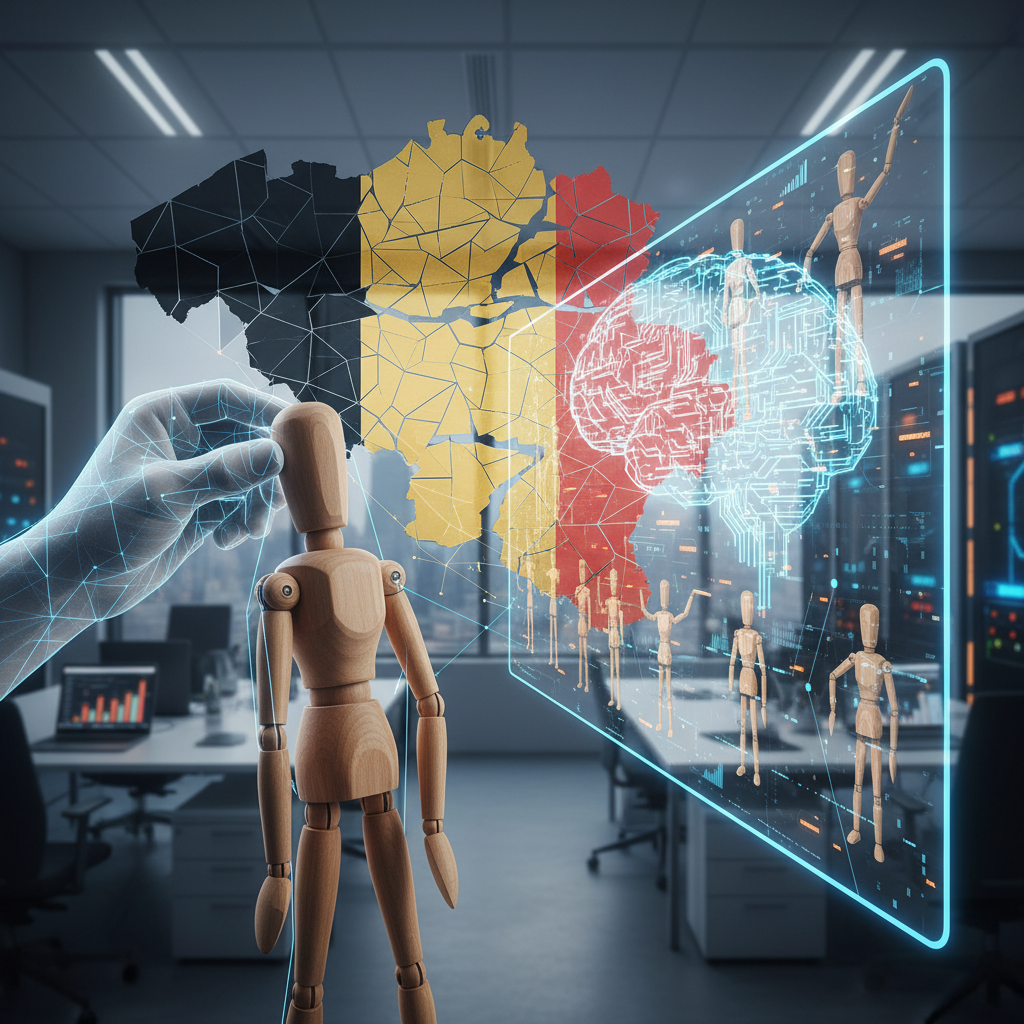
Expert analysis suggests that the future of the creator economy will not be one of simple replacement, but rather of radical transformation. "Belgian pragmatism meets AI hype," as I often say, and this is particularly true here. The emphasis will shift from mere execution to curation, conceptualization, and the application of unique human insight that AI cannot replicate. Those who can leverage AI as a co-pilot, rather than seeing it as a competitor, are likely to fare better. This requires a significant investment in upskilling and a willingness to embrace new workflows.
What is coming next? We can anticipate increased regulatory scrutiny, particularly from Brussels, concerning data provenance and intellectual property rights within generative AI models. There will likely be a push for more robust labeling of AI-generated content and potentially new compensation models for creators whose work forms the training data for these powerful systems. Furthermore, specialized AI tools, tailored for specific creative niches, will continue to emerge, further fragmenting the market. The challenge for Belgium, and indeed for Europe, will be to foster an environment where technological progress enhances human creativity, rather than diminishes it, ensuring that our rich cultural heritage continues to thrive in this new digital age. The debate is far from settled, and the stakes for independent creators have never been higher. The future of our creative industries hinges on these critical distinctions and the policies we enact today. For further insights into the broader implications, one might consider the ongoing discussions around AI ethics and governance.