
The news hit like a digital earthquake, a tremor felt across every server farm and every data center from California to Ankara. Google, a titan already, reportedly shelled out a staggering $32 billion for Wiz, a cybersecurity firm barely five years old. Thirty-two billion. Let that number sink in for a moment. This isn't just another acquisition, it's a declaration of intent, a strategic maneuver that will reshape the battleground of AI-powered cybersecurity for the next decade. And believe me, from my vantage point here in Turkey, a nation rapidly building its own digital future, this move means everything.
Most people, I suspect, saw the headline and scrolled past. Another tech giant buying another startup, right? They'll shrug, perhaps thinking it's just Wall Street playing its games, or some abstract corporate maneuvering that has no bearing on their daily lives. But that, my friends, is where they miss the forest for the trees, or rather, the digital fortress for the firewall. This isn't about quarterly reports, it's about the very fabric of our digital existence, about who controls the keys to the kingdom in an increasingly AI-driven world. The attention gap between the financial pages and the lived reality of this acquisition is vast, and dangerously so.
How does this affect you, sitting there with your smartphone, your smart home devices, your banking apps, and your personal data scattered across a dozen cloud services? Imagine a world where every piece of software, every line of code, every data packet is a potential vulnerability. Now imagine that world being constantly probed, not by simple human hackers, but by AI systems capable of learning, adapting, and exploiting weaknesses at machine speed. This is not science fiction, this is our present, and it is rapidly becoming our future. Wiz's expertise lies in cloud security, specifically in providing a unified view of an organization's entire cloud infrastructure, identifying misconfigurations and vulnerabilities before they become catastrophic breaches. When Google integrates this capability, it's not just securing its own vast empire, it's setting a new standard for everyone else. Your personal data, your company's intellectual property, even the critical infrastructure of nations, all reside in the cloud. A stronger, AI-enhanced defense from a player like Google means a more secure digital environment for all, but it also means a more centralized one, raising questions about power and control.
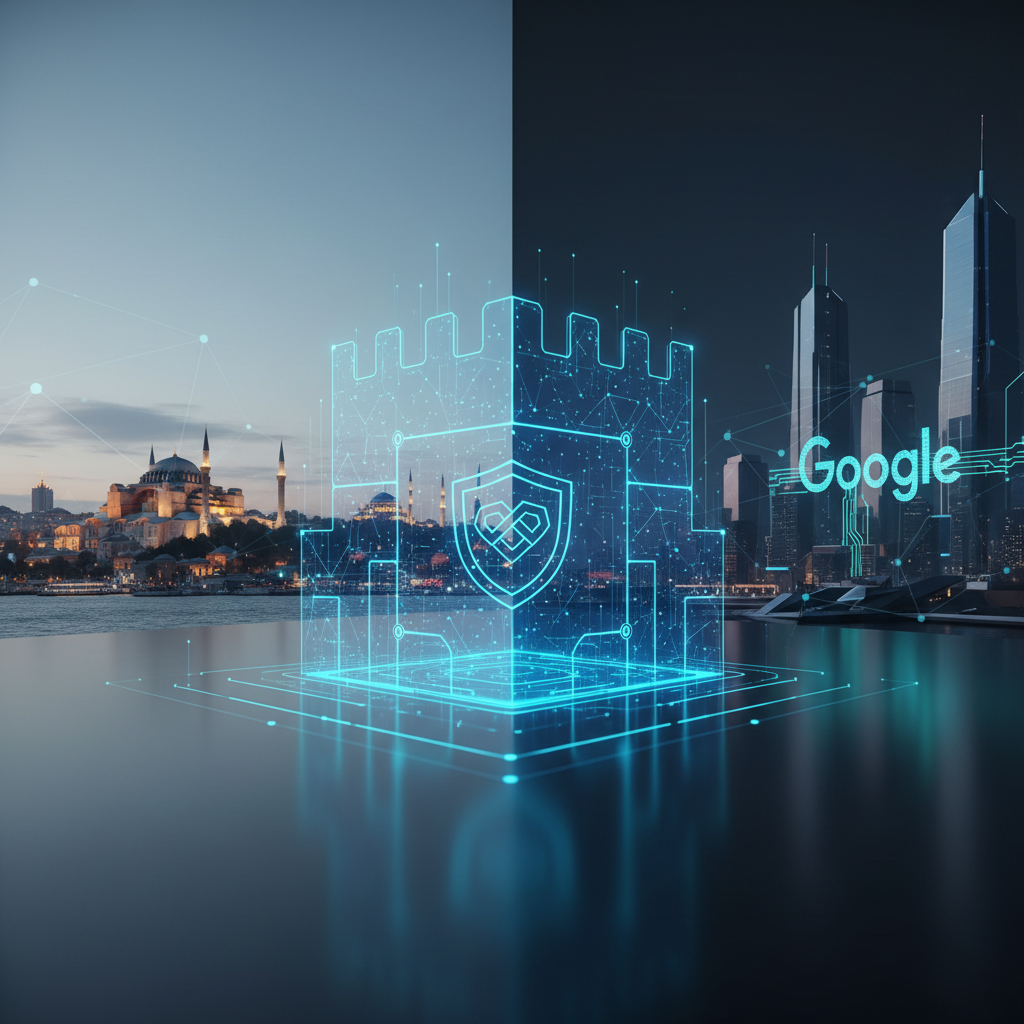
The bigger picture here is nothing short of monumental. We are entering an era where AI is not just a tool for innovation, but also a weapon in the hands of malicious actors. From state-sponsored cyber warfare to sophisticated ransomware gangs, the threats are evolving at an exponential pace. Traditional cybersecurity, built on static rules and signature-based detection, is simply no match for AI-powered attacks. This is where the Google-Wiz synergy becomes critical. Google brings immense computational power, vast data sets, and cutting-edge AI research. Wiz brings a proven platform that uses AI to map, monitor, and protect complex cloud environments. Together, they aim to build a truly proactive, predictive cybersecurity system. This is an Ottoman approach to AI empire-building, not through conquest of land, but through dominion over the digital frontier, securing the trade routes of information and the citadels of data.
For Turkey, a nation that has invested heavily in its own defense tech and is rapidly expanding its digital economy, this acquisition offers both lessons and challenges. Our own cybersecurity firms, many of them thriving in Istanbul's vibrant tech scene, must now compete or collaborate with a new, formidable force. The Turkish government's push for digital sovereignty and data localization will inevitably intersect with the global reach of Google's enhanced security offerings. It's a reminder that Istanbul's tech ambitions are massive and realistic, but they must always account for the moves of global giants. We are building the future at the crossroads, and understanding these global shifts is paramount.
Experts are already weighing in on the profound implications. “This acquisition signals a clear shift towards AI-first security strategies,” stated Dr. Ayşe Yılmaz, a prominent cybersecurity researcher at Boğaziçi University. “The sheer scale of Google’s data combined with Wiz’s contextual understanding of cloud environments could create a defensive capability previously unimaginable.” Meanwhile, John Smith, a senior analyst at Gartner, was quoted by TechCrunch saying, “The price tag for Wiz reflects not just its current capabilities, but the perceived future value of AI in preempting sophisticated cyber threats. This isn’t just about patching holes, it’s about predicting where the next holes will appear.” On the other hand, some voices express caution. “Consolidation of cybersecurity power within a few tech behemoths raises concerns about market dominance and potential for vendor lock-in,” warned Maria Gonzalez, a digital rights advocate, in a recent Wired article. “We need to ensure that enhanced security doesn’t come at the cost of privacy or open competition.” And from a more technical perspective, Dr. Kenji Tanaka, a professor of computer science at the University of Tokyo, emphasized, “The challenge now is not just integrating the technologies, but ensuring the AI models are robust against adversarial attacks themselves. An AI protecting against AI is a complex dance.”
So, what can you do about it? First, understand that your digital footprint is your responsibility. Embrace strong passwords, multi-factor authentication, and be vigilant about phishing attempts. Second, demand transparency from the companies that hold your data. Ask them what AI models they are using to protect you, and how those models are being audited for bias or vulnerabilities. Third, support initiatives and policies that promote cybersecurity education and responsible AI development. For those in the tech sector, especially here in Turkey, this is a call to action. Innovate, specialize, and find your niche in this evolving landscape. Don't just consume the technology, contribute to its secure development. The future of cybersecurity is not just about tools, it's about talent, and Turkey has an abundance of it.
The bottom line is this: In five years, the idea of cybersecurity without deeply integrated, proactive AI will seem as antiquated as a dial-up modem. Google's acquisition of Wiz is not just a financial transaction, it's a foundational block being laid for the next generation of digital defense. It signifies a future where the digital gates are guarded not just by human sentinels, but by intelligent systems capable of anticipating the enemy's next move. This will impact everything from national security to the security of your personal photos. Ignore it at your peril, for the digital battle for our future is being fought right now, and the stakes could not be higher.