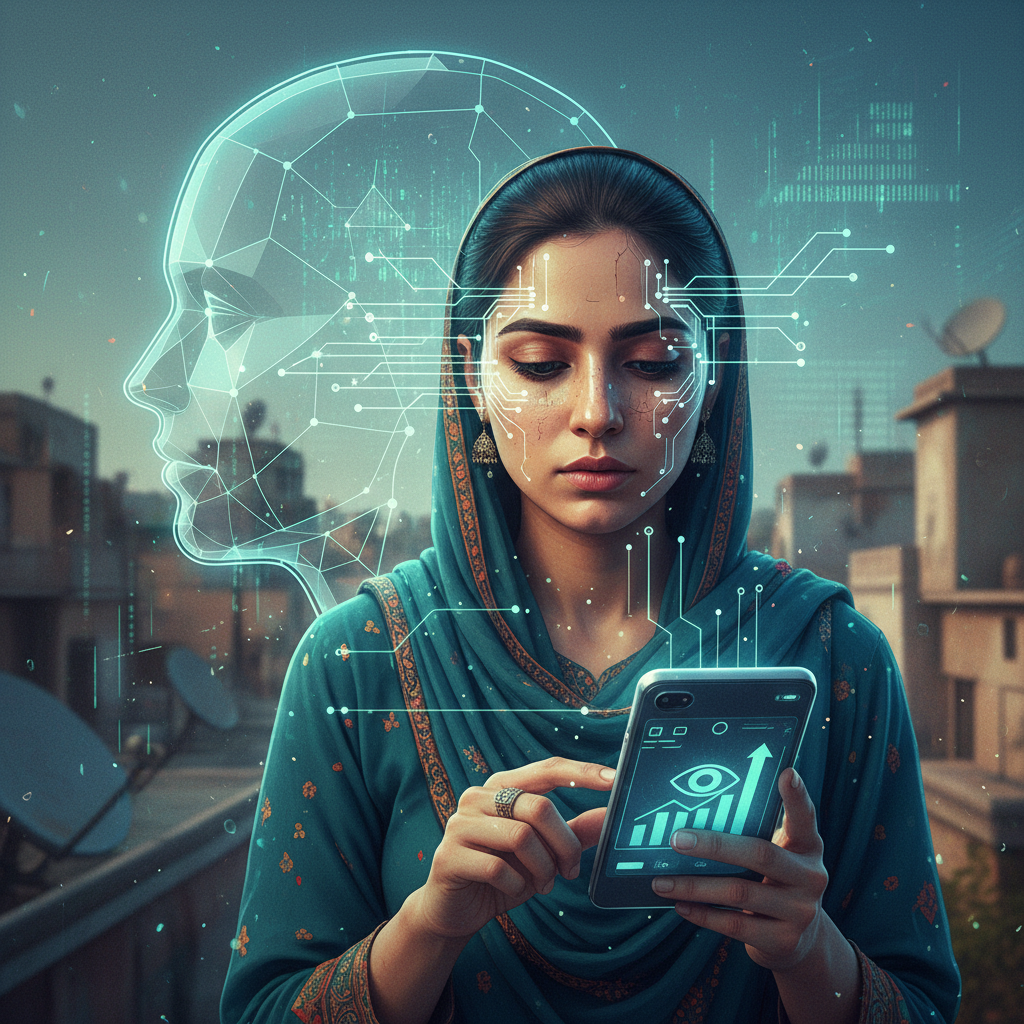
Ah, the generative image revolution. It arrived like a monsoon, sudden and overwhelming, promising to wash away the mundane and replace it with dazzling, AI-generated dreams. For a while, it felt like the Wild West, a digital frontier where anyone with a prompt could conjure anything, from a sari-clad astronaut on Mars to a dosa-eating dragon. Then, as always, the grown-ups arrived, clutching their rulebooks. This time, it is India's Ministry of Electronics and Information Technology, or MeitY as we fondly call it, that has decided to bring some order to the digital chaos, particularly for platforms like Stability AI and Midjourney. And honestly, I am not entirely sure if they are building a sturdy bridge or just adding more potholes to the information highway.
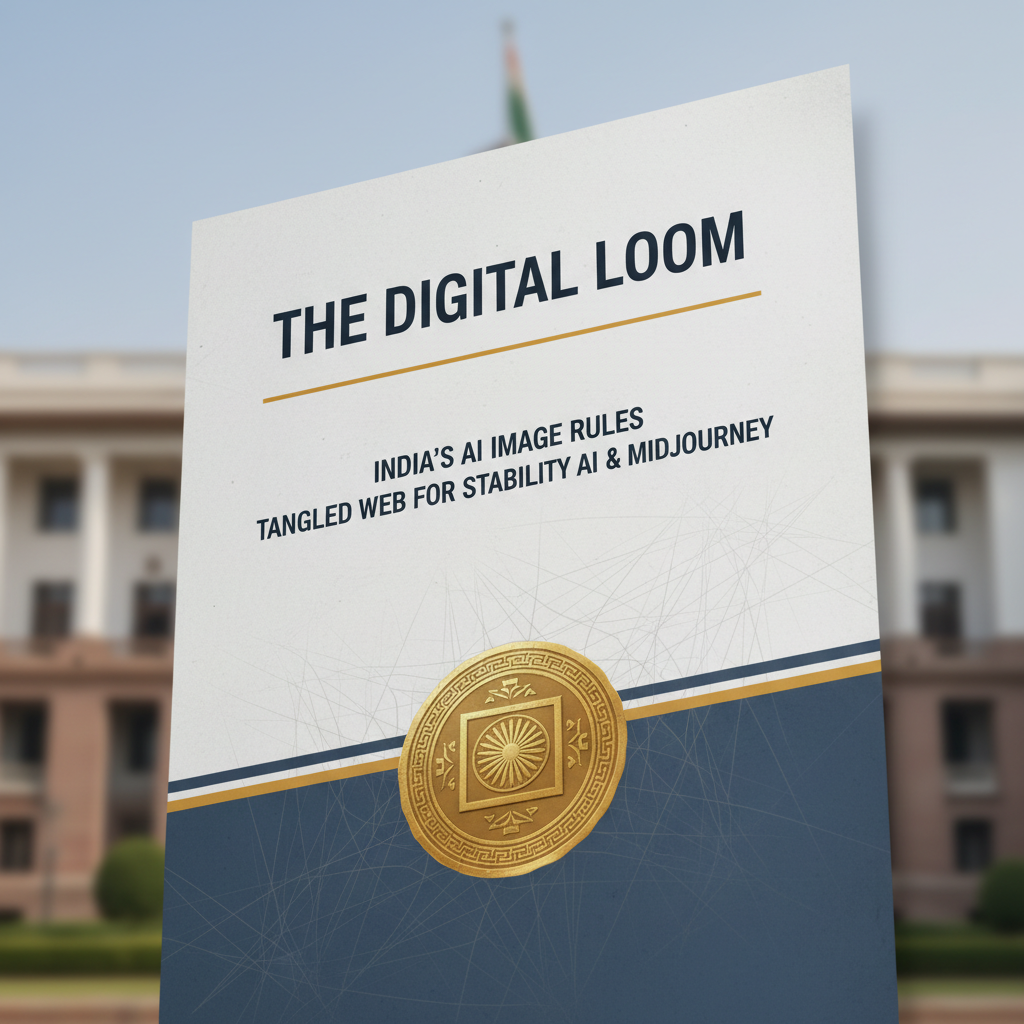
The latest directive, issued in late March, is a rather broad stroke, instructing all AI models, including the image-generating variety, to seek explicit government approval before being deployed to Indian users. Yes, you read that right. Approval. It also mandates that these models must not produce content that is illegal under Indian law, which, let us be frank, is a rather expansive category. Furthermore, they are required to clearly label AI-generated content and ensure their outputs do not spread misinformation or deepfakes. It is a classic move, isn't it, trying to catch a digital whirlwind in a regulatory net. The stated goal is noble: protect citizens from harmful content, misinformation, and the potential misuse of powerful AI tools. After all, who wants their grandmother believing a deepfake of a politician dancing to a Bollywood item number, no matter how entertaining?
So, who is behind this sudden surge of regulatory zeal? Well, MeitY, obviously, but the impetus comes from a growing global concern about AI's unchecked power. In India, the government has been increasingly vocal about the need for a 'safe and trusted internet.' The recent surge in deepfake incidents, particularly those targeting public figures and even ordinary citizens, has certainly added fuel to the fire. Remember that unfortunate incident with the actress whose face was swapped onto another body in a viral video? That sent shivers down many spines. "We cannot allow technology to become a weapon against our social fabric," declared Shri Rajeev Chandrasekhar, the Minister of State for Electronics and Information Technology, in a recent press conference. "These guidelines are a necessary step to ensure accountability and transparency in the AI ecosystem, especially for models that can generate realistic, yet fabricated, content." It is a sentiment that resonates, particularly in a country where misinformation can spread faster than a WhatsApp forward about a new miracle cure.
What does this mean in practice for Stability AI, Midjourney, and the myriad of smaller generative art platforms? Well, for starters, it means a lot more paperwork. Imagine the queues, the forms, the endless bureaucratic loops. It is like trying to get a building permit in Mumbai, but for algorithms. Every new model, every significant update, will likely need to pass through a government clearance process. This could significantly slow down innovation, a point that has not gone unnoticed by the industry. Furthermore, the onus is now squarely on the AI developers to ensure their models are 'safe' and 'non-misinformative.' How does one even define that for a creative, generative model? Is a satirical image of a deity 'misinformation'? Is a political cartoon 'illegal content'? The lines, my friends, are blurrier than a poorly rendered AI landscape.
Predictably, the industry reaction has been a mix of cautious compliance and thinly veiled frustration. Larger players with deeper pockets, like Google and OpenAI, who already have significant legal and compliance teams, might find it easier to navigate these waters, albeit with grumbles. For smaller startups, particularly those operating on shoestring budgets, this could be a death knell. "The compliance burden is immense," lamented Priya Sharma, CEO of 'Canvas AI,' a Bengaluru-based startup specializing in AI-driven textile design. "We are a team of ten people, not a multinational corporation. Diverting resources to navigate complex regulatory approvals for every model iteration will stifle our ability to compete and innovate. It is a classic case of overreach, trying to solve a nuanced problem with a blunt instrument." Indeed, the fear is that this will inadvertently create a moat around the giants, making it harder for nimble Indian startups to flourish. TechCrunch has been tracking similar regulatory challenges faced by startups globally.
Civil society groups, on the other hand, are largely welcoming the move, albeit with caveats. Many have been advocating for stronger guardrails around AI for years, particularly concerning deepfakes and algorithmic bias. "This is a crucial first step towards making AI platforms accountable," stated Dr. Anjali Rao, a leading AI ethics researcher at the Indian Institute of Science. "However, the devil is in the details. The implementation must be transparent, and the approval process should not become a tool for censorship or stifle artistic expression. We need clear definitions of 'harmful' and 'misinformation' that are not open to arbitrary interpretation." She raises a valid point. The potential for misuse of such broad powers is not lost on anyone who has observed the evolution of digital content regulation in India. Oh, the irony, that the very tools meant to prevent misinformation could be used to control information.
So, will it work? That is the million-dollar question, isn't it? On one hand, the intent is sound. Holding powerful AI systems accountable and protecting citizens from genuine harm is a laudable goal. The requirement for clear labeling of AI-generated content is particularly important, helping users distinguish between reality and synthetic creation. On the other hand, the broadness of the directives, the potential for bureaucratic bottlenecks, and the inherent difficulty in regulating rapidly evolving technology raise serious concerns. The internet, much like the Ganges, finds a way around obstacles. People will always find ways to access models, approved or not, especially if the local offerings become too restrictive or slow. It is a global technology, after all, and digital borders are notoriously porous. We have seen this play out with content moderation before; it is a never-ending game of whack-a-mole.
Ultimately, the success of these regulations will hinge on their implementation. If MeitY can create a transparent, efficient, and nuanced approval process that balances innovation with safety, then perhaps India can set a precedent for responsible AI governance. If it devolves into red tape and arbitrary restrictions, then we might just see a brain drain of AI talent and a stifling of the very innovation we claim to champion. For now, Stability AI and Midjourney, along with their smaller cousins, are left to ponder how to navigate this new regulatory landscape, a landscape that looks suspiciously like a government office during peak hours. File this under 'things that make you go hmm,' because the future of generative AI in India just got a lot more interesting, and perhaps, a little more complicated. For more on global AI policy, you might want to check out MIT Technology Review. The world is watching how India, a digital powerhouse, handles this delicate dance between innovation and regulation.