
G'day, everyone. Braideùn O'Sullivàn here, buzzing with excitement from down under, ready to dive into one of the most critical conversations shaping our digital destiny. You know, we're living through an extraordinary time, a moment when artificial intelligence isn't just a buzzword, it's the very fabric being woven into our lives, from the apps on our phones to the algorithms powering our hospitals. But as we gallop into this future, there's a growing chasm, a real head-scratcher that keeps me up at night: the global AI governance gap. It's not just a fancy academic term, folks, it's the difference between a future we build together, safely and equitably, and one that fragments into a chaotic, unregulated mess. It's the challenge of our generation, and it demands our attention. My Irish roots taught me to question, my Australian home taught me to build, and right now, I'm questioning how we build this future responsibly. So, what exactly is this governance gap, and why should it matter to you, whether you're sipping a flat white in Melbourne or a coffee in Cupertino?
What Exactly is the Global AI Governance Gap?
Alright, let's break it down. Imagine you've got a brand new, incredibly powerful car, say a Tesla Cybertruck, that can drive itself. It's amazing, it's fast, it's smart. But what if every country had different traffic laws, or worse, no traffic laws at all? Some places might say drive on the left, others on the right. Some might have speed limits, others none. That's essentially the global AI governance gap. It's the absence of a unified, internationally agreed-upon framework, a set of common rules, standards, and ethical guidelines for how AI is developed, deployed, and regulated across different nations and jurisdictions.
Right now, we have a patchwork. The European Union has its groundbreaking AI Act, a comprehensive, risk-based approach that's setting a global benchmark. The United States is leaning more towards voluntary guidelines and sector-specific regulations, often driven by industry leaders like OpenAI and Google. China has its own distinct approach, heavily integrated with state control and data sovereignty. And here in Australia, we're busy developing our own strategies, like the National AI Centre, but we're still navigating the global currents. This disparity creates friction, uncertainty, and potential for significant problems, particularly when AI systems operate across borders, which they almost always do.
Why Should You Care About This Patchwork?
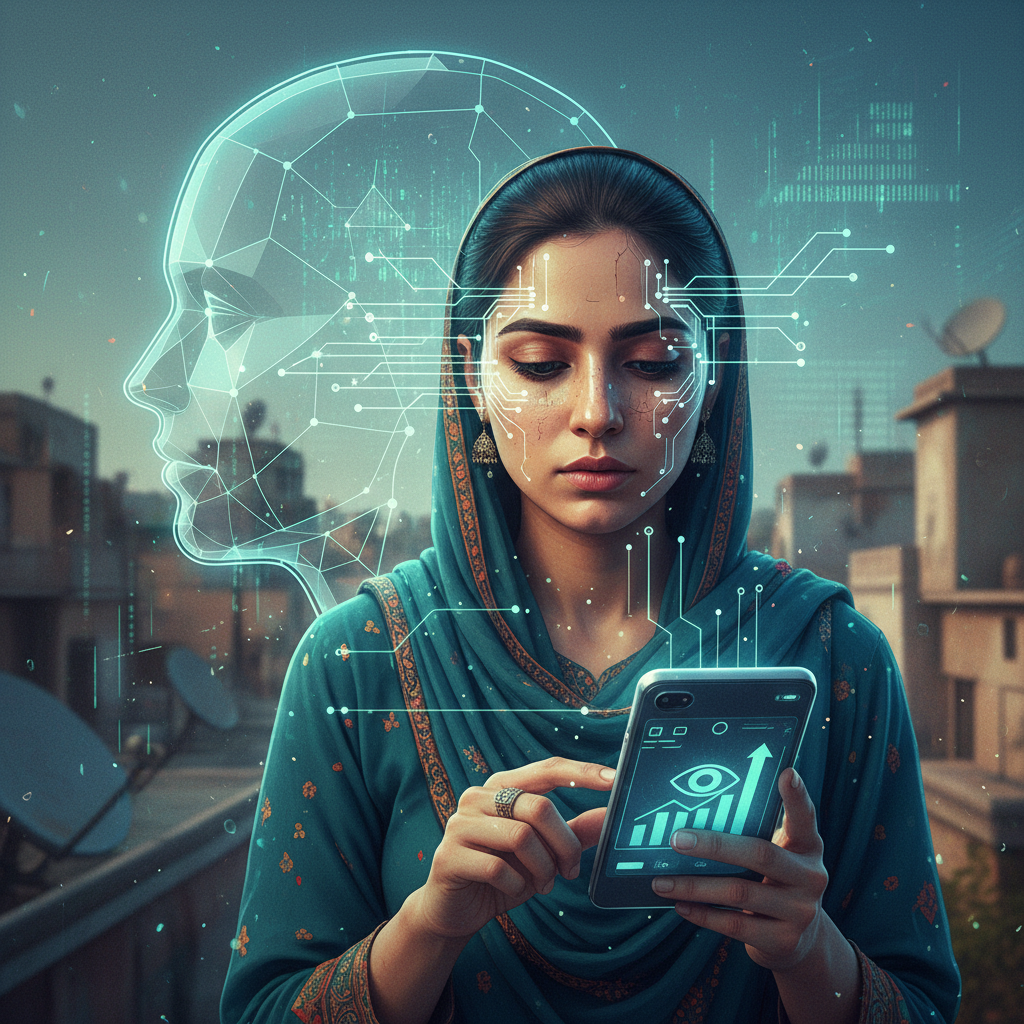
Why should this matter to the average person, you ask? Because AI isn't some distant sci-fi concept anymore, it's in your everyday. It influences your loan applications, your job interviews, the news you see, and even the medical diagnoses you receive. When there's no common ground on how these powerful systems are governed, we face several risks. Firstly, a race to the bottom: countries or companies might lower ethical standards to gain a competitive edge, leading to less safe or biased AI. Secondly, a lack of interoperability: imagine trying to share medical AI data between a hospital in Sydney and one in Singapore if their regulatory frameworks are completely incompatible. Thirdly, and perhaps most critically, a deficit of trust. If people don't trust that AI is being developed and used responsibly, adoption will falter, and the immense benefits AI offers will be delayed or lost. As our own Minister for Industry and Science, the Honourable Ed Husic, recently noted, trust is the bedrock of innovation. Without it, the whole edifice crumbles.
How Did This Governance Gap Develop?
This isn't a new problem, but it's been supercharged by the sheer speed of AI development. For decades, AI was largely an academic pursuit. Then, with breakthroughs in deep learning, massive datasets, and computational power from giants like NVIDIA, things exploded. Suddenly, we had large language models like OpenAI's GPT-4 and Anthropic's Claude 3, capable of generating human-like text, images, and even code. Governments and international bodies simply weren't prepared for this rapid acceleration. Lawmaking is a slow, deliberative process, often taking years. AI innovation, however, moves at warp speed, sometimes literally overnight. This mismatch in pace is the primary driver of the gap. Everyone is trying to catch up, but they're all running in slightly different directions, often with different national interests at heart.
How Does It Work in Simple Terms? Analogies and Examples
Think of it like this: the internet. When the internet first emerged, it was a wild frontier. No one really knew how to regulate it, and it grew organically. We're still grappling with internet governance today, decades later, dealing with issues like data privacy, cybersecurity, and content moderation. AI is the internet on steroids, with even more profound implications because it can make decisions, learn, and act autonomously. If the internet was a global library, AI is a global library that can write its own books, translate them into any language, and then decide which ones you get to read. Without a common understanding of who gets to decide what's published, what's censored, or even what's true, we're in for a bumpy ride.
Another way to look at it is through the lens of climate change. We all share the same planet, and emissions from one country affect everyone. Similarly, a powerful, unregulated AI system developed in one nation could have global consequences, whether it's spreading misinformation, disrupting financial markets, or impacting employment worldwide. It's a shared global resource, and it requires shared global stewardship.
Real-World Examples of the Gap in Action
-
Data Privacy and Cross-Border Data Flows: Consider a global tech company like Microsoft, which operates its Copilot AI services worldwide. If a user in Germany interacts with Copilot, their data might be processed on servers in the US. The EU's GDPR has strict rules on data transfer and processing, while US laws are different. This creates a legal minefield for companies and raises questions about who has jurisdiction over your data. This is a constant challenge for companies like Salesforce, which handles vast amounts of customer data globally. You can read more about these challenges on Reuters Technology.
-
Autonomous Weapons Systems: This is a truly chilling example. Some nations are investing heavily in AI-powered autonomous weapons, while others advocate for a complete ban. Without international consensus, we risk an AI arms race, where machines make life-and-death decisions without human intervention. The ethical implications are staggering, and the lack of a global framework is a ticking time bomb.
-
Bias and Discrimination: AI systems learn from data. If that data is biased, the AI will perpetuate and even amplify those biases. An AI used for hiring might discriminate against certain demographics, or an AI used for loan approvals might unfairly disadvantage certain communities. If these systems are developed in one country with one set of cultural biases and then deployed globally, the impact can be devastating. Companies like Google and Meta are constantly battling these issues within their own AI models.
-
Intellectual Property and Generative AI: Generative AI models, like those from Stability AI or Midjourney, are trained on vast amounts of existing content, including copyrighted material. Artists and creators are rightly asking who owns the output, and who should be compensated for the training data. Different countries have different copyright laws, making it incredibly complex to establish global norms for this new creative frontier. This is a huge legal battleground right now, with many artists and creators looking to protect their work.
Common Misconceptions About AI Governance
One big misconception is that AI governance is about stifling innovation. Absolutely not! It's about fostering responsible innovation. Just like building codes don't stop architects from designing incredible skyscrapers, but ensure they're safe, AI governance aims to create a secure and trustworthy environment for AI to flourish. Another myth is that it's too late, or too hard, to achieve global cooperation. Yes, it's challenging, but the alternative is far worse. We've seen international cooperation on everything from nuclear non-proliferation to climate agreements; AI is just the next frontier.
Some folks also think that national regulations are enough. While national efforts, like Australia's own AI ethics framework, are crucial, they're insufficient for a technology that knows no borders. An AI model trained in California can be deployed in Canberra in an instant. This is why we need a global conversation, a global handshake, on these issues.
What to Watch For Next
The good news is that the conversation is happening. International bodies like the UN, the G7, and the Oecd are actively discussing AI governance. We're seeing initiatives like the UK's AI Safety Summit, bringing together world leaders and tech giants like Sam Altman and Jensen Huang to talk about the most pressing risks. The EU's AI Act, while not global, is having a 'Brussels effect,' influencing regulations in other parts of the world, much like GDPR did for data privacy. There's something happening in the Southern Hemisphere that Silicon Valley hasn't noticed yet, and that's a growing push from nations like Australia, Singapore, and South Korea to ensure our voices are heard in shaping these global norms, not just reacting to them.
Keep an eye on the development of international AI safety institutes, like the one established in the UK and the US, which aim to conduct independent evaluations of advanced AI models. Also, watch for more sector-specific agreements. For example, the financial industry, with its heavy reliance on AI for fraud detection and algorithmic trading, might see its own set of global standards emerge. The stakes are incredibly high, and the path forward requires diplomacy, collaboration, and a shared vision for a future where AI serves humanity, not the other way around. It's a grand challenge, but one I'm confident we can tackle together, with a bit of that Aussie ingenuity and Irish spirit guiding the way. For more on the global efforts, check out MIT Technology Review.
It's an exciting, albeit complex, time to be alive, and I can't wait to see how we collectively navigate these waters. The future of AI isn't just about code and algorithms; it's about the kind of world we choose to build, together. And that, my friends, is a story worth telling, and one we're all writing every single day.