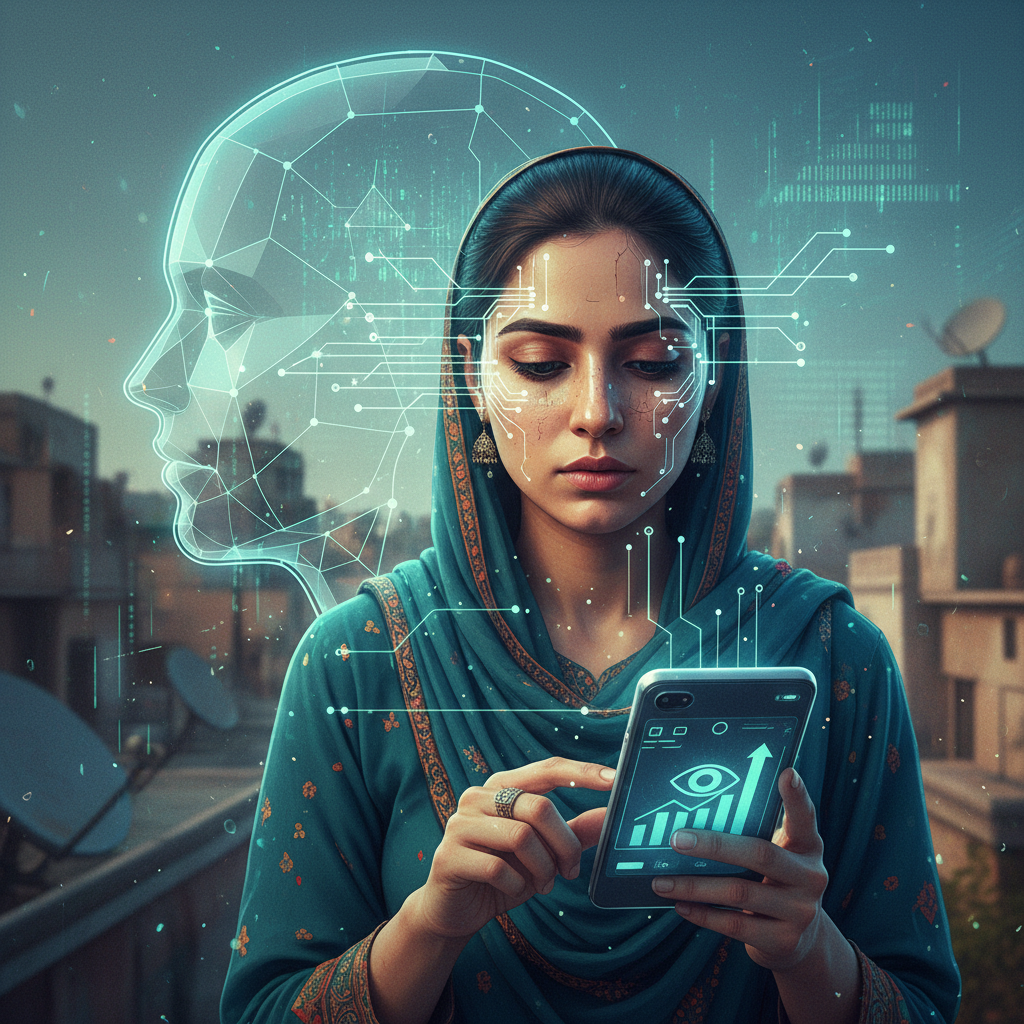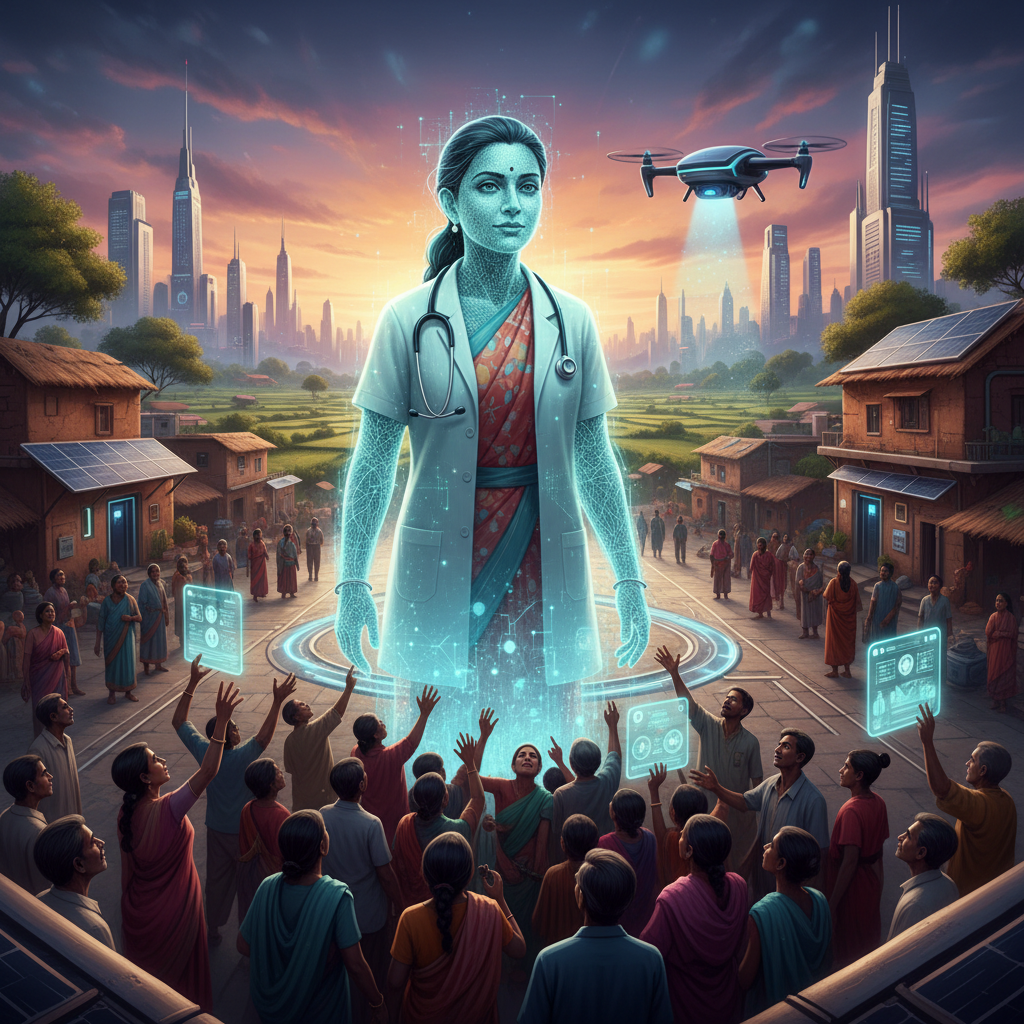
Picture this: it's 2032. In a remote village in Rajasthan, an elderly woman, who once had to travel two days to see a doctor, now sits comfortably in her home. A small, solar-powered device, no bigger than a smartphone, scans her retina, monitors her heart rhythm, and analyzes her voice for subtle changes in tone and cadence. An AI, trained on millions of diverse Indian health records and speaking her local dialect, offers a diagnosis and a personalized treatment plan, instantly. This isn't science fiction, my friends, this is the inevitable future of healthcare, and India, with its unique challenges and unparalleled digital infrastructure, is writing the blueprint.
For too long, the economics of healthcare have been a brutal zero-sum game. Access was a luxury, talent was concentrated, and innovation often served the privileged few. But AI, particularly in the health sector, is an equalizer. It's not just about efficiency; it's about redistribution of opportunity and wealth. The question isn't if AI will change everything, but how it will fundamentally alter who profits and who pays, especially in a nation as vast and varied as ours.
We are at an inflection point. The traditional models of healthcare, burdened by infrastructure costs, geographical barriers, and a chronic shortage of skilled professionals, are crumbling under their own weight. India, with its 1.4 billion people, faces this challenge acutely. Yet, this very challenge is our greatest advantage. Necessity, as they say, is the mother of invention, and our innovators are not just inventing, they are reinventing.
Consider the sheer scale. We have a massive, digitally-native population, a burgeoning startup ecosystem, and a government pushing for digital public goods. The Ayushman Bharat Digital Mission, for instance, is building a foundational digital health infrastructure that will be the envy of the world. This isn't just about electronic health records; it's the nervous system for an AI-powered healthcare revolution. It means that the data, the lifeblood of any effective AI, is being collected and standardized at a scale no other nation can match.
So, who profits? First, the AI platforms themselves. Companies like Bengaluru's 'MediMind AI' and Hyderabad's 'AarogyaTech', which are building specialized large language models (LLMs) and diagnostic algorithms tailored for Indian conditions and languages, are poised to become global giants. Their valuations, already in the hundreds of millions, will soar into the billions. These aren't just software companies; they are the architects of a new health economy. Their profits will come from licensing their advanced diagnostic tools, predictive analytics, and personalized treatment recommendation engines to governments, hospitals, and even individual practitioners worldwide.
Then there are the hardware innovators. The makers of those ubiquitous, affordable AI-powered diagnostic devices, the ones that will be in every village and every home. Think of companies like 'HealthSense India', developing low-cost, high-precision sensors and edge AI processors. These devices, often running on open-source AI frameworks, will democratize access to diagnostics, much like mobile phones democratized communication. The margins might be thin per unit, but the volume will be astronomical.
And let's not forget the data annotators and validators. While AI automates many tasks, the human element in training and refining these models remains critical, especially for nuanced medical data. This creates millions of new, skilled jobs in smaller towns and rural areas, providing a legitimate pathway to economic upliftment for a generation that might otherwise have been left behind. "We're seeing a complete redefinition of the medical workforce," says Dr. Priya Sharma, CEO of HealthBridge AI, a startup focused on ethical AI deployment in rural health. "It's not about replacing doctors, but augmenting them, and creating entirely new roles for data specialists and AI navigators."
But who pays? The traditional pharmaceutical giants, for one, will need to adapt or face obsolescence. Their business model, often reliant on blockbuster drugs and high-cost R&D, will be challenged by AI's ability to discover new compounds faster, personalize dosages, and even predict drug efficacy with unprecedented accuracy. The era of one-size-fits-all medication is ending. Similarly, large, centralized hospital chains that fail to integrate AI into their core operations will find themselves outcompeted by leaner, more efficient AI-driven clinics and telehealth services.
Insurance companies too, will have to fundamentally rethink their models. With AI-driven preventative care becoming the norm, and early diagnosis drastically reducing the severity of chronic diseases, the very nature of risk assessment and premium calculation will change. Those who embrace AI for proactive health management will thrive; those who cling to reactive, illness-based models will struggle.
"The shift is profound," explains Professor Rakesh Singh, an economist at the Indian Institute of Management, Ahmedabad. "We're moving from a 'sick care' economy to a 'well-being' economy. The profits will increasingly flow to those who keep people healthy, not just treat them when they're sick. This is a massive opportunity for India to lead, not just follow, on the global stage." Indeed, India will own the next decade of AI in this domain, mark my words.
Moreover, the global health tourism industry, which has often seen India as a destination for affordable treatment, will also transform. As AI democratizes high-quality diagnostics and care, the incentive for medical travel might diminish for routine procedures, shifting focus to highly specialized, complex interventions where human expertise remains paramount.
What should you do now? If you're an entrepreneur, look at building AI solutions that address India's unique health challenges: rural access, chronic disease management, and personalized nutrition. The market is immense, and the impact, even more so. If you're a healthcare professional, embrace these tools. Learn to work with AI, not against it. Your role will evolve from primary diagnostician to a compassionate guide and complex case manager.
For policymakers, the task is clear: foster an environment of ethical AI development, invest in digital literacy, and ensure equitable access to these transformative technologies. The digital divide must not become a health divide. We need robust data governance frameworks that protect privacy while enabling innovation. "Our challenge is to ensure that this technological leap benefits everyone, from the bustling streets of Mumbai to the quietest corners of Arunachal Pradesh," states Dr. Kavita Rao, Director of the National Health AI Council. "It requires foresight, collaboration, and a deep understanding of our diverse population."
This isn't just about technology; it's about human potential. It's about empowering every Indian, regardless of their postcode or income, to live a healthier, more productive life. When health becomes a right, not a privilege, the economic ripple effects are monumental. A healthier population is a more productive population, a more innovative population, and ultimately, a wealthier nation. Forget Silicon Valley, look at Hyderabad and Bengaluru; the future of global health economics is being forged right here, right now, in India. The world is watching, and we are ready to deliver. You can follow more of these developments on platforms like TechCrunch which often highlight emerging AI unicorns from our region.