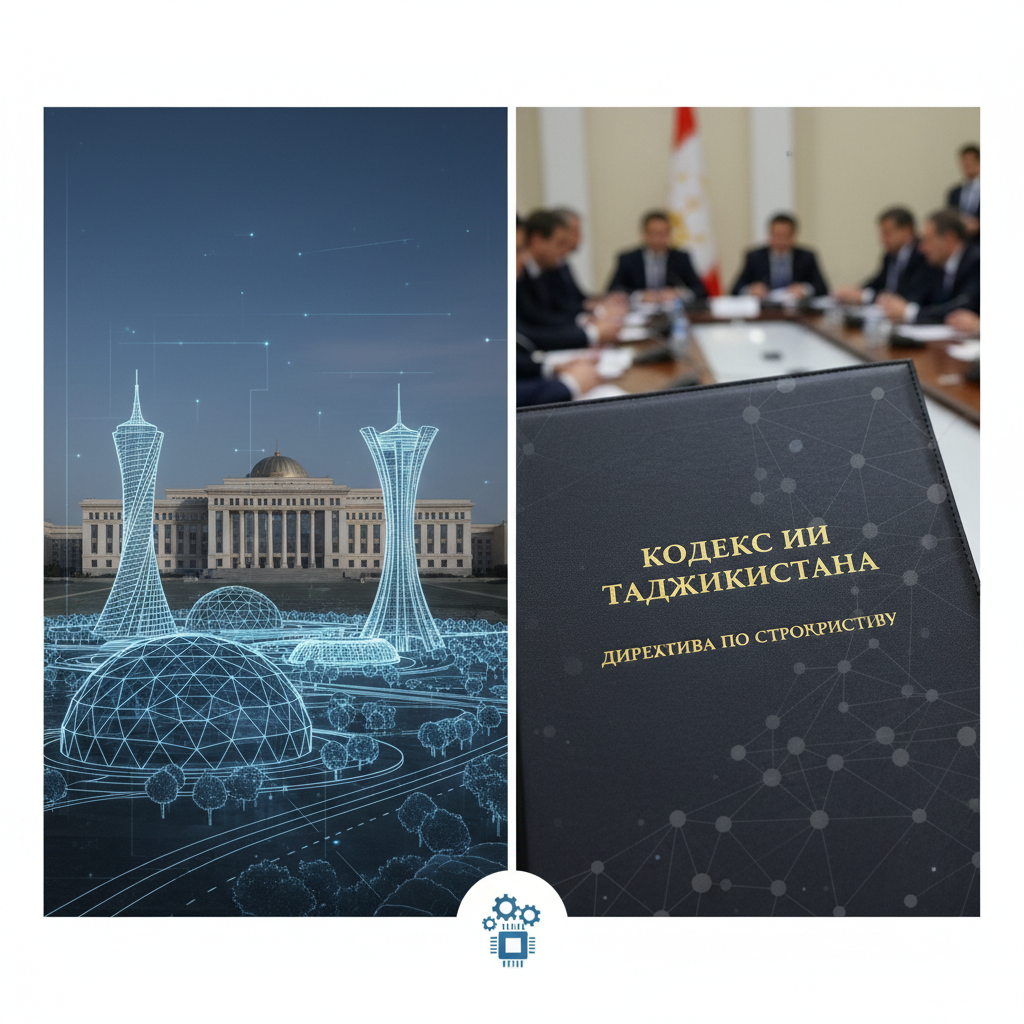

The dust of progress, much like the dust from a construction site, often obscures the true picture. In Tajikistan, a nation where the mountains stand as eternal sentinels and the rivers carve paths through ancient lands, the conversation surrounding artificial intelligence often feels distant, a whisper from the global north. Yet, a significant policy shift has emerged from Dushanbe, aiming to embed AI directly into the very fabric of our national development: the construction sector.
Late last year, the Ministry of Construction and Architecture unveiled a new directive. This policy mandates the exploration and, where feasible, implementation of AI driven solutions for building design optimization, safety monitoring, and project management across major state-funded construction projects. It is a bold declaration, one that seeks to leverage the computational power of AI to address long-standing inefficiencies and enhance structural integrity in a seismically active region. The ambition is clear: to build smarter, safer, and more cost-effectively.
Who is behind this ambitious push, and what is their motivation? The primary architects of this policy are officials within the Ministry of Construction and Architecture, notably Deputy Minister Rustam Barotov. Speaking at a recent forum on technological adoption, Mr. Barotov emphasized the transformative potential. “Our goal is not merely to construct buildings, but to construct a more resilient future for Tajikistan,” he stated. “AI offers us tools to predict structural weaknesses, optimize material usage, and prevent accidents before they occur. This is about national security and economic prudence.” The impetus also stems from a recognition that traditional construction methods, while robust, are often slow and prone to human error, particularly in complex infrastructure projects like hydroelectric dams or multi-story residential complexes. The government, keen to accelerate its national development agenda, sees AI as a potential catalyst.
What does this mean in practice for the builders and engineers on the ground? For design optimization, the directive encourages the use of generative AI platforms, similar in concept to those developed by companies like Autodesk or Dassault Systèmes, though often localized or adapted for regional specificities. These systems can rapidly iterate through thousands of design possibilities, considering factors such as material strength, cost efficiency, thermal performance, and seismic resistance, far exceeding human capacity. For safety monitoring, the policy envisions AI powered camera systems and sensor networks deployed on construction sites. These systems, utilizing computer vision algorithms, could detect unsafe practices, identify workers without proper safety gear, or even predict equipment failure by analyzing operational data. Project management, too, is targeted for AI integration, with algorithms designed to optimize scheduling, resource allocation, and risk assessment, drawing upon vast datasets of past project performance.
However, the reality in Central Asia is different from the headlines often seen in global tech publications. The implementation of such advanced technologies is not a simple matter of procurement. It requires a robust digital infrastructure, a skilled workforce capable of operating and maintaining these systems, and a regulatory framework that can adapt to rapidly evolving technology. Many smaller construction firms, which form the backbone of the industry, lack the capital and technical expertise to adopt these solutions immediately. The policy, for now, primarily targets larger state-backed projects, creating a potential two-tiered system.
Industry reaction has been mixed, though largely cautiously optimistic. Major state-owned construction enterprises, such as Tajiksnabstroy, have expressed willingness to pilot these technologies. “We understand the long-term benefits,” remarked Davlat Safarov, Chief Engineer at Tajiksnabstroy. “However, the initial investment in hardware, software licenses, and specialized training for our engineers is substantial. We need clear guidelines and financial incentives from the government to make this transition viable on a wider scale.” Smaller private contractors, on the other hand, voice concerns about being left behind. They fear that without accessible training programs and subsidized technology, they will be unable to compete for future projects that mandate AI integration. The availability of local AI talent is also a critical bottleneck. While universities are beginning to offer AI courses, the practical experience needed for complex engineering applications is still nascent.
From the perspective of civil society, the policy elicits both hope and apprehension. Organizations like the Tajikistan National Union of Engineers acknowledge the potential for improved safety and efficiency. “Any measure that reduces workplace accidents and ensures the structural integrity of our buildings is welcome,” said Dr. Gulnora Karimova, a structural engineer and advocate for ethical technology use. “However, we must also consider the ethical implications. Who is responsible when an AI system makes a design error? How do we ensure data privacy with pervasive monitoring on construction sites? And what about the potential displacement of manual labor?” These are not trivial questions, and the current policy framework offers limited answers, focusing more on technical implementation than on societal safeguards. There is a palpable need for public discourse and stakeholder engagement to shape a more comprehensive approach.
Will this policy work? The answer, like many things in our developing nation, is complex and depends heavily on execution. Tajikistan's challenges require Tajik solutions. The directive is a crucial first step in acknowledging the potential of AI, but its success hinges on several factors. First, the government must invest significantly in digital infrastructure, ensuring reliable internet access and computing resources even in remote project locations. Second, a robust education and training pipeline is essential to cultivate a local workforce proficient in AI and construction technology. This includes not only university programs but also vocational training for existing workers. Third, a flexible and responsive regulatory environment is needed, one that can address emerging ethical and legal questions without stifling innovation. Finally, genuine collaboration between government, industry, academia, and civil society will be paramount. Without these foundational elements, the policy risks becoming a bureaucratic exercise, a well-intentioned but ultimately ineffective decree. The promise of AI in construction is not just about algorithms and data; it is about building a future that genuinely serves the people of Tajikistan, brick by digital brick. Let's talk about what actually works, and ensure our policies are grounded in our unique realities. For more on global AI policy developments, one might consult Reuters Technology or MIT Technology Review. The path forward demands pragmatism, not just aspiration.