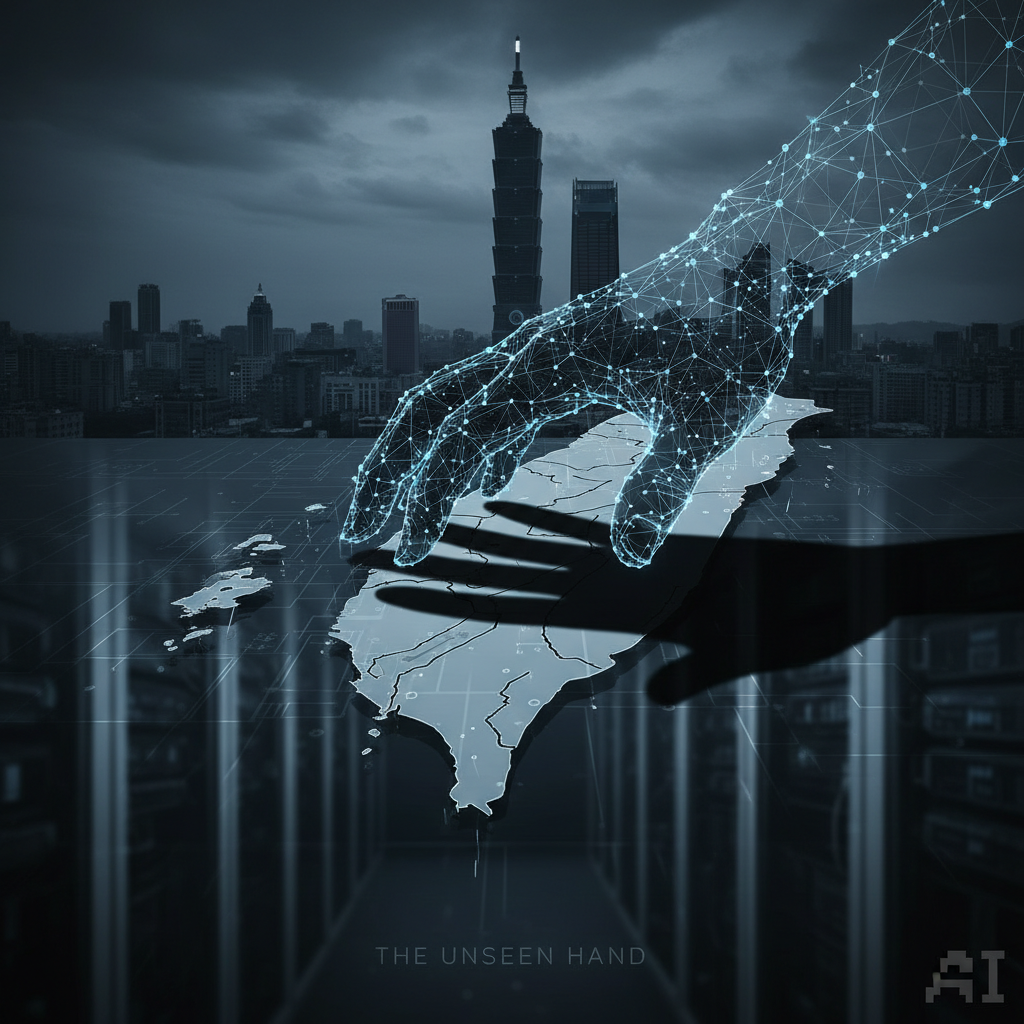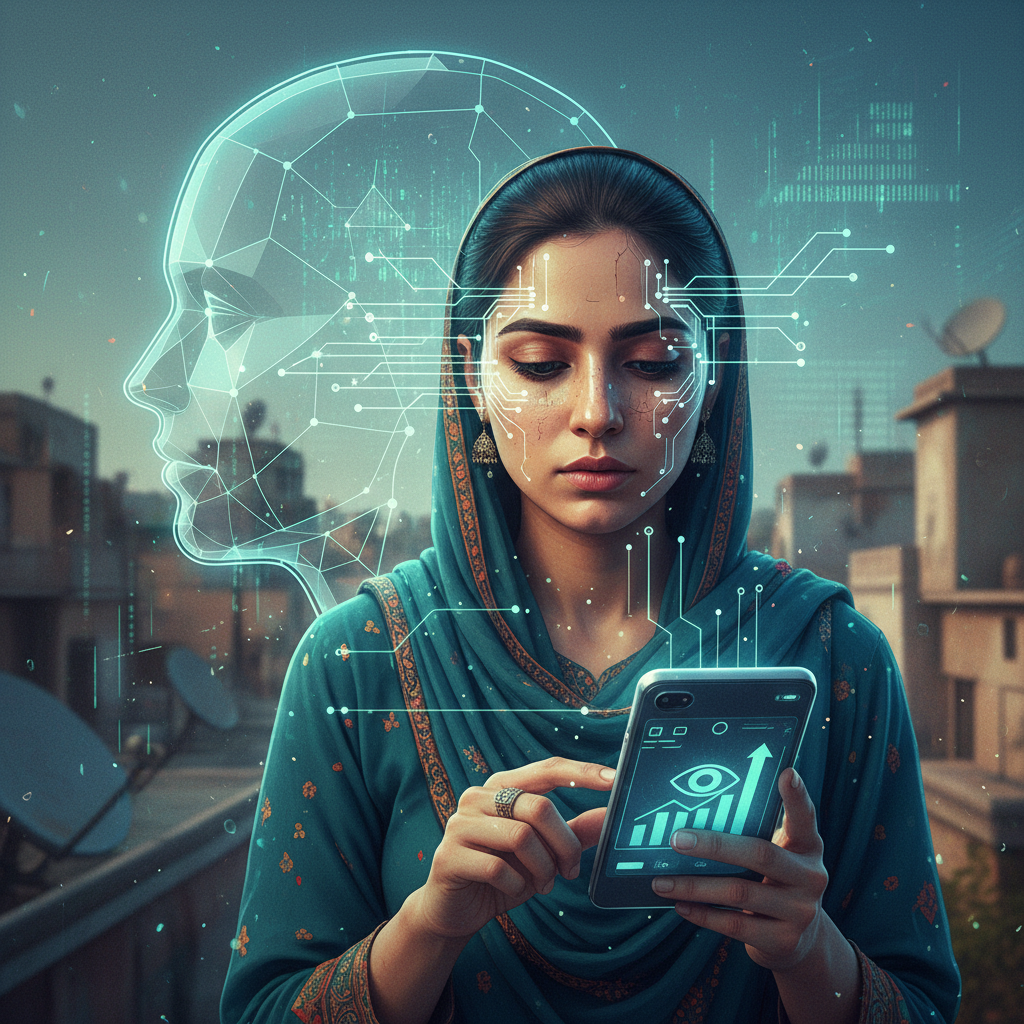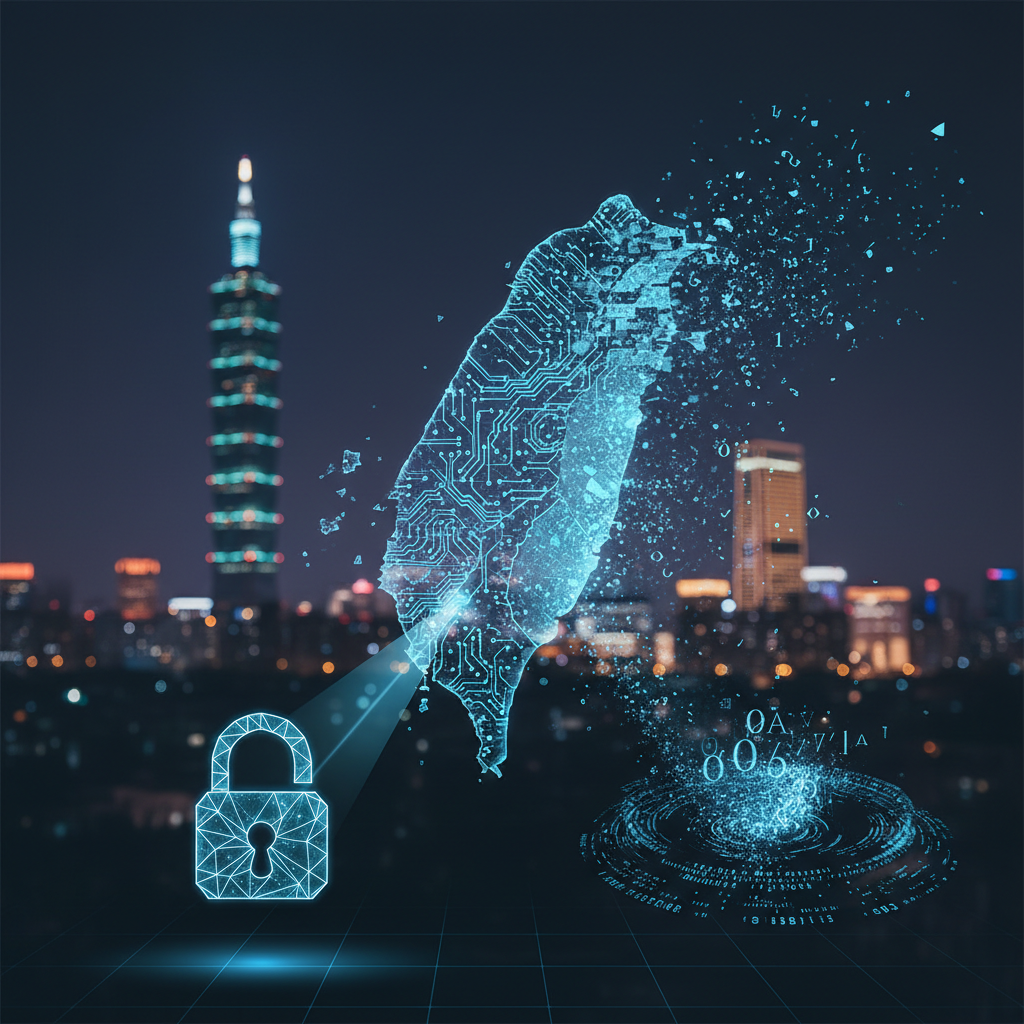
The digital world, once a realm of relative certainty, now teeters on the precipice of profound distrust. With the rapid advancement of generative AI, particularly in models capable of synthesizing photorealistic images and convincing audio, the very foundation of digital identity is under siege. We are no longer merely contending with phishing scams or stolen passwords; we face a future where a digitally fabricated persona can convincingly impersonate anyone, from a corporate CEO to a national leader. For Taiwan, a nation at the forefront of semiconductor innovation and a frequent target of disinformation campaigns, this is not merely an academic concern but an urgent national security and economic imperative.
The technical challenge before us is multifaceted: how do we establish and verify a digital identity with absolute certainty when the tools for its forgery are becoming indistinguishable from reality? The problem is not just detection, which is a perpetual arms race, but prevention and verifiable authentication. Let's separate fact from narrative. The narrative often focuses on the sensationalism of deepfakes, but the fact is that robust digital identity systems are critical infrastructure, much like our power grids or transportation networks.
Architecture Overview: A Multi-Layered Defense
Securing digital identity against deepfakes requires a multi-layered, decentralized architecture. Traditional centralized identity providers are single points of failure, vulnerable to both state-sponsored attacks and sophisticated criminal enterprises. A more resilient system would integrate elements of Self-Sovereign Identity (SSI) with advanced cryptographic proofs and AI-driven anomaly detection at the edge.
Our proposed architecture comprises several key components:
- Decentralized Identifiers (DIDs) and Verifiable Credentials (VCs): Based on W3C standards, DIDs provide a globally unique, persistent identifier that is cryptographically verifiable. VCs, issued by trusted entities (e.g., government agencies, banks, educational institutions), attest to attributes of an identity. These are stored on a distributed ledger technology (DLT), not necessarily a public blockchain, but a permissioned one that ensures immutability and auditability.
- Biometric Liveness Detection Modules: At the point of identity verification, advanced liveness detection algorithms, often employing infrared sensors, 3D facial mapping, and micro-expression analysis, are crucial. These systems must differentiate between a live human and a sophisticated deepfake presentation attack. "The sophistication of these attacks demands continuous innovation in sensor fusion and AI models," notes Dr. Chen Mei-Ling, Head of Biometric Security Research at Academia Sinica in Taipei.
- Zero-Knowledge Proofs (ZKPs): This is where the true power lies. ZKPs allow a prover to demonstrate the truth of a statement to a verifier without revealing any information beyond the validity of the statement itself. For digital identity, this means a user can prove they are over 18, or a citizen of Taiwan, or have sufficient funds, without disclosing their exact birthdate, national ID number, or bank balance. This privacy-preserving aspect is paramount in an era of pervasive data breaches.
- AI-Powered Anomaly Detection and Threat Intelligence: A central, yet privacy-preserving, threat intelligence network aggregates data on known deepfake generation techniques, attack vectors, and compromised credentials. AI models, particularly graph neural networks, can identify anomalous login patterns, unusual transaction requests, or discrepancies in biometric data that might indicate a deepfake in progress.
Key Algorithms and Approaches
Implementing such an architecture relies heavily on advanced cryptographic and machine learning techniques.
Zero-Knowledge Proofs (ZKPs)
Consider a user proving their age without revealing their birthdate. A common ZKP scheme suitable for this is zk-SNARKs (Zero-Knowledge Succinct Non-Interactive Argument of Knowledge). The process involves:
- Setup: A trusted setup generates public parameters for the specific statement (e.g.,
age > 18). - Prover: The user, holding their birthdate (witness
w), computes a proofπthatF(public_input, w) = true, whereFis a function representingage > 18andpublic_inputis the current date. - Verifier: The verifier, using the public parameters and
public_input, checks ifπis valid without ever seeingw.
Conceptual Example (Simplified zk-SNARK):
// Statement: I know a number 'x' such that x^3 + x + 5 = 35
// Witness: x = 3

function generate_proof(witness_x, public_statement):
 // Complex polynomial arithmetic and elliptic curve cryptography
 // to create a proof without revealing witness_x
 return proof_pi

function verify_proof(proof_pi, public_statement):
 // Use public parameters to verify proof_pi against public_statement
 // without needing witness_x
 return true_or_false
// Statement: I know a number 'x' such that x^3 + x + 5 = 35
// Witness: x = 3

function generate_proof(witness_x, public_statement):
 // Complex polynomial arithmetic and elliptic curve cryptography
 // to create a proof without revealing witness_x
 return proof_pi

function verify_proof(proof_pi, public_statement):
 // Use public parameters to verify proof_pi against public_statement
 // without needing witness_x
 return true_or_false
The mathematical underpinnings involve converting the statement into a Rank 1 Constraint System (R1CS) and then to Quadratic Arithmetic Programs (QAPs), which are then proven using elliptic curve pairings. This ensures both soundness (a false statement cannot be proven) and completeness (a true statement can always be proven).
Deepfake Detection with Multi-Modal Fusion
While ZKPs secure the identity attributes, liveness detection and deepfake recognition are crucial at the point of interaction. State-of-the-art approaches leverage multi-modal fusion, combining visual, audio, and physiological signals.
- Visual Analysis: Convolutional Neural Networks (CNNs) and Vision Transformers (ViTs) analyze subtle artifacts in video frames. These include inconsistencies in eye blinking patterns, head pose estimation, facial blood flow (photoplethysmography, PPG), and pixel-level noise discrepancies. For instance, deepfake generation often leaves traces in high-frequency components of images or exhibits unnatural temporal coherence. A common technique involves training a model on a dataset of real and synthetic videos, focusing on residual noise patterns.
- Audio Analysis: Recurrent Neural Networks (RNNs) or Transformer models process audio streams, looking for anomalies in vocal timbre, prosody, and background noise. Deepfake audio often lacks the natural imperfections of human speech, such as breath sounds or subtle variations in pitch. Spoofing detection algorithms analyze features like Mel-frequency cepstral coefficients (MFCCs) and phase information.
- Physiological Signal Integration: Sensors can detect heart rate, skin conductivity, and pupil dilation. These involuntary physiological responses are extremely difficult for deepfake models to simulate accurately in real-time. A discrepancy between visual liveness cues and physiological signals can be a strong indicator of a synthetic presentation.
Implementation Considerations
Developing these systems is not without its challenges. Performance is paramount; ZKP generation and verification must be near-instantaneous for real-time authentication. Hardware acceleration, particularly using specialized ASICs or NVIDIA GPUs, is essential for both ZKP computation and deepfake detection. Taiwan's expertise in semiconductor design and manufacturing offers a significant advantage here. "Our engineers are constantly pushing the boundaries of what's possible in secure hardware enclaves and cryptographic accelerators," states Dr. Lin Po-Chieh, CEO of a prominent Taipei-based cybersecurity firm.
Privacy is another critical concern. While ZKPs offer strong privacy guarantees, the collection of biometric data must be handled with extreme care, adhering to strict data protection regulations like Taiwan's Personal Data Protection Act. Data minimization and on-device processing should be prioritized.
Benchmarks and Comparisons
Compared to traditional PKI (Public Key Infrastructure) systems, a ZKP-based SSI framework offers superior privacy and resistance to centralized attacks. PKI relies on trusted Certificate Authorities, which can be compromised. SSI, particularly with DIDs and VCs, distributes trust and gives individuals more control over their data. Deepfake detection rates vary widely, but state-of-the-art multi-modal systems are achieving over 95% accuracy on publicly available datasets like FaceForensics++ and DeepFakeDetectionChallenge, significantly outperforming single-modal approaches which often hover around 80-90%.
Code-Level Insights
For ZKP implementation, libraries like bellman (Rust) or snarkjs (JavaScript) are popular for zk-SNARKs. For deepfake detection, frameworks like PyTorch or TensorFlow are standard. Developers would leverage pre-trained models from Hugging Face or build custom CNN/ViT architectures. For liveness detection, integrating SDKs from specialized hardware vendors (e.g., Fido Alliance certified biometric sensors) is common.
# Conceptual Python snippet for ZKP proof generation (using a hypothetical library)
from zkp_lib import generate_proof, verify_proof

def prove_age_over_18(birth_date_timestamp, current_timestamp):
 # Define the circuit for age calculation and comparison
 circuit_definition = {
# Conceptual Python snippet for ZKP proof generation (using a hypothetical library)
from zkp_lib import generate_proof, verify_proof

def prove_age_over_18(birth_date_timestamp, current_timestamp):
 # Define the circuit for age calculation and comparison
 circuit_definition = {