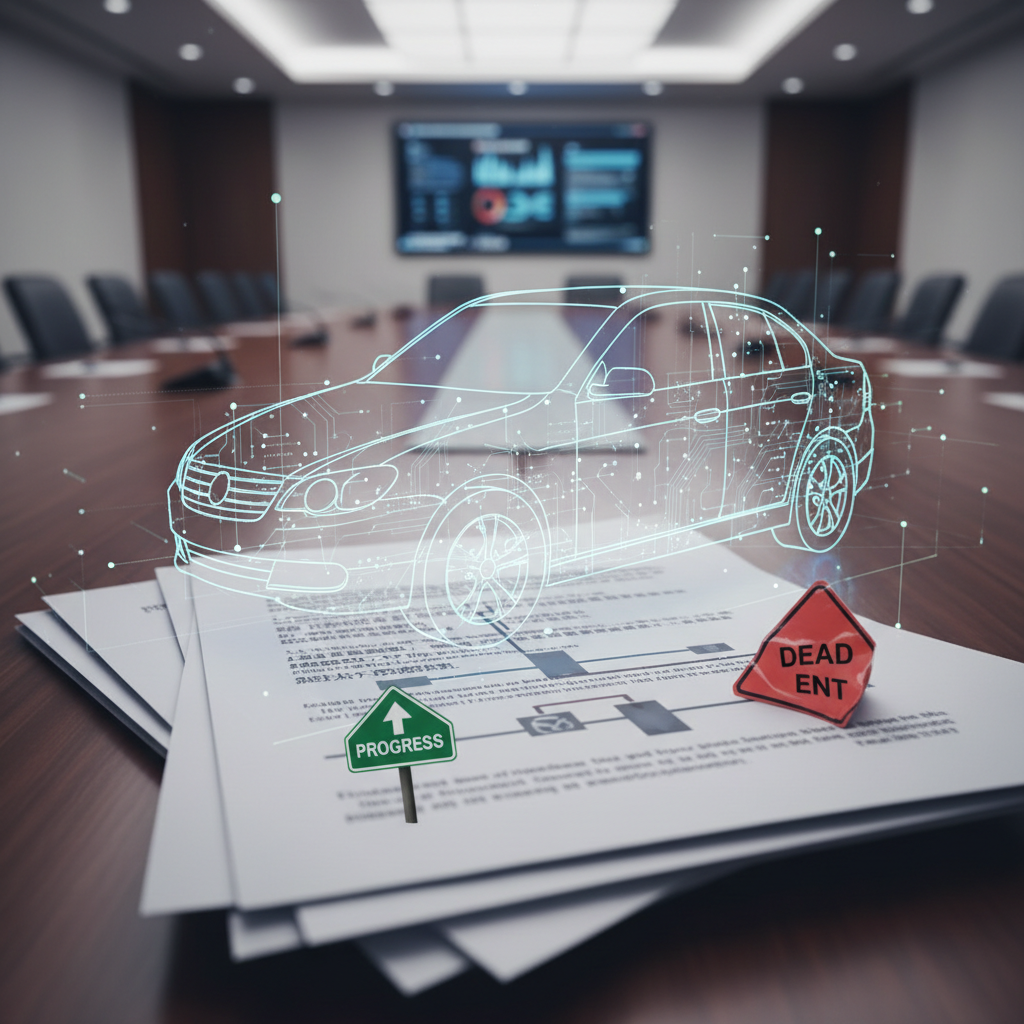

The promise of autonomous vehicles, once a distant vision, now navigates closer to Taiwan's bustling streets. With the Executive Yuan recently unveiling its comprehensive draft regulations for Level 4 autonomous driving systems, a palpable sense of anticipation, and indeed apprehension, has settled over the island. This move, framed as a crucial step towards cementing Taiwan's position in the global AI and smart mobility landscape, warrants a closer, more critical examination than the celebratory press releases suggest.
The policy initiative, officially titled the “Autonomous Vehicle Technology Development and Management Act” (自駕車科技發展及管理條例), aims to establish a clear legal framework for the testing, deployment, and eventual commercialization of highly automated vehicles. It outlines requirements for operational permits, data recording, cybersecurity, and liability in the event of an accident. The Ministry of Transportation and Communications (motc) has been the primary architect, collaborating with the Ministry of Economic Affairs (moea) and various industry stakeholders. Their stated motivation is clear: to foster innovation, attract investment, and ensure public safety as Taiwan transitions into a smart nation. “This framework is designed to provide a predictable environment for our innovators while safeguarding our citizens,” stated Minister Wang Kwo-Tsai of the Motc during a recent legislative briefing. “We cannot afford to be left behind in this critical technological race.”
In practice, what does this mean for Taiwan? The proposed regulations stipulate that Level 4 vehicles, capable of operating without human intervention under specific conditions, will require extensive testing and certification. A dedicated review committee, comprising experts from government, academia, and industry, will evaluate applications. Data collected by these vehicles, particularly concerning incidents, must be stored locally and made accessible for investigation. Furthermore, a novel insurance scheme is proposed, designed to cover damages where human fault is absent. The government projects that by 2030, autonomous vehicles could comprise 10 percent of public transport fleets in designated smart cities, a bold claim that demands rigorous scrutiny. This ambition, if realized, would represent a significant overhaul of urban planning and transportation infrastructure.
However, the data tells a more nuanced story. Taiwan's urban environments, characterized by narrow alleys, ubiquitous scooters, and often unpredictable traffic patterns, present a formidable challenge for even the most advanced autonomous systems. The sheer density of vehicles, coupled with a driving culture that often prioritizes expediency over strict adherence to lane markings, creates a dynamic environment that differs significantly from the more structured road networks often used for initial AV deployments in other nations. A recent study by National Chiao Tung University’s Institute of Traffic and Transportation found that current Level 4 systems struggle with accurately predicting the erratic movements of scooters and pedestrians in high-density areas, showing a 15 percent higher error rate compared to controlled test environments.
Industry reactions have been a mix of cautious optimism and pragmatic concern. Major players like Foxconn, which has invested heavily in electric vehicle platforms, and local AI startups such as iAuto, welcome the regulatory clarity. “A clear rulebook is essential for investment and development,” commented Dr. C.C. Wei, CEO of Tsmc, whose company’s advanced chips are integral to these systems, in a recent private briefing. “Without it, the risks are simply too high for mass deployment.” However, smaller firms and some traditional automotive parts manufacturers express anxieties about the stringent compliance costs and the competitive landscape. “The barrier to entry, particularly for liability and data infrastructure, could be prohibitive for local SMEs,” noted Mr. Lin Chih-Ming, CEO of a Taipei-based automotive sensor company. “We need more support for local integration, not just a framework for global giants.” There is also the perennial question of talent; developing and maintaining these complex systems requires a specialized workforce, and Taiwan faces stiff competition for AI engineers globally.
Civil society groups, particularly those focused on consumer protection and privacy, have voiced reservations. The requirement for extensive data collection, while crucial for safety and liability, raises concerns about surveillance and data security. “Who owns this data, and how will it be protected from misuse or cyberattacks?” asked Ms. Chen Mei-Ling, spokesperson for the Taiwan Digital Rights Association. “The draft regulations offer some assurances, but the devil is always in the implementation details. We must ensure that our privacy is not sacrificed at the altar of technological progress.” Furthermore, labor unions representing taxi drivers and public transport operators have expressed fears about job displacement, urging the government to include robust retraining and social safety net provisions in the overall strategy.
So, will it work? Taiwan's position is more complex than headlines suggest. The regulatory framework is a necessary first step, providing a foundation for future development. However, its success hinges on several critical factors: the government’s ability to adapt the regulations to Taiwan’s unique road conditions, the willingness of industry to invest significantly in localized testing and validation, and the capacity to address public concerns regarding safety, privacy, and employment. The current draft, while comprehensive on paper, may not fully account for the unpredictable human element that characterizes Taiwanese traffic. The cultural acceptance of autonomous vehicles, particularly after any potential high-profile incidents, will also be a significant hurdle. Let's separate fact from narrative; the path to widespread autonomous vehicle adoption in Taiwan is not merely a matter of legislative decree or technological prowess. It is a complex societal negotiation, demanding careful consideration of our distinct environment and the values of our community. The journey has begun, but whether it leads to a smooth ride or a series of unexpected detours remains to be seen.