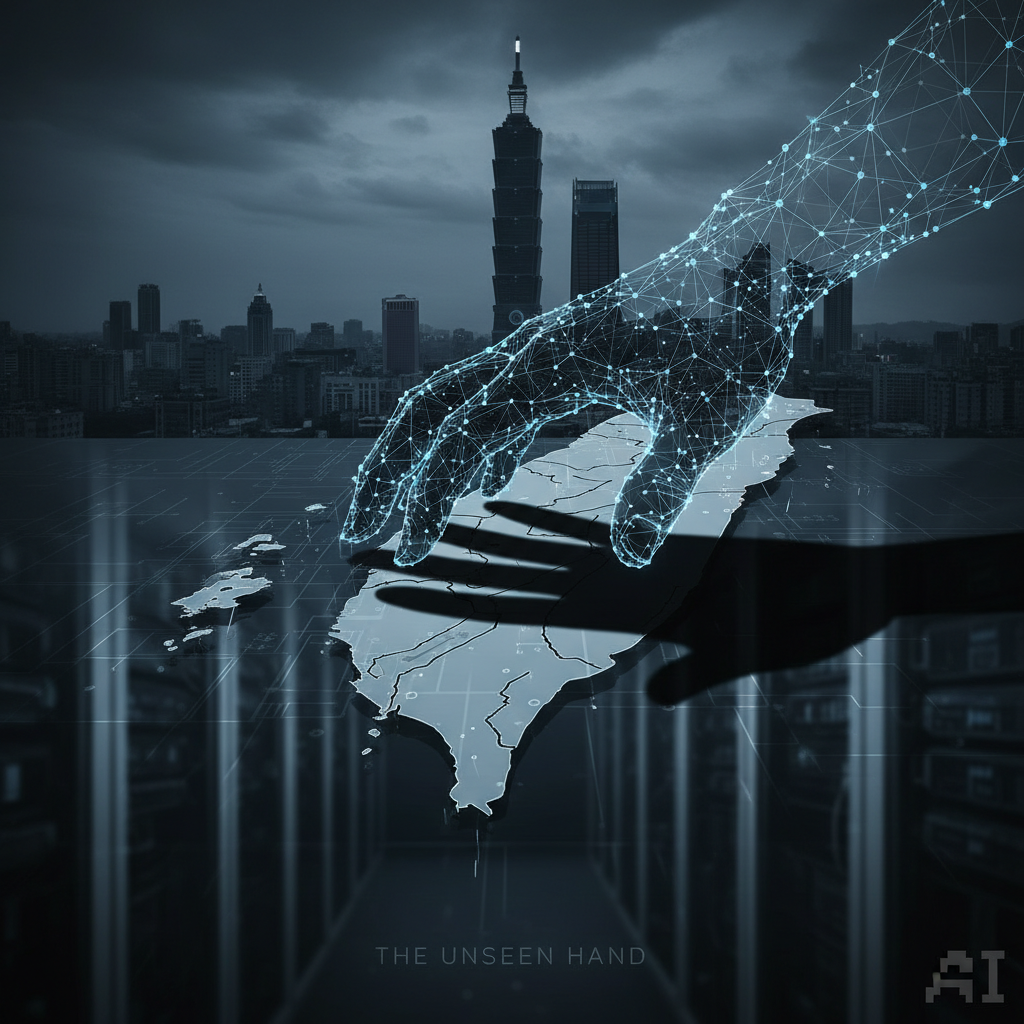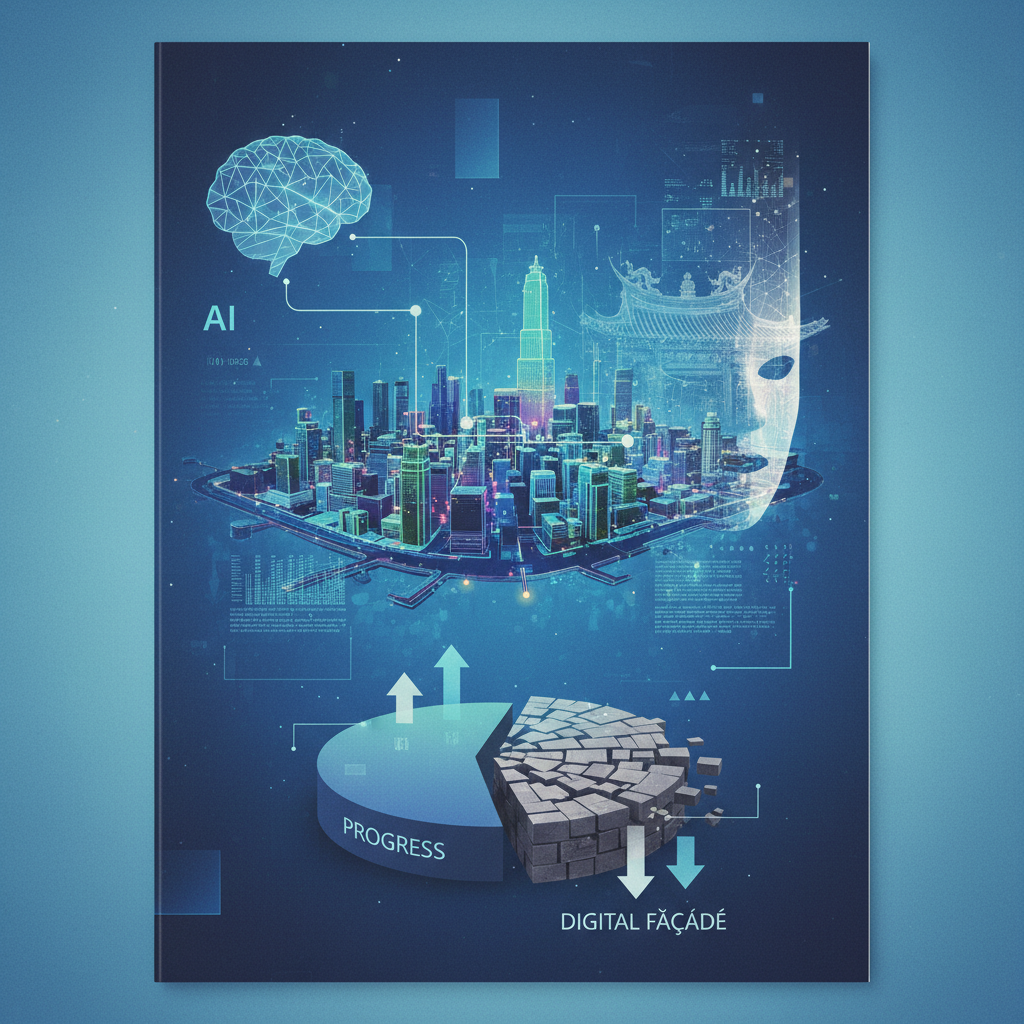

The relentless hum of construction in Taipei, a city perpetually reinventing itself, serves as a potent backdrop to the global discourse on smart urbanism. From Singapore's meticulously planned digital ecosystems to London's ambitious traffic management systems, megacities are increasingly turning to artificial intelligence and advanced data analytics to solve their most pressing challenges. The promise is compelling: optimized traffic flow, reduced energy consumption, enhanced public safety, and more efficient resource allocation. But as a journalist based in Taiwan, a hub of technological innovation and pragmatic skepticism, I must ask: Is this wave of AI-driven urban transformation a genuine blueprint for progress, or merely a sophisticated digital façade masking deeper systemic issues?
Historically, urban planning has been an iterative process, often reactive, evolving slowly over decades or even centuries. The post-war boom saw cities expand rapidly, often without the foresight to manage the ensuing congestion and pollution. Consider the haphazard growth of many Asian metropolises, where informal settlements often precede formal infrastructure. The concept of a 'smart city' emerged in the early 2000s, initially emphasizing connectivity and digital services. However, the advent of sophisticated AI models and ubiquitous sensor networks has dramatically broadened this scope. Today, the vision is of an urban organism, constantly learning and adapting, its functions orchestrated by algorithms.
Proponents point to impressive statistics. Cisco's 'Smart City Solutions' report from 2023 projected the global smart city market to reach over 1.5 trillion USD by 2028, growing at a compound annual growth rate of 23%. This growth is fueled by massive investments in IoT devices, 5G networks, and AI platforms designed to process the deluge of urban data. For instance, Barcelona's 'superblocks' project, while not solely AI-driven, uses data to reallocate street space, prioritizing pedestrians and public transport, leading to reported reductions in air pollution by 20% in some areas. In China, cities like Hangzhou have implemented AI-powered traffic management systems, claiming to reduce congestion by as much as 15% during peak hours, according to local government reports.
However, the data tells a more nuanced story. While individual projects show promise, the holistic integration of AI into complex urban fabrics remains a significant hurdle. Dr. Chen Wei-Liang, a professor of Urban Informatics at National Taiwan University, articulated this concern during a recent seminar. "We often see pilot projects demonstrating impressive metrics in isolation, but scaling these across an entire megacity, with its myriad legacy systems, social complexities, and political currents, is an entirely different challenge," he stated. "The interoperability of disparate systems, the standardization of data, and the sheer computational overhead often become bottlenecks, turning ambitious plans into fragmented realities."
Taiwan, with its high population density and advanced technological infrastructure, is a prime candidate for smart city initiatives. Taipei, in particular, has been a testbed for various projects, from smart streetlights that adjust illumination based on real-time traffic and pedestrian density to AI-driven public transport scheduling. The Taipei City Government's 'Smart City Project Management Office' has been actively collaborating with local tech firms, including those specializing in edge AI and IoT solutions. Yet, even here, where technological adoption is high and public trust in government initiatives is relatively robust, challenges persist.
Consider the issue of data privacy. As cities deploy thousands of sensors, cameras, and microphones, collecting everything from traffic patterns to waste management metrics, the volume of personal data generated is staggering. Who owns this data? How is it secured? And for what purposes will it be used? These are not merely academic questions; they are fundamental to public acceptance and ethical governance. Ms. Lin Mei-Ling, a legal expert specializing in data governance at Academia Sinica, emphasized this point. "While the efficiency gains are undeniable, the potential for surveillance and algorithmic bias is equally significant. Without robust regulatory frameworks and transparent oversight, smart cities risk becoming instruments of control rather than platforms for empowerment. Taiwan's position is more complex than headlines suggest, balancing innovation with democratic values," she explained, referencing the ongoing debates surrounding data localization and cross-border data flows.
Furthermore, the economic implications are substantial. Developing and maintaining these intricate AI systems requires significant capital investment and a highly skilled workforce. This often leads to a reliance on a few dominant technology providers, raising concerns about vendor lock-in and technological sovereignty. For a region like Taiwan, which is a global leader in semiconductor manufacturing, this presents both an opportunity and a vulnerability. While our chips power much of the AI world, the applications and data ownership often reside elsewhere. This dynamic underscores the importance of developing indigenous AI capabilities and fostering local innovation, rather than merely importing solutions.
Let's separate fact from narrative. The narrative often paints a picture of seamless, futuristic urban environments. The fact is that many 'smart city' projects are incremental improvements, often addressing specific pain points rather than transforming the entire urban experience. A smart traffic light system is valuable, but it does not inherently solve the root causes of urban congestion, which might stem from inadequate public transport infrastructure or unsustainable urban sprawl. The real challenge lies in integrating these disparate solutions into a cohesive, equitable, and resilient urban strategy.
Experts from global institutions echo these sentiments. Dr. Anya Sharma, a lead researcher at the MIT Technology Review on urban futures, recently noted, "The most successful smart city initiatives are those that prioritize citizen engagement and address genuine community needs, rather than simply deploying technology for technology's sake. A 'smart' city isn't just about sensors and algorithms; it's about intelligent governance and responsive public services." Her research highlights that many projects fail due to a lack of citizen buy-in or an inability to adapt to local cultural and social contexts.
In Taipei, the integration of AI into urban planning is a continuous, evolving process. The city's digital twin initiative, aiming to create a virtual replica of the city for simulation and planning, represents a significant step. This allows planners to model the impact of new infrastructure, predict disaster scenarios, and optimize resource distribution before physical implementation. Such tools, powered by advanced AI and high-performance computing, offer unprecedented foresight. However, even with such sophisticated tools, the human element remains paramount. The decisions about what to optimize, what data to prioritize, and whose needs to serve ultimately rest with policymakers and citizens.
So, is AI in urban planning a fad or the new normal? It is unequivocally the new normal, but not in the utopian, fully automated sense often portrayed in popular media. It is a powerful set of tools that, when applied thoughtfully and ethically, can significantly enhance urban efficiency and quality of life. However, its success hinges not just on technological prowess, but on robust governance, transparent data practices, and a clear understanding of societal priorities. The path forward for megacities, including those in Taiwan, involves navigating this complex interplay of technology, policy, and human values. The future of our cities will not be determined by AI alone, but by how intelligently we choose to wield it. For further reading on the broader implications of AI in society, consider this analysis on AI ethics. The lessons learned from these urban experiments will undoubtedly inform how we approach other large-scale AI deployments, from national infrastructure to global supply chains. The journey is just beginning, and the critical questions remain more important than ever.