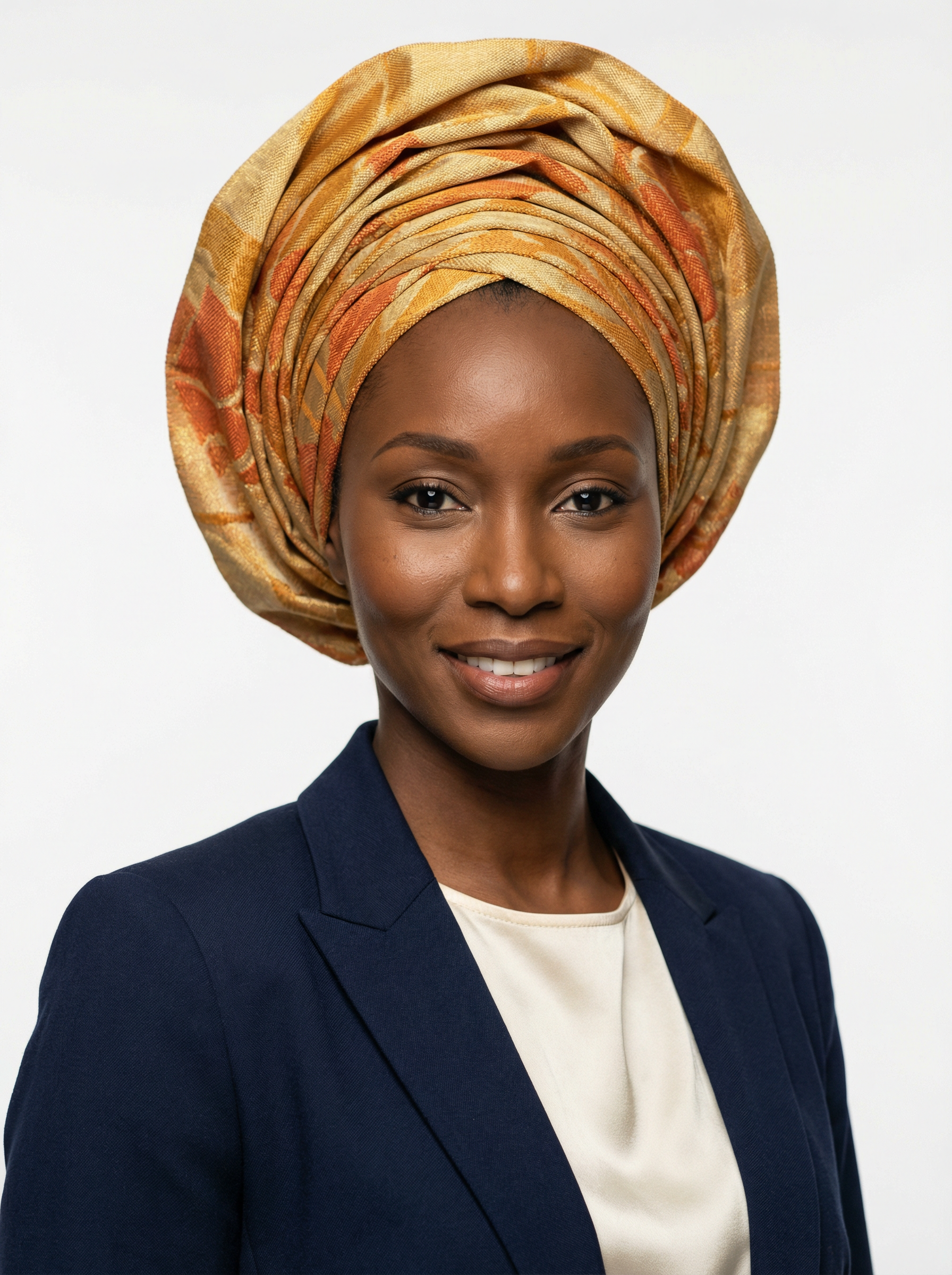

You're going to want to sit down for this. Seriously, grab a cup of munkoyo and settle in, because what I'm about to tell you is going to make you question everything you thought you knew about AI. While the big tech titans like OpenAI and Google are busy throwing billions at ever-larger language models that sometimes feel like digital parrots, a quiet revolution is brewing right here in Lusaka, Zambia. And it's being led by a woman who traded the glittering promises of Silicon Valley for the dusty, vibrant reality of home.
Meet Dr. Naledi Banda, a name you'll soon be hearing a lot more often. Dr. Banda, a computer scientist with a PhD from Stanford and a resume that includes a seven-year stint at Google DeepMind, where she worked on some of their most cutting-edge projects, is the founder and CEO of Chisomo AI. 'Chisomo,' for those who don't know, means 'grace' or 'mercy' in Nyanja, one of Zambia's main languages. And frankly, a little grace is exactly what the AI world needs right now.
From Google's Labyrinth to Lusaka's Lab: An 'Aha' Moment Under the African Sun
Dr. Banda's journey isn't your typical startup fairy tale. She wasn't fired, she wasn't overlooked, she wasn't even particularly unhappy at Google. She was, by all accounts, on a fast track to becoming one of the most influential researchers in the world. But something gnawed at her. "I was working on models that could generate poetry or compose music, and while impressive, I kept thinking, 'What about the real problems?'" she told me during a recent interview at Chisomo AI's surprisingly sleek, solar-powered facility in Lusaka's Roma area. "What about optimizing our energy grids, predicting crop yields with precision, or building diagnostic tools that don't need a supercomputer in every clinic?" she asked, her eyes sparkling with an intensity that belies her calm demeanor.
The 'aha moment' came, as these things often do, in a flash of frustration and clarity. She was on a sabbatical back home in Zambia, observing the challenges faced by local farmers struggling with unpredictable weather patterns and limited resources. She saw the vast potential of AI, but also its glaring disconnect from the immediate, tangible needs of her community. The irony is almost too perfect: the very technology designed to solve problems often creates new ones, or simply ignores the most pressing ones for the sake of abstract advancement. "We were building digital brains that could beat grandmasters at chess, but couldn't tell a farmer in Chongwe when the next rain was coming with enough accuracy," she mused, shaking her head slightly.
That's when the idea for Chisomo AI, and its focus on neuromorphic computing, truly crystallized. She realized that the conventional, von Neumann architecture of most AI chips, which separates processing and memory, was inherently inefficient for the kind of real-time, low-power, and adaptive intelligence needed in resource-constrained environments. It was like trying to teach a fish to climb a tree, when what you really needed was a bird.
The Problem: Power, Latency, and the African Context
Here's the rub. Most of the AI we hear about, the large language models and generative AI, run on massive data centers powered by energy-hungry GPUs from companies like NVIDIA. These systems are fantastic for complex, offline training, but they're a nightmare for edge computing, where power is scarce, connectivity is unreliable, and decisions need to be made in milliseconds. Imagine trying to run a sophisticated AI diagnostic tool in a rural clinic in Mpika with intermittent electricity and no fiber optic cable. It's simply not feasible with current technology.
This is where neuromorphic computing steps in. Instead of traditional chips, which process data sequentially, neuromorphic chips mimic the human brain's architecture. They integrate memory and processing, allowing for highly parallel, event-driven computation. Neurons and synapses, simulated in silicon, communicate only when necessary, leading to incredibly low power consumption and high efficiency. It's less about brute-force calculation and more about adaptive, learning intelligence.
"Our current AI models are like giant, hungry calculators," Dr. Banda explained, gesturing towards a whiteboard covered in complex diagrams. "They consume astronomical amounts of energy and generate heat like a braai stand. Neuromorphic chips, on the other hand, are designed to be more like biological brains: efficient, adaptive, and capable of learning from sparse data with minimal power." This is crucial for applications in agriculture, healthcare, and infrastructure monitoring across Africa, where reliable power and internet are often luxuries, not guarantees.
Chisomo AI's Technology: Silicon Synapses for a Smarter Africa
Chisomo AI isn't just talking the talk, they're building the chips. Their flagship product, the 'Chisomo NeuroCore,' is a custom-designed neuromorphic processor optimized for edge AI applications. Unlike general-purpose GPUs, the NeuroCore is purpose-built for tasks like pattern recognition, anomaly detection, and real-time inference with ultra-low latency and power consumption. The company has already filed several patents for their proprietary spiking neural network (SNN) architectures and their unique fabrication process, which allows for more cost-effective production in smaller batches.
"We're not trying to compete with NVIDIA or Intel on raw computational power for training massive models," Dr. Banda clarified. "Our focus is on inference at the edge, where every watt and every millisecond counts. Think of it as specialized intelligence, not generalized brute force." She pointed to a small, credit-card-sized board. "This little guy, running on a tiny solar panel, can monitor the health of a remote water pump, detect early signs of crop disease, or even help diagnose malaria from a microscopic image, all in real-time." This kind of distributed, intelligent sensing could revolutionize everything from smart agriculture to preventative healthcare in developing regions.
The Market Opportunity: Billions in Untapped Potential
The market for edge AI, particularly in emerging economies, is colossal and largely underserved by traditional tech giants. According to a recent report by Reuters Technology News, the global edge AI market is projected to reach over $100 billion by 2030, with a significant portion of that growth expected from regions like Africa and Southeast Asia. Chisomo AI is positioning itself as a leader in this critical niche.
"We estimate the immediate addressable market in sub-Saharan Africa alone for our specific applications in precision agriculture and remote healthcare to be around $5 billion annually within the next five years," stated Mr. Chanda Mwila, Chisomo AI's Chief Financial Officer, a former investment banker who joined the startup from Absa Zambia. "Our chips offer a 90% reduction in power consumption compared to conventional GPUs for similar inference tasks, making them economically viable even in off-grid scenarios. That's a game-changer for adoption." The company plans to license its NeuroCore designs and offer custom solutions, rather than becoming a chip manufacturer themselves, focusing on their intellectual property and software stack.
Competitive Landscape: David vs. Goliath, With a Twist
In a twist that surprised absolutely no one, the competitive landscape is dominated by giants. Intel has its Loihi neuromorphic research chip, IBM has NorthPole, and even some academic institutions are dabbling. However, these efforts are largely research-focused or aimed at high-end enterprise applications, not the low-power, cost-sensitive edge deployments that Chisomo AI targets. "Their solutions are often over-engineered and prohibitively expensive for our target markets," Dr. Banda noted. "We're building for resilience, affordability, and practical impact, not just raw performance benchmarks in a lab." She believes their deep understanding of the African context gives them an unparalleled advantage.
"While the big players are busy trying to build the next OpenAI or Google Gemini, they're largely ignoring the 'last mile' of AI, particularly in regions where infrastructure is a challenge," commented Dr. Kwasi Agyemang, a leading expert in AI ethics and development from the University of Ghana, during a recent virtual conference. "Chisomo AI's approach is not just technically innovative, it's socially responsible. It's about building AI that serves, not just sells." This focus on practical, localized solutions could be Chisomo AI's secret weapon against the global behemoths.
Funding and What's Next: A Seed of Hope, Cultivated at Home
Chisomo AI recently closed a seed funding round of $12 million, led by a consortium of African impact investors and a surprising appearance from a major European venture capital firm, which saw the potential in their unique approach. "We were initially skeptical about a hardware startup in Zambia, but Dr. Banda's vision and the sheer demand for efficient edge AI in Africa convinced us," said Ms. Lena Schmidt, a partner at the VC firm, in a press release. The funding will be used to scale up their engineering team, refine their chip designs, and develop a comprehensive software development kit (SDK) to make it easier for developers to build applications on the NeuroCore.
Their immediate plans include pilot projects in Zambia and Malawi focused on agricultural pest detection and early warning systems for natural disasters. They are also exploring partnerships with local universities to build a talent pipeline, ensuring that the benefits of this technology are deeply rooted in the communities it serves. "We want to build not just chips, but capabilities," Dr. Banda affirmed. "We want to empower a new generation of African AI engineers and entrepreneurs to solve our problems, with our solutions."
As I left Chisomo AI's campus, the afternoon sun casting long shadows across the jacaranda trees, I couldn't help but feel a surge of optimism. While the global AI narrative often feels dominated by a handful of companies and their ever-expanding, often abstract, ambitions, Dr. Naledi Banda and Chisomo AI are quietly, gracefully, building something different. They're not just mimicking the human brain; they're building an AI that understands the human heart, particularly the one beating here in Africa. And that, my friends, is a revolution worth watching. For more insights into the broader AI landscape, you might want to check out Wired's AI section. And if you're curious about the technical underpinnings of neuromorphic computing, MIT Technology Review often has excellent deep dives. It's a reminder that sometimes, the most profound innovations don't come from the biggest budgets, but from the sharpest minds focused on the most urgent needs, right here at home. This isn't just about silicon; it's about ubuntu in code, a collective intelligence that truly serves all.