
The relentless march of artificial intelligence often conjures images of gleaming data centers and sophisticated algorithms, yet behind every breakthrough, every nuanced large language model, lies a vast, often invisible workforce. These are the data annotators, the labelers, the human intelligence that painstakingly teaches machines to see, hear, and understand our world. In South Korea, a nation synonymous with technological prowess and rapid digital adoption, the welfare of these 'AI workers' has become a pressing policy concern. The recent introduction of the AI Labor Protection Act in the National Assembly signals a pivotal moment, a recognition that the human element in the AI pipeline can no longer be overlooked.
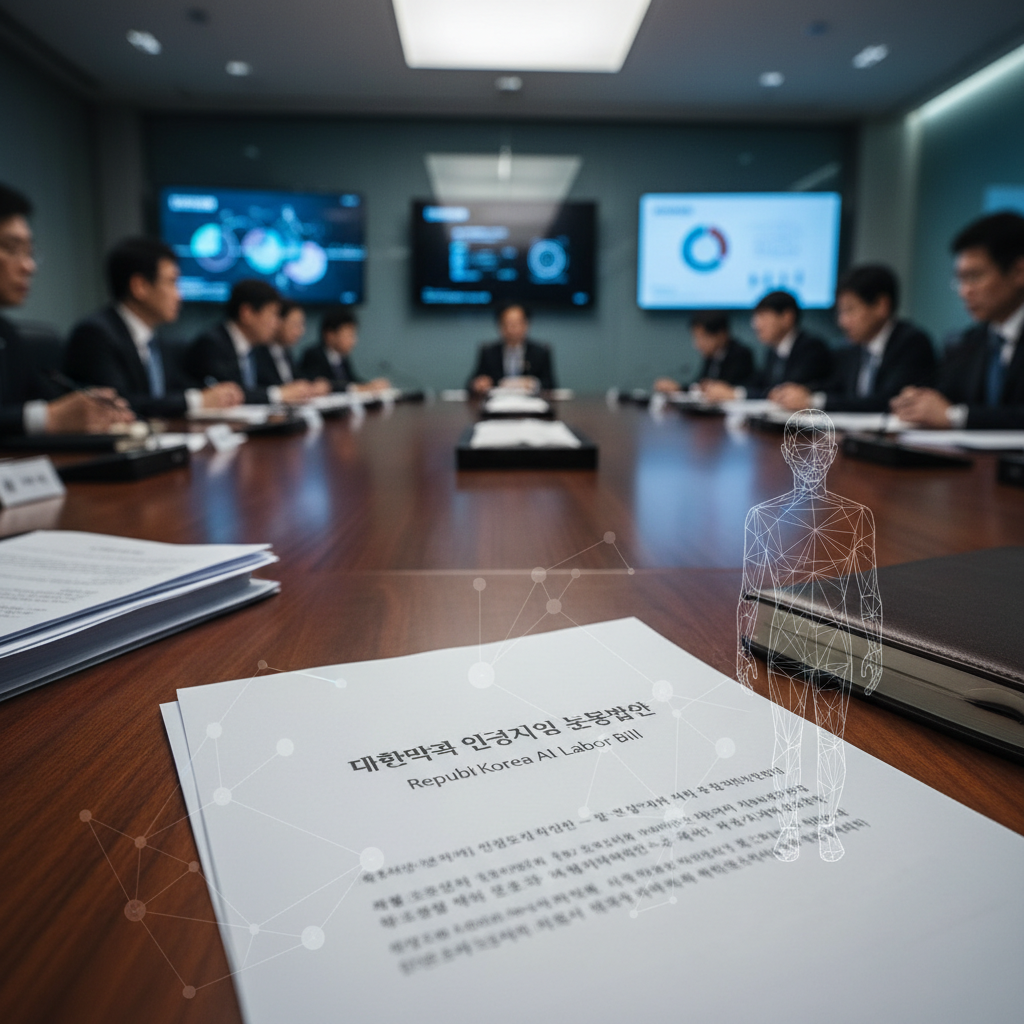
This legislative initiative, spearheaded by a cross-party group of lawmakers, seeks to establish a framework for fair labor practices within the burgeoning AI data industry. It is a proactive stance, characteristic of the Korean approach to AI, which often prioritizes societal impact alongside technological advancement. The proposed act aims to address issues ranging from fair wages and working conditions to protection against algorithmic management and job displacement. It acknowledges that while AI promises efficiency, it also creates new forms of labor, often precarious and undercompensated.
At its core, the bill seeks to define the legal status of data annotators, many of whom operate as independent contractors or through third-party platforms, often lacking the protections afforded to traditional employees. This ambiguity has allowed for a 'wild west' scenario in some segments, where compensation can be meager, and job security is non-existent. For instance, a common task like transcribing audio for voice assistants, a foundational component for companies like Naver's Clova or Kakao's Kakao I, might pay as little as ₩2,000 to ₩5,000 per hour, far below the national minimum wage for conventional employment. The bill proposes to mandate minimum wage standards, establish clear contractual obligations, and provide avenues for dispute resolution, effectively extending a safety net to these digital laborers.
Who is behind this legislative push, and why now? The impetus comes from a confluence of factors. Firstly, the sheer scale of South Korea's AI ambition demands a robust and ethical data infrastructure. Companies like Samsung and LG are pouring billions into AI research and product integration, from smart home devices to autonomous vehicles. This requires an ever-increasing volume of high-quality, human-annotated data. As Professor Kim Min-joo of Seoul National University's School of Law recently stated, "The quality of our AI models is directly proportional to the quality and ethical sourcing of our data. Protecting annotators is not just a moral imperative, it is an economic necessity for Korea's AI competitiveness." Her words underscore the pragmatic aspect of this policy.
Secondly, there is a growing global awareness, amplified by reports from organizations like the International Labour Organization, regarding the exploitative conditions faced by some data workers worldwide. South Korea, with its strong labor movement history and commitment to social welfare, is keen to avoid being seen as a haven for such practices. The tragic case of a data annotator in a developing nation, reportedly working for pennies an hour to label gruesome content for a major tech firm, served as a stark global reminder of the human cost. While conditions in Korea are generally better, the underlying structural vulnerabilities remain.
What does this mean in practice for the industry? For large conglomerates like Samsung SDS or SK C&C, who often outsource data annotation, it means greater scrutiny of their supply chains and potentially increased operational costs. They will need to ensure that their third-party data labeling partners comply with the new regulations. For smaller AI startups, particularly those focused on niche data sets, the administrative burden and financial implications could be more significant. However, it also presents an opportunity for these companies to differentiate themselves as ethical AI developers, a growing concern for consumers and investors alike.
Industry reaction has been, predictably, mixed. While no major player publicly opposes the spirit of worker protection, concerns about competitiveness and implementation challenges are frequently voiced. A spokesperson for a leading Korean AI startup, who wished to remain anonymous due to ongoing policy discussions, commented, "We understand the need for protection, but we must ensure that these regulations do not stifle innovation or place Korean companies at a disadvantage against global competitors who operate under less stringent rules." This sentiment highlights a perennial challenge in policy making: balancing ethical considerations with economic realities. Reuters has reported extensively on similar debates in other advanced economies.
Civil society groups, on the other hand, have largely welcomed the proposed act. Organizations like the Korean Federation of Service Workers' Unions have been vocal advocates for data annotators, highlighting their precarious employment status and the psychological toll of repetitive, often sensitive, work. Ms. Lee Ji-hye, a representative from the Citizens' Coalition for Economic Justice, emphasized, "These workers are the unsung heroes of our AI era. They deserve the same fundamental rights and dignity as any other worker. This bill is a crucial first step towards recognizing their invaluable contribution and preventing the creation of a digital underclass." Her perspective resonates deeply within a society that values collective well-being.
Will it work? The success of the AI Labor Protection Act will depend on several critical factors. Firstly, robust enforcement mechanisms will be essential. Legislation without teeth is merely aspirational. The Ministry of Employment and Labor, alongside relevant agencies, will need adequate resources and expertise to monitor compliance and investigate grievances. Secondly, there must be a clear and practical definition of who constitutes an 'AI worker' under the act, given the diverse nature of data tasks and employment arrangements. This is not a simple matter, as the lines between casual crowdsourcing and structured employment can be blurry.
Furthermore, the global nature of AI development means that a purely national approach has limitations. Data annotation can be outsourced across borders, potentially creating a regulatory arbitrage where companies seek jurisdictions with fewer protections. South Korea will need to engage in international dialogues and potentially collaborate on global standards to ensure a level playing field. However, the Korean approach to AI is fundamentally different in its emphasis on comprehensive, top-down policy, which could serve as a model for other nations grappling with similar issues.
Ultimately, this legislation represents more than just labor reform; it is a statement about South Korea's vision for an ethical AI future. Just as the nation meticulously built its semiconductor industry, ensuring quality and reliability at every step, it now seeks to build an AI ecosystem founded on human dignity. The challenge lies in translating noble intentions into effective, enforceable policies that can adapt to the rapid evolution of AI technology and its associated labor demands. The world will be watching to see if Seoul can truly protect the invisible hands that power our intelligent machines. For a deeper dive into the ethical considerations of AI, particularly regarding human labor, one might consider the broader discussions on AI ethics.