The drumbeat of innovation often arrives in Africa not as a symphony of progress, but as a distant echo of Silicon Valley's latest pronouncements. This time, the reverberations concern a profound shift in artificial intelligence: new architectures that promise reasoning beyond mere pattern matching, systems capable of understanding context, causality, and even intent. While the world's tech titans like Google DeepMind and OpenAI trumpet these advancements, Senegal, through its newly proposed Artificial Intelligence Reasoning and Governance Act, or Airga, is attempting to chart a different course, one rooted in national sovereignty and ethical oversight.
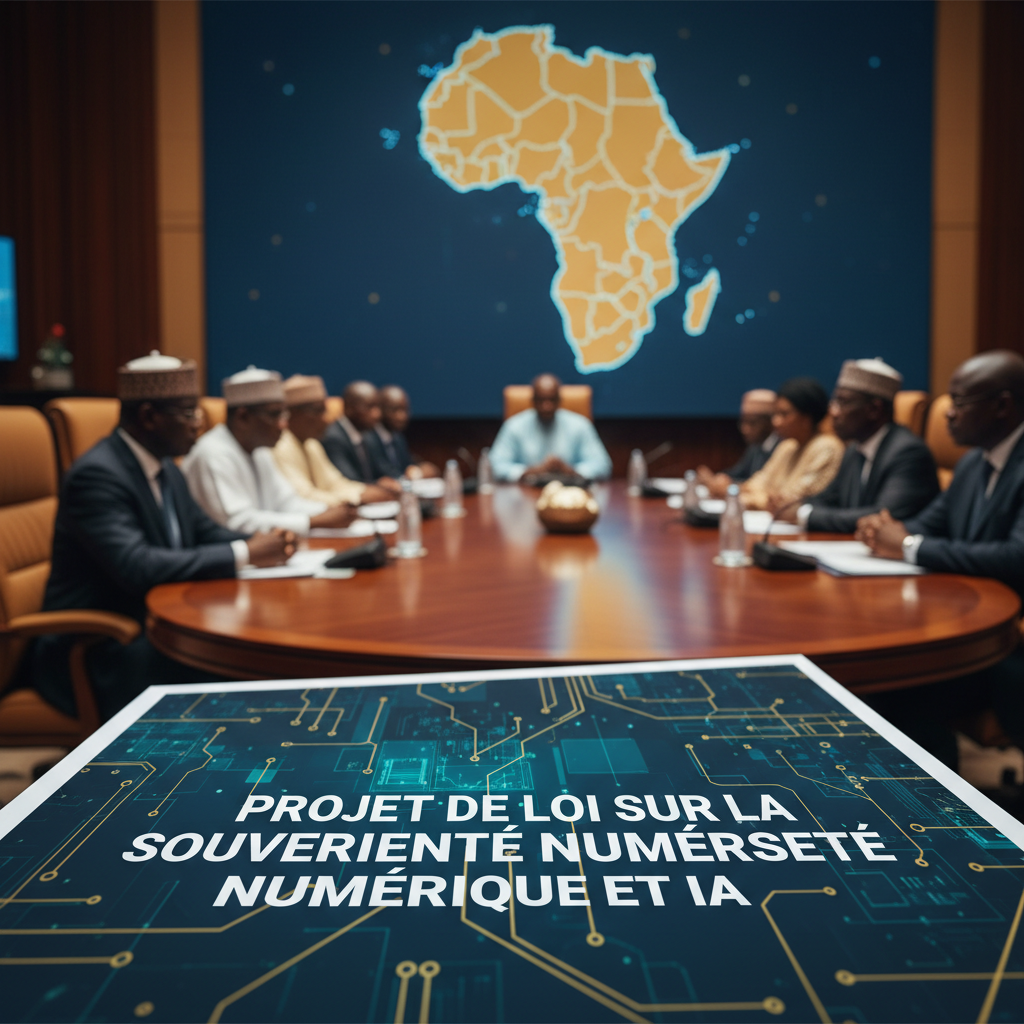
This legislative move, currently under intense debate in the Assemblée Nationale, is not merely a bureaucratic exercise. It is a direct response to the escalating power of these advanced AI systems, which are increasingly deployed in critical sectors from finance and healthcare to agriculture and national security. The stakes, as my sources tell me, could not be higher for a continent often relegated to the role of data provider and technology consumer. The question is whether Dakar's proactive stance can genuinely protect its citizens and foster indigenous innovation, or if it will merely create new hurdles for an already challenging digital transformation.
The Policy Move: Asserting Control Over Cognitive AI
At its core, Airga seeks to establish a comprehensive regulatory framework for AI systems exhibiting advanced reasoning capabilities. It mandates strict data localization requirements for any AI model processing sensitive Senegalese data, particularly those used in public services or critical infrastructure. Furthermore, it introduces a tiered classification system for AI, with 'high-risk' reasoning AI requiring pre-market algorithmic audits, impact assessments, and clear human oversight protocols. The proposed law also outlines provisions for explainability, demanding that developers of advanced AI systems provide clear, understandable explanations for their decisions, a direct challenge to the black-box nature of many current models.
"We cannot allow the cognitive core of our nation's future to be dictated by algorithms developed thousands of kilometers away, opaque and unaccountable," stated Fatou Sow, Minister of Digital Economy and Telecommunications, in a recent address to the Senegalese Chamber of Commerce. "Our data, our values, our very way of reasoning must be reflected in the AI systems that serve our people. This is not about stifling innovation, but about safeguarding our digital destiny." Her words resonate with a growing sentiment across the continent, where the digital colonial anxieties are palpable.
Who is Behind Airga and Why?
The impetus for Airga comes from a coalition of government officials, local academics, and civil society organizations who have long advocated for a more equitable and ethical digital future for Senegal. The Ministry of Digital Economy and Telecommunications, in collaboration with the Université Cheikh Anta Diop's Artificial Intelligence Research Lab, has been instrumental in drafting the legislation. Their motivation is multi-faceted. Firstly, there is a clear desire to prevent the unchecked proliferation of powerful AI systems that could perpetuate existing biases or create new forms of discrimination, particularly in areas like credit scoring, employment, and even judicial processes.
Secondly, the government aims to foster a local AI ecosystem. By requiring data localization and promoting explainability, they hope to encourage Senegalese developers to build and adapt AI solutions tailored to local contexts, rather than simply importing foreign models. Thirdly, and perhaps most critically, is the issue of digital sovereignty. The documents reveal a deep concern within government circles about the potential for foreign-developed AI to be used for surveillance, economic exploitation, or even geopolitical influence, especially as these systems become more sophisticated in their reasoning capabilities. The fear is that without robust regulation, Senegal could become a testing ground or a mere data farm for global tech giants, with little control over the outcomes.
What It Means in Practice: A Tightening Grip on Data and Algorithms
For international tech companies like Microsoft and Amazon, who are aggressively expanding their cloud and AI services across Africa, Airga presents a significant challenge. Compliance will necessitate substantial investment in local data centers and the adaptation of their proprietary AI models to meet Senegability and transparency requirements. For smaller Senegalese startups, it could be a double-edged sword: increased regulatory burden but also a potential competitive advantage if they can build compliant, locally-attuned AI solutions.
Consider the agricultural sector, a cornerstone of Senegal's economy. If an advanced AI system from, say, Google's Gemini is used to predict crop yields or optimize irrigation, Airga would likely demand that the data processing occur within Senegal and that the reasoning behind its recommendations be auditable. This moves beyond simple data privacy; it delves into the very cognitive processes of the AI itself. For a country where food security is paramount, this level of control is seen as essential.
Industry Reaction: Caution, Concern, and Calculated Adaptation
The reaction from the tech industry has been predictably mixed. Major players have expressed public support for ethical AI but privately voice concerns about the practicalities and costs of compliance. "While we commend Senegal's commitment to responsible AI, the proposed data localization requirements and explainability mandates for complex reasoning models present significant technical and operational hurdles," commented Dr. Kwame Nkrumah, Head of Africa Policy for Anthropic, during a recent virtual conference. "Implementing these across diverse, cutting-edge architectures like Claude 3 will require substantial re-engineering and potentially slow down deployment of beneficial AI solutions." Reuters has reported similar sentiments from other global tech firms operating in emerging markets.
However, some local industry leaders see an opportunity. "This is not just regulation, it is an investment in our future," asserted Aïssatou Diallo, CEO of SenAI Innovations, a Dakar-based AI startup specializing in local language processing. "It forces us to build AI that truly understands our context, our Wolof proverbs, our unique social dynamics. It levels the playing field somewhat against the global giants who often arrive with one-size-fits-all solutions." Her company, for instance, is developing reasoning AI for financial inclusion that understands the nuances of informal economies, a task where generic models often fail.
Civil Society Perspective: A Guarded Optimism
Civil society organizations, long advocating for stronger digital rights, have largely welcomed Airga, albeit with a degree of guarded optimism. "The intent is noble, and the framework addresses many of our core concerns regarding algorithmic bias and transparency," noted Ndèye Fatou Diop, Director of the Senegalese Digital Rights Initiative. "However, the devil will be in the details of implementation. We need to ensure that the regulatory body is adequately resourced, independent, and capable of truly scrutinizing these incredibly complex reasoning systems. Without robust enforcement, even the best laws remain mere words on paper." Wired has consistently highlighted the global challenges of AI regulation enforcement.
There are also concerns about potential unintended consequences, such as stifling innovation or creating a fragmented digital landscape. Some worry that overly strict regulations could deter foreign investment, leaving Senegal behind in the global AI race. This is a delicate balance, one that the government acknowledges it must navigate carefully.
Will It Work? The Path Ahead for Senegal
Whether Airga will truly work remains to be seen. The ambition is clear: to establish Senegal as a leader in ethical and sovereign AI governance, particularly concerning advanced reasoning capabilities. The policy framework is comprehensive, addressing critical issues of data localization, explainability, and human oversight. However, the success of this initiative hinges on several factors.
Firstly, effective enforcement will require significant technical expertise and resources, areas where many African nations face perennial challenges. Secondly, the government must maintain a dialogue with both international tech companies and local innovators to ensure that the regulations are practical and do not inadvertently stifle the very innovation they seek to protect. Thirdly, the geopolitical landscape of AI is constantly shifting, with major powers like the United States and China also developing their own regulatory approaches. Senegal must find a way to assert its sovereignty without isolating itself from the global technological currents.
This is just the tip of the iceberg, of course. The global race for AI supremacy is not merely about computational power; it is increasingly about who controls the underlying logic, the very 'reasoning' of these intelligent machines. Senegal's Airga represents a bold attempt to reclaim a measure of that control for its people. The world, and indeed Africa, will be watching closely to see if this legislative gambit can truly protect its digital future from the opaque depths of advanced algorithms.