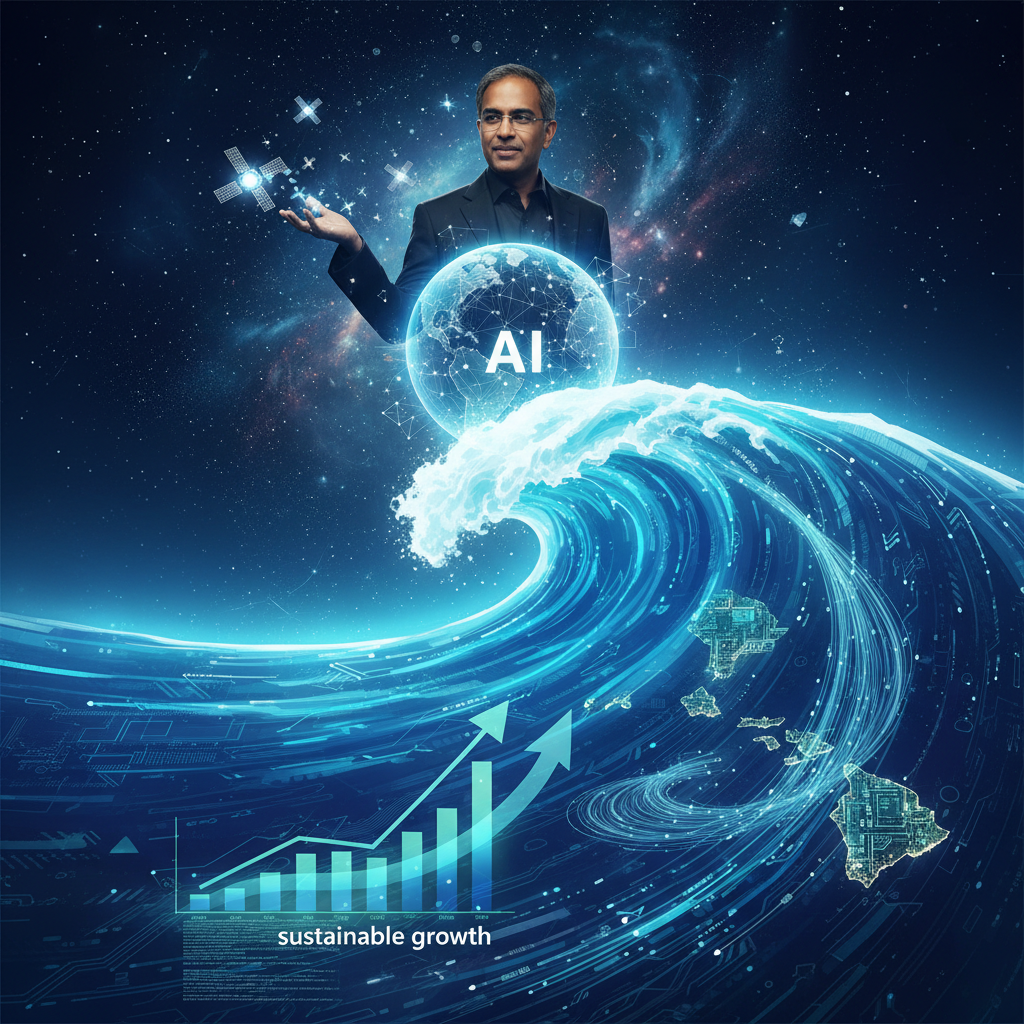

Is Microsoft's stratospheric market capitalization, now rivaling the GDP of entire nations, a testament to Satya Nadella's visionary AI-first strategy, or merely the froth on a speculative wave that will eventually recede? From my vantage point here in Hawaiʻi, watching the Pacific tides ebb and flow, I've learned that true power isn't in the momentary surge, but in the deep, consistent currents that shape the ocean floor over millennia. We need to ask ourselves if Microsoft's AI ascendancy is truly reshaping the digital landscape with the enduring strength of volcanic rock, or if it is just another dazzling, transient display.
For decades, Microsoft was seen as the dependable, if somewhat staid, enterprise software behemoth. Windows, Office, Azure, these were the bedrock of corporate IT. Then came the generative AI explosion, and with it, Satya Nadella's bold, almost audacious, embrace of OpenAI. This wasn't a cautious dip of the toe; it was a full-on dive into the deep end, exemplified by multi-billion dollar investments and the rapid integration of OpenAI's models like GPT into nearly every facet of Microsoft's product portfolio. Remember the early 2020s, when the tech world was still debating the practical applications of large language models? Nadella didn't debate, he acted. He saw the potential not just for incremental improvements, but for a fundamental paradigm shift, a new layer of intelligence woven into the fabric of computing.
The results, at least on paper, have been nothing short of spectacular. Microsoft's market cap has surged, driven by investor excitement over its AI leadership. Services like Copilot for Microsoft 365, which promises to revolutionize productivity by automating mundane tasks and assisting with content creation, have captured imagination and early adoption. Azure AI services have seen exponential growth, attracting enterprises eager to leverage cutting-edge models without building them from scratch. This isn't just about selling more software; it's about selling a vision of a smarter, more efficient future, powered by Microsoft's AI. As Reuters has reported, the company's financial performance has consistently outpaced expectations, largely attributed to this strategic focus.
But is this sustainable? The tech landscape is littered with companies that rode a hot trend only to find themselves adrift when the next wave arrived. Consider the dot-com bubble, or even the more recent metaverse hype that saw Meta pour billions into a vision that has yet to fully materialize in the way Mark Zuckerberg envisioned. The question for Microsoft, and for us watching from the crossroads of Pacific and Silicon Valley, is whether this AI-first strategy is built on solid ground or shifting sands.
I recently spoke with Dr. Leilani Kaui, an expert in ethical AI and indigenous data governance at the University of Hawaiʻi at Mānoa. She offered a crucial perspective. “The sheer power of these models is undeniable, but power without purpose, or without a deeply ingrained ethical framework, can be dangerous,” Dr. Kaui explained. “Aloha means more than hello because it's a framework for ethical AI. It's about reciprocal relationships, respect for all life, and long-term stewardship. Microsoft's scale means their choices have global repercussions, and we need to see if their AI principles truly reflect a commitment beyond quarterly earnings.” Her words resonate deeply here, where the impact of technology on community and environment is always a primary concern.
Industry analysts generally laud Nadella's foresight. “Microsoft’s early and aggressive bet on generative AI, particularly with OpenAI, has given them a significant competitive advantage,” stated Daniel Ives, a managing director at Wedbush Securities, in a recent investor note. “They’ve moved faster and more decisively than many of their peers, positioning themselves as the go-to platform for enterprise AI adoption.” This sentiment is echoed across Wall Street, where the narrative of Microsoft as an AI leader has become firmly entrenched. The company's ability to integrate AI into existing, widely used products like Office and Windows, rather than creating entirely new ecosystems, has been a masterstroke, ensuring rapid deployment and user familiarity.
However, not everyone is convinced that the current valuation fully reflects fundamental value. Some skeptics point to the immense computational costs associated with training and running large language models, questioning the long-term profitability margins, especially as competition intensifies. “The cost of inference, the sheer energy consumption of these models, is a silent killer,” noted Dr. Kenji Tanaka, a computational physicist who has consulted for several tech giants, during a recent online forum. “While Microsoft has Azure’s vast infrastructure, the economics of truly ubiquitous, personalized AI at scale are still being worked out. We are building the future on volcanic rock, but we must ensure it is not too heavy for the foundations.” He highlights a point often overlooked: the physical and environmental footprint of this digital revolution.
My take? Nadella’s strategy is a genuine, paradigm-shifting move, not a fad. The integration of AI into Microsoft's core products is too deep, too pervasive, to be dismissed as a temporary trend. Copilot isn't just a feature; it's an intelligent layer that fundamentally alters how we interact with software. The enterprise demand for AI solutions is real and growing, and Microsoft is uniquely positioned to capture a significant share of that market through Azure. Their partnerships, particularly with OpenAI, have given them a critical head start in a rapidly evolving field. The future is being built on volcanic rock, and Microsoft is laying some of the strongest foundations.
However, the long-term sustainability of this surge will depend on several factors beyond just technological prowess. The ethical considerations Dr. Kaui raised are paramount. As AI becomes more embedded in our lives, questions of bias, privacy, and control will only intensify. Microsoft, with its global reach, has a profound responsibility to lead in developing AI that benefits all of humanity, not just shareholders. They must demonstrate that their commitment to responsible AI is as robust as their technological ambition. Furthermore, the competitive landscape is fierce. Google, Amazon, and a host of startups are pouring resources into their own AI initiatives, and innovation moves at a blistering pace. Microsoft cannot afford to rest on its laurels.
From the shores of Hawaiʻi, where we understand the power of both creation and destruction, the story of Microsoft's AI journey is one of immense potential. It's a story of a company that dared to reinvent itself, to embrace a future that many others only cautiously approached. The market cap surge is a reflection of that bold vision, but the true measure of its success will be in how it navigates the complex ethical, environmental, and competitive currents that lie ahead. The tide is definitely in, but the ocean always demands respect and foresight for those who wish to sail its waters successfully. For more insights into the broader AI landscape, you might find articles on MIT Technology Review useful, as they often delve into the deeper societal implications of these technological shifts.