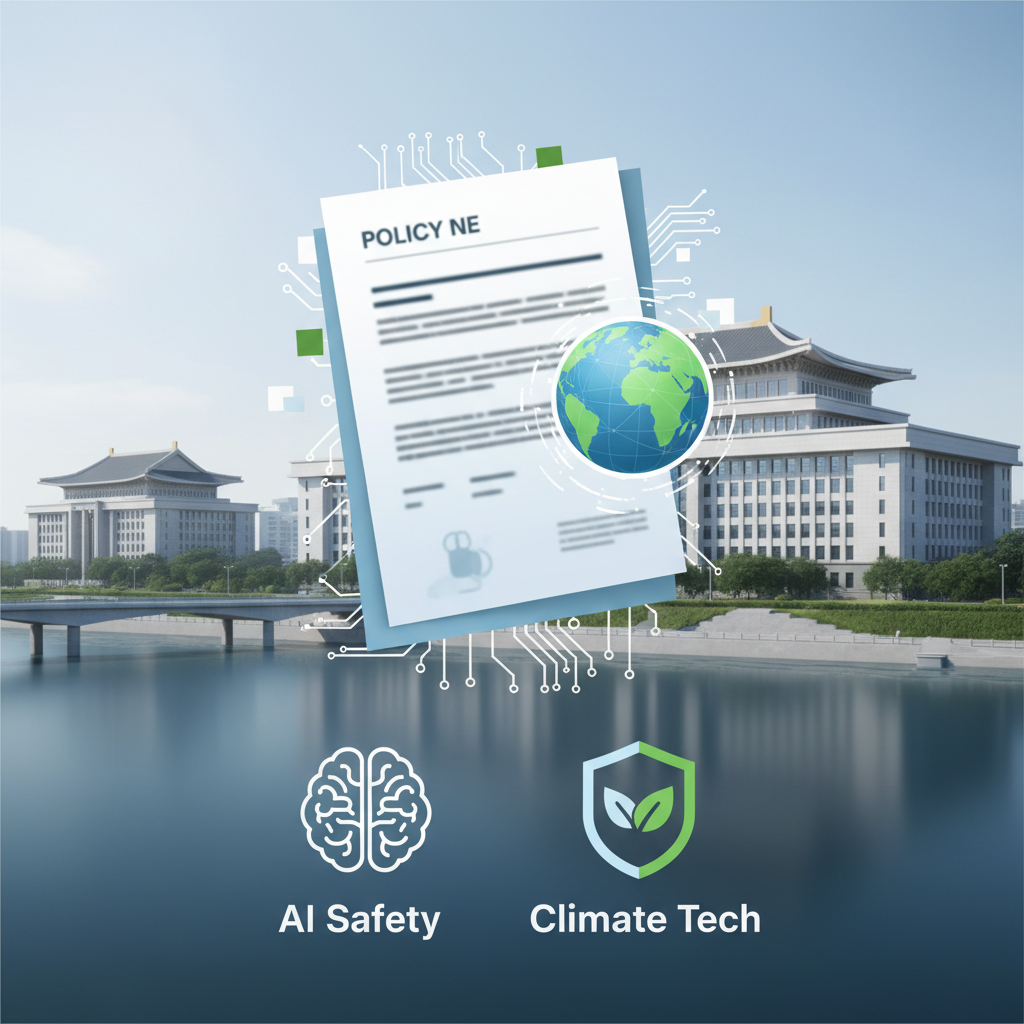

The global discourse surrounding artificial intelligence has shifted dramatically from unbridled optimism to a more cautious, yet equally ambitious, pursuit of responsible innovation. At the heart of this evolving paradigm lies the concept of AI safety institutes, governmental or quasi-governmental bodies tasked with rigorously testing and evaluating advanced AI systems before their widespread deployment. While nations like the United States and the United Kingdom have championed their own versions, South Korea, ever the pragmatic innovator, has quietly unveiled its own formidable initiative: the National AI Safety and Reliability Institute (naisri).
This move by Seoul is not merely an echo of Western regulatory trends, but a carefully calibrated strategy deeply rooted in the nation's industrial prowess and its unique approach to technological advancement. For decades, South Korea has been a crucible for hardware innovation, from semiconductors to advanced display technologies, and this heritage profoundly shapes its AI governance philosophy. The establishment of Naisri, officially launched in January 2026, signals a clear intent: to ensure that the AI systems powering everything from Samsung's next-generation consumer electronics to Hyundai's autonomous vehicles are not just intelligent, but also demonstrably safe and reliable.
The Policy Move: A National Imperative for AI Integrity
The genesis of Naisri can be traced back to the growing recognition within the Korean government and industry that the rapid acceleration of AI capabilities, particularly with large language models and generative AI, necessitates a proactive regulatory framework. The Ministry of Science and ICT (msit), in conjunction with leading research institutions like Kaist and Etri, spearheaded the institute's formation. Their mandate is clear: to develop standardized testing protocols, conduct pre-market evaluations of high-risk AI systems, and foster a national culture of AI safety research.
According to Dr. Lee Hyun-woo, Director General for AI Policy at Msit, "Our vision for Naisri is not to stifle innovation, but to cultivate trust. We recognize that without public confidence in AI's safety and reliability, its transformative potential cannot be fully realized. This institute is our commitment to that future." He emphasized that a core function of Naisri will be to certify AI models for specific applications, much like how electrical appliances receive safety certifications. This pragmatic, application-focused approach distinguishes it from some broader, more philosophical regulatory discussions occurring elsewhere.
Who's Behind It and Why: A Hardware-First Mentality
NAISRI's formation is a direct response to the urgent need for a regulatory body capable of assessing the complex interplay between AI software and the sophisticated hardware it runs on. The Korean approach to AI is fundamentally different from many Western counterparts, which often prioritize software development. Here, the synergy between cutting-edge chips, advanced sensors, and robust AI algorithms is paramount. Samsung's latest move reveals a deeper strategy, as the company has pledged significant resources and expertise to Naisri, recognizing that their global competitiveness hinges on not just performance, but also verifiable safety.
"For companies like Samsung, LG, and Hyundai, AI safety is not an abstract concept; it is a critical engineering challenge," explained Professor Kim Min-jun, a lead researcher in AI ethics at Kaist. "When an AI system controls a vehicle or manages critical infrastructure, its failure modes must be meticulously understood and mitigated. Naisri provides the framework for this rigorous, data-driven validation." The institute is structured with specialized labs focusing on areas such as algorithmic bias detection, adversarial attack resilience, and real-world performance under stress conditions, particularly for embedded AI systems common in Korean industry.
What It Means in Practice: From Lab to Market
In practice, Naisri will operate as a central hub for AI testing and certification. Developers of high-risk AI applications, such as those in autonomous driving, medical diagnostics, or critical infrastructure management, will be encouraged, and eventually mandated, to submit their models for evaluation. This involves a multi-stage process: initial documentation review, simulated environment testing, and where appropriate, real-world pilot deployments under NAISRI's supervision. The institute will issue a "Safety and Reliability Seal" for compliant systems, a designation expected to become a de facto standard for market entry in South Korea.
Here's the technical breakdown: NAISRI's testing methodologies incorporate a blend of established software verification techniques with novel hardware-in-the-loop simulations. For instance, testing an AI-powered industrial robot involves not just analyzing its code, but also subjecting its physical counterpart to a battery of stress tests in a controlled environment, observing its behavior under various failure conditions, and assessing its human-machine interaction safety. This holistic approach reflects Korea's deep expertise in robotics and manufacturing.
Industry Reaction: A Calculated Acceptance
The initial reaction from the Korean tech industry has been one of calculated acceptance. While some smaller startups voiced concerns about potential compliance burdens and delayed market entry, major players like Samsung Electronics and LG AI Research have largely embraced the initiative. They view Naisri as a necessary step to maintain consumer trust and ensure long-term market stability. "We believe that robust safety standards will ultimately accelerate innovation by fostering greater public acceptance," stated Dr. Park Ji-hoon, Head of AI Research at Samsung Electronics. "Our collaboration with Naisri is integral to our commitment to ethical AI development and maintaining our leadership in global markets." This sentiment is echoed by Hyundai Motor Group, which sees NAISRI's work as crucial for the widespread adoption of Level 4 and Level 5 autonomous vehicles.
However, there is also a pragmatic understanding that these regulations must not become an insurmountable barrier. Industry leaders are actively engaged in shaping NAISRI's evolving standards, aiming for a balance that protects consumers without stifling the rapid pace of AI development. The concern is that overly prescriptive regulations could disadvantage Korean companies against international competitors operating under less stringent regimes.
Civil Society Perspective: Guarded Optimism and Calls for Transparency
Civil society organizations in South Korea have largely welcomed the establishment of Naisri, viewing it as a positive step towards responsible AI governance. Groups like the Korean Civic Network for AI Ethics have been vocal proponents of stronger oversight. "For too long, the development of powerful AI systems has occurred behind closed doors," remarked Ms. Choi Eun-jung, executive director of the network. "naisri offers a crucial mechanism for independent scrutiny, but its effectiveness will depend on its transparency, independence from industry influence, and its willingness to engage diverse stakeholders, including vulnerable communities." They emphasize the need for clear channels for public feedback and mechanisms to address potential biases or harms identified during testing.
Concerns remain regarding the institute's funding sources, the composition of its expert panels, and the extent to which its findings will be made public. There is a strong call for Naisri to not only certify safety but also to actively educate the public about AI risks and mitigation strategies, fostering a more informed citizenry.
Will It Work? The Path Ahead
The success of South Korea's National AI Safety and Reliability Institute hinges on several critical factors. First, its ability to attract and retain top-tier AI talent will be paramount, given the global competition for such expertise. Second, Naisri must establish credible, internationally recognized testing methodologies that can adapt to the incredibly fast pace of AI innovation. This means continuous research and development within the institute itself.
Finally, and perhaps most importantly, NAISRI's efficacy will be measured by its ability to foster a collaborative ecosystem where government, industry, academia, and civil society work in concert. The Korean government's track record of successful national initiatives, often driven by a collective sense of purpose, provides a hopeful precedent. However, the unique challenges of AI governance, with its ethical complexities and rapid technological shifts, present a new test. If Naisri can successfully bridge the gap between cutting-edge research and practical, enforceable safety standards, it could very well serve as a compelling model for other nations navigating the treacherous, yet exhilarating, waters of AI deployment. The world watches to see if Seoul's pragmatic, hardware-informed approach can indeed set a new global benchmark for AI integrity. For more insights into global AI policy developments, consider exploring resources like Reuters Technology News or MIT Technology Review. The journey towards truly safe and beneficial AI is a marathon, not a sprint, and South Korea has just taken a significant stride. You can also find more information on the latest AI innovations and their impact on society at Wired's AI section.