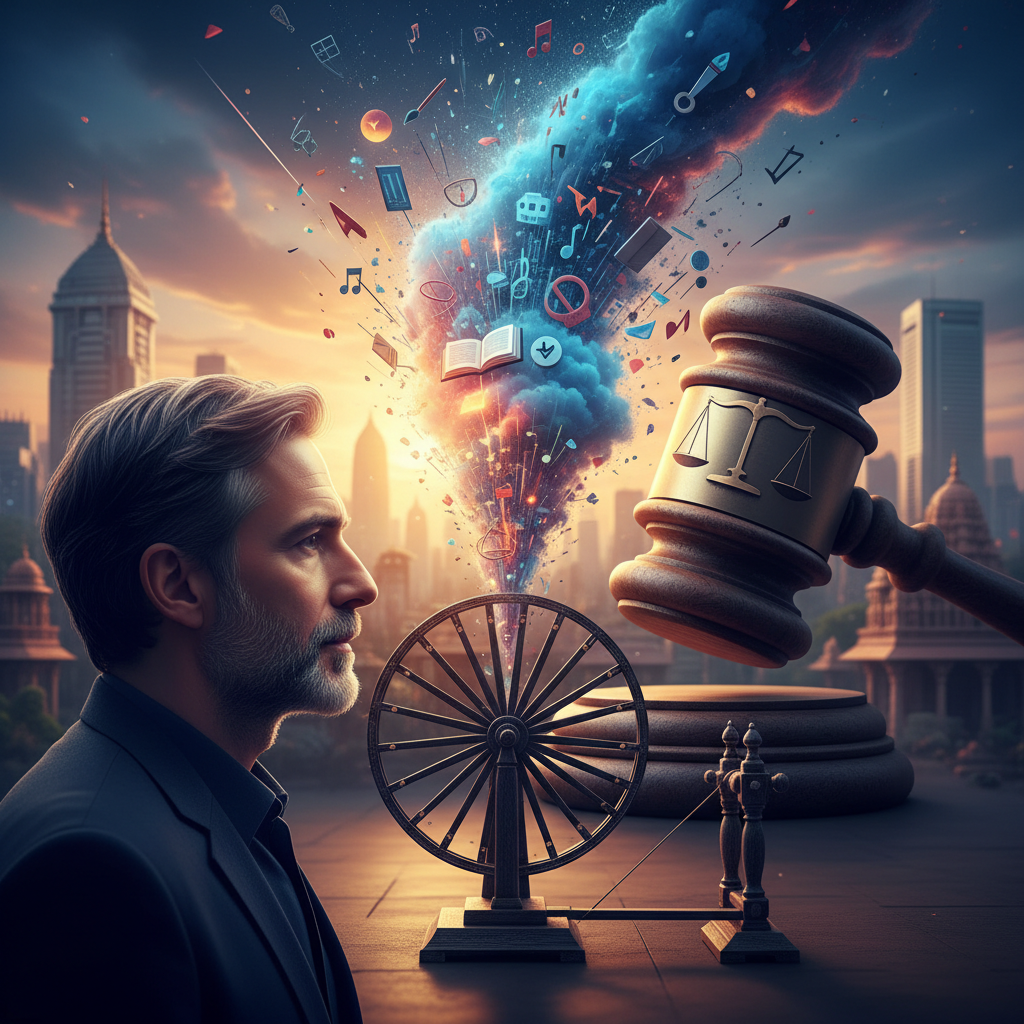
Namaste, fellow tech enthusiasts and dreamers! Rajèsh Krishnàn here, buzzing with excitement from the heart of India's tech capital, Bangalore. You know, sometimes I feel like we are all characters in a grand Bollywood epic, with technology playing the role of the dazzling hero, transforming everything around us. And right now, the biggest drama unfolding on this global stage is about AI and intellectual property. Who owns what an AI creates? It is a question that has everyone from Silicon Valley to our very own Film City scratching their heads, and India, my friends, is right in the thick of it.
Just imagine, a few years ago, if someone told you that a machine could write a poem so beautiful it could bring tears to your eyes, or compose a symphony that rivals AR Rahman, you might have laughed. But here we are, in April 2026, and AI models like OpenAI's GPT-5, Google's Gemini Ultra, and Anthropic's Claude 3.5 are not just assisting, they are creating. They are generating everything from marketing copy and legal briefs to stunning digital art and even entire video game assets. The scale is mind-boggling, truly.
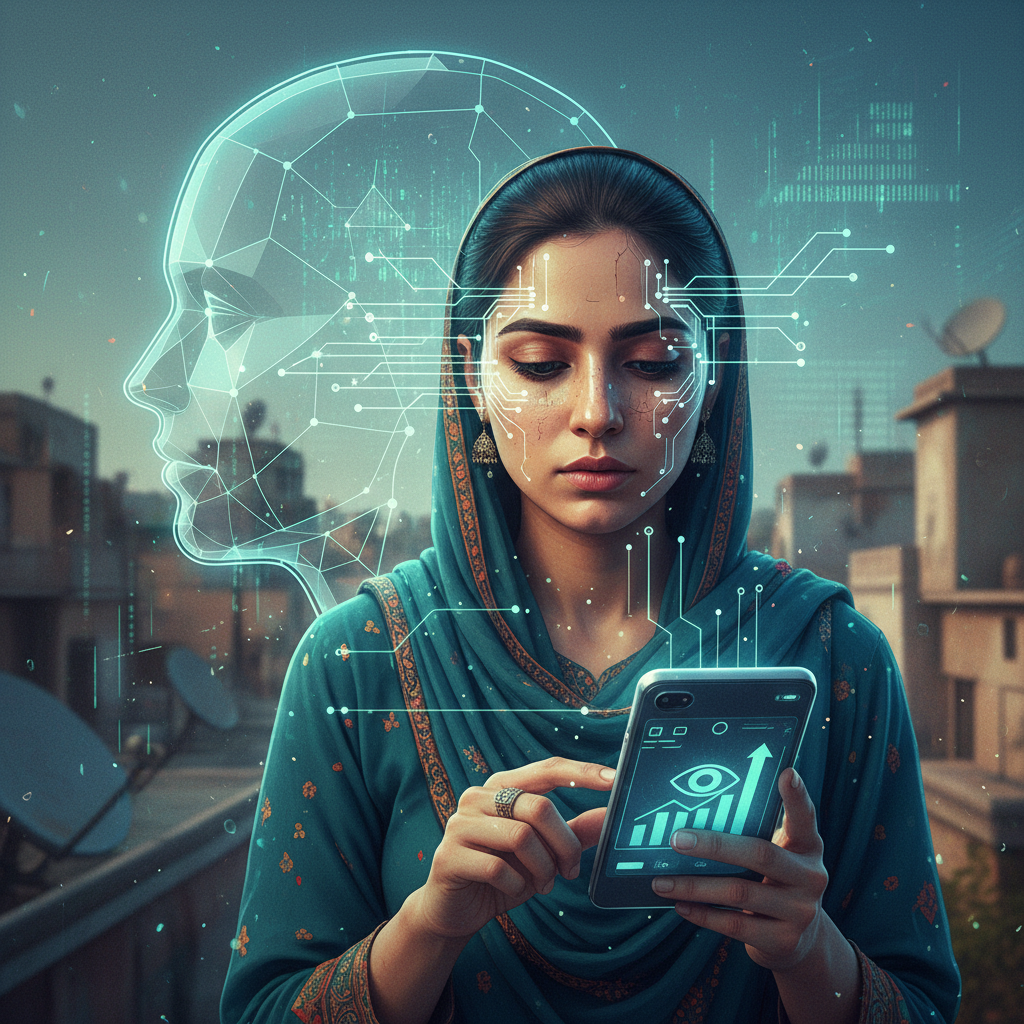
This explosion of AI generated content has thrown a massive curveball into the traditional understanding of intellectual property, particularly copyright. Our current laws, many of them decades old, were designed for human creators. They assume a human author who pours their heart and soul into a work. But what happens when the 'author' is an algorithm, trained on billions of pieces of human creativity? Is it the AI developer, the user who prompted the AI, or perhaps nobody at all? It is a legal wicket that is proving incredibly tricky to bat on.
In India, this discussion is gaining serious momentum. Our creative industries, from Bollywood to our thriving software sector, are deeply intertwined with intellectual property. The Indian Copyright Act of 1957, while amended over the years, still largely operates on the premise of human authorship. Section 13 of the Act, for example, grants copyright to original literary, dramatic, musical, and artistic works. But where does an AI fit into this framework? Can an AI be considered an 'author'? The current consensus among legal experts in India is a resounding 'no'. Copyright, as it stands, requires a human mind behind the creation.
I recently had a chat with Dr. Anjali Sharma, a leading IP lawyer based in Delhi, who has been advising several Indian tech startups. She put it quite eloquently, saying, "The law is a bit like a slow-moving elephant, and AI is a cheetah. The elephant will eventually catch up, but it takes time. For now, in India, human authorship is paramount. If an AI creates something independently, without significant human intervention that qualifies as 'skill and judgment', it is unlikely to be granted copyright protection under existing statutes." It is a clear stance, but one that is already being challenged by the rapid pace of AI evolution.
Consider the case of a Bangalore based startup, 'Kala AI', which developed a generative AI model capable of producing unique traditional Indian art forms. Their users, often small artisans or digital artists, use Kala AI to generate new patterns for sarees, intricate designs for jewelry, or even digital renditions of ancient murals. Kala AI's CEO, Rohan Mehta, told me, "Our users are creating incredible things, but the moment they ask about copyright, it gets complicated. We ensure our terms of service clarify that the user owns the output, provided they add their own creative input. But the underlying AI model, that is ours, and its unique 'style' is what we protect." This highlights the nuanced layers of ownership that are emerging.
Globally, the picture is equally complex. The U.S. Copyright Office has repeatedly stated that it will not register works produced solely by an AI, requiring human authorship. However, they have also indicated that human selection or arrangement of AI generated material could be copyrightable. This is a subtle but crucial distinction. Meanwhile, countries like the UK and Ireland have provisions that allow for copyright in computer generated works, where the author is deemed to be the person who made the arrangements necessary for the creation of the work. It is a patchwork quilt of regulations, and it is creating headaches for international businesses and creators alike.
One of the biggest concerns, and frankly, a very valid one, revolves around the training data. Many of these powerful AI models are trained on vast datasets that include copyrighted material scraped from the internet without explicit permission. This has led to high-profile lawsuits against companies like OpenAI and Meta, brought by artists, authors, and news organizations. The New York Times, for instance, sued OpenAI and Microsoft, alleging copyright infringement for using its articles to train AI models. The outcome of these cases could fundamentally reshape how AI is developed and deployed.
In India, our courts are yet to grapple with a landmark case of this nature, but the legal community is watching closely. The Indian IT industry, which is having its moment on the global stage, relies heavily on innovation and intellectual property protection. As more Indian companies develop their own foundational AI models, they will inevitably face these same questions. The Ministry of Electronics and Information Technology (MeitY) has been engaging in discussions about a comprehensive AI policy, and IP is definitely a hot topic. "We are exploring various models, learning from global precedents, and aiming for a framework that fosters innovation while protecting creators," a senior MeitY official, who wished to remain unnamed, shared with me recently. It is a delicate balance, like walking a tightrope during a monsoon.
But let us not forget the opportunities! This is just the beginning. AI is not just a tool for replication, it is a catalyst for new forms of creativity. Imagine AI as a super-talented junior artist in a film studio, capable of generating thousands of costume designs or background scores in minutes. The director, the human creative, still makes the final choices, infuses the vision, and brings the story to life. The AI augments, it does not replace, the human spark.
For India, with its rich tapestry of art, music, and storytelling, this could be a golden age of co-creation. Our vibrant startup ecosystem in Bangalore and Hyderabad is already exploring these frontiers. Companies are developing AI tools that help musicians experiment with new ragas, assist writers in crafting compelling narratives, and empower designers to visualize complex architectural marvels. The key will be to establish clear guidelines that reward both the AI developers and the human users who leverage these tools to create something truly original.
As we navigate this exciting, sometimes bewildering, new landscape, the conversation around AI and IP needs to be inclusive. It cannot just be about legal jargon; it must involve artists, technologists, policymakers, and the public. We need to define what 'originality' means in the age of algorithms and ensure that creators, whether human or AI-assisted, are fairly recognized and compensated. This is not just a legal challenge; it is a philosophical one, asking us to rethink the very nature of creation and ownership. And trust me, India, with its ancient wisdom and modern innovation, is uniquely positioned to contribute to this global dialogue. The game is on, and the stakes are higher than ever! For more insights into the evolving legal landscape of AI, you can always check out resources like Reuters Technology News or TechCrunch AI. It is a fascinating journey, and I cannot wait to see what new chapters unfold.