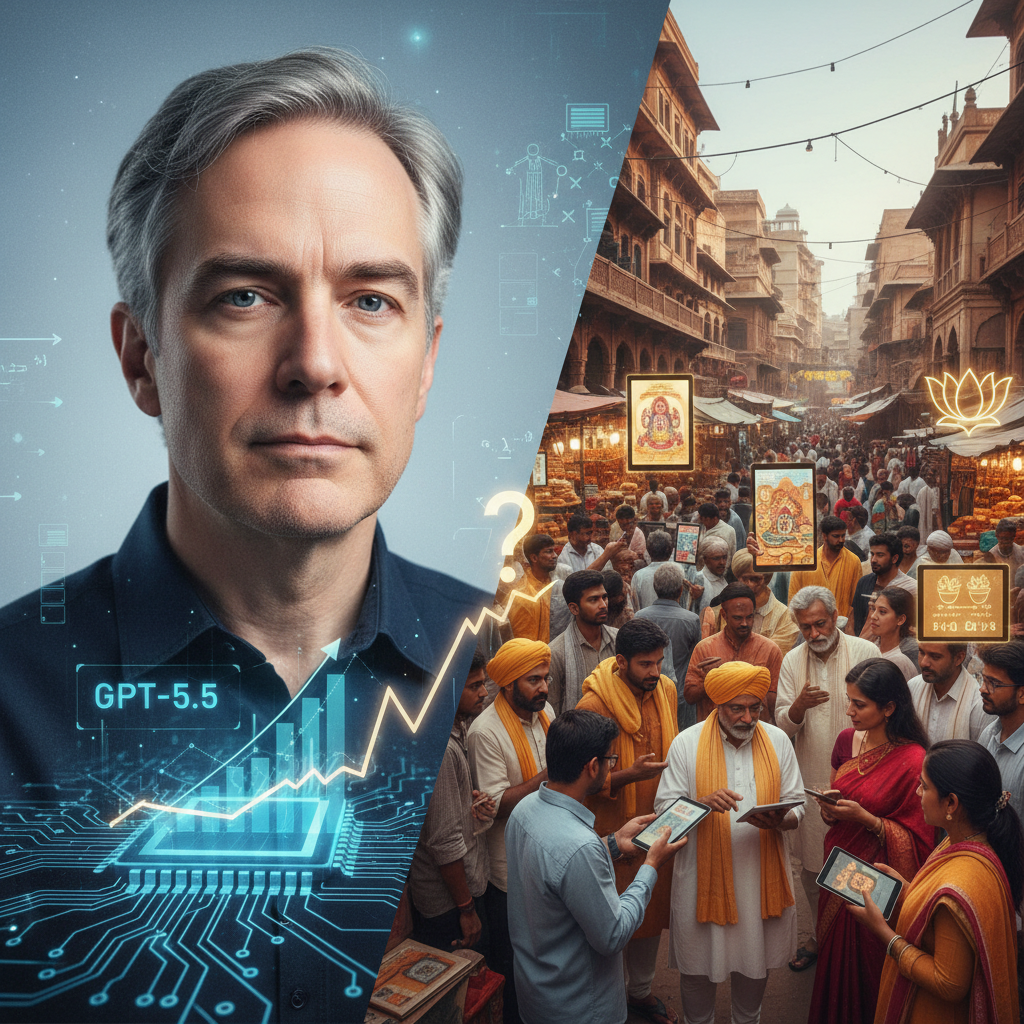

Let's be honest, the tech world is a bit like a Bollywood movie sometimes: grand pronouncements, dazzling special effects, and everyone waiting to see who the real hero is. Right now, all eyes are on OpenAI, and their latest GPT-5.5 release is the talk of the town, or rather, the talk of every tech corridor from San Francisco to Bengaluru.
They've pushed the envelope again, no doubt. The benchmarks are impressive, the performance metrics are off the charts, and the chatter is all about how it outpaces Google's Gemini Ultra and Anthropic's Claude 3 Opus in a dozen different tests. We're talking about improvements in reasoning, context understanding, and multimodal capabilities that make previous iterations look like quaint relics. Sam Altman and his team at OpenAI have delivered a powerful piece of technology, a testament to relentless iteration and massive compute power. You can read all about the technical deep dives on sites like MIT Technology Review.
But here's the thing, and this is where my Indian perspective kicks in: raw benchmarks, while important, tell only half the story. It's like judging a chef by how many ingredients they have, not by how well they can cook a regional dish. These models, for all their sophistication, are still largely built on a Western worldview, trained on datasets that reflect a particular cultural and linguistic bias. When I look at GPT-5.5, I see a marvel of engineering, but I also see a challenge, an opportunity for India to truly shine.
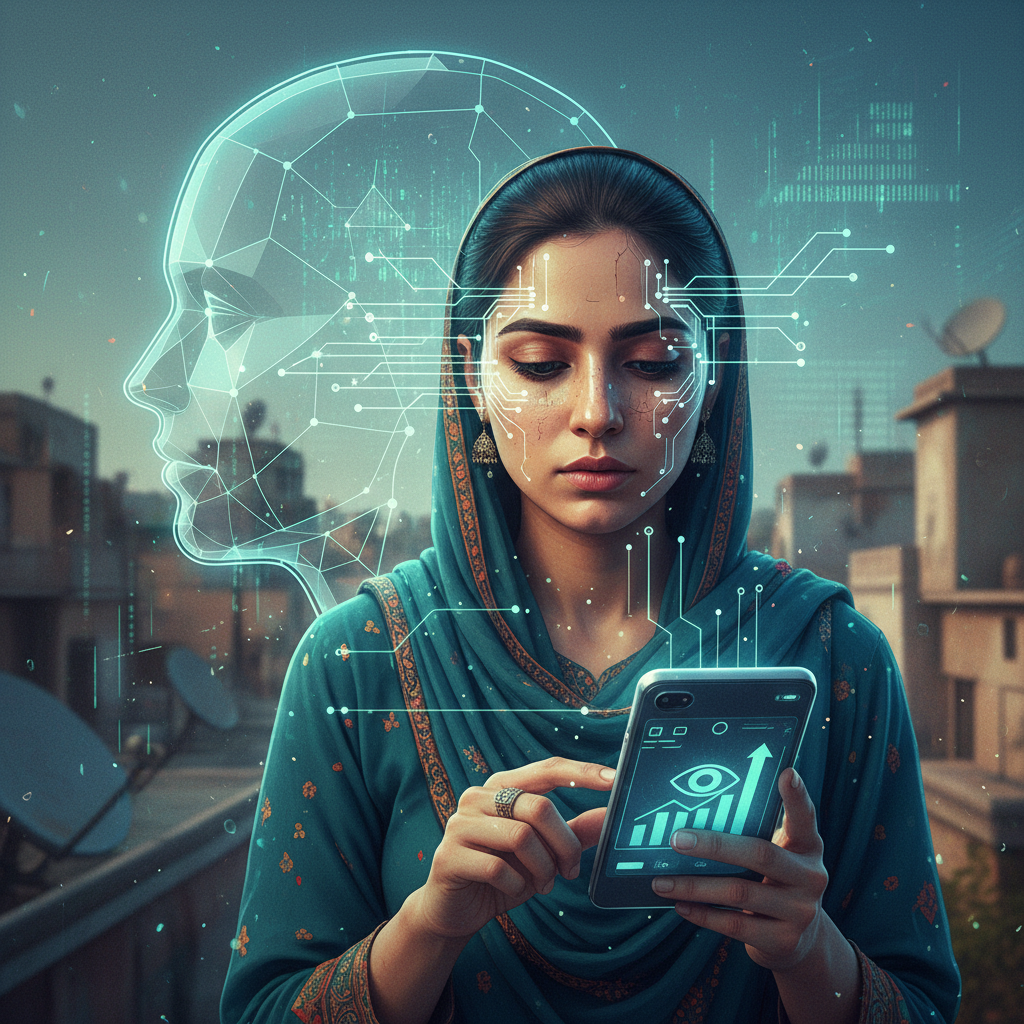
We're not just consumers of technology here, we're creators, innovators, and problem-solvers. The real question for us isn't whether GPT-5.5 can write better English poetry or debug more efficiently, but whether it can understand the nuances of a conversation in Tamil, grasp the context of a rural Indian marketplace, or assist a farmer in a remote village. Can it truly become a tool for the next billion users, or will it remain a sophisticated toy for the already privileged?
This is the inflection point. For too long, the narrative has been dictated by Silicon Valley. Their benchmarks, their use cases, their ethical frameworks. But the world is bigger than that. India, with its incredible linguistic diversity, its unique societal structures, and its pressing developmental needs, offers a crucible for AI that demands more than just raw processing power. It demands cultural intelligence, contextual awareness, and a deep understanding of local challenges.
I've spoken to folks at various Indian AI startups, the ones quietly building solutions that address real pain points. They're not just trying to catch up to OpenAI, they're trying to leapfrog them in areas that matter to us. "The benchmarks are interesting, but they don't capture the essence of what we're trying to build," a CEO of a Mumbai-based AI firm, who preferred to remain unnamed for competitive reasons, told me recently. "We need models that can truly integrate with our diverse languages and cultural contexts, not just translate them awkwardly." This sentiment is echoed across the board.
Consider the sheer linguistic landscape of India. We have 22 official languages, and hundreds more dialects. A model trained predominantly on English and other major global languages will always struggle to achieve true fluency and understanding in this environment. It's not just about translation, it's about cultural idiom, historical context, and the subtle ways meaning is conveyed. This is where companies like Sarvam AI, which is building Indic language models, are making waves. They understand that a truly intelligent AI for India must be of India.
Then there's the data. The internet, as we know it, is heavily skewed towards certain demographics and content types. The vast majority of human knowledge, especially in non-Western contexts, isn't neatly digitized and indexed for large language models to gobble up. This creates inherent biases and blind spots in even the most advanced models like GPT-5.5. This isn't a criticism of OpenAI's engineering prowess, it's a statement about the limitations of their training data and, by extension, their worldview.
We need to ask ourselves: are these models truly intelligent if they can't understand the world beyond their training data? Are they truly powerful if they can't empower everyone, everywhere? "The next generation of AI success will not just be about who has the biggest model, but who has the most relevant model for specific populations," observed Dr. Rohini Sreedhar, a leading AI ethicist at the Indian Institute of Technology Madras, in a recent panel discussion. "Benchmarks need to evolve to reflect this global reality, not just a Silicon Valley standard." Her point is absolutely critical.
This isn't to say OpenAI's advancements are irrelevant. Far from it. They push the boundaries of what's possible, and that inspires everyone. But their success also highlights the immense opportunity for others to build on top of, or parallel to, these foundational models, tailoring them for specific needs. Imagine a GPT-5.5 equivalent that is natively fluent in Telugu, understands the nuances of Indian legal texts, or can assist in healthcare diagnostics based on regional disease patterns. That's the AI we need, and that's the AI India is uniquely positioned to build.
Forget Silicon Valley, look at Hyderabad. Look at Bengaluru. Look at the vibrant startup ecosystem in Pune and Chennai. These are the places where the next wave of AI innovation, one that is truly global and inclusive, is being forged. We're not just talking about fine-tuning existing models, but about building new architectures, new datasets, and new applications from the ground up, with an Indian heart and a global mind. This is about creating AI that understands the rhythm of our lives, the complexities of our societies, and the aspirations of our people.
The competition between OpenAI, Google, and Anthropic is fierce, and it's driving incredible progress. Each new model release is a step forward, a testament to human ingenuity. But the real victory won't be measured in benchmark scores alone. It will be measured in impact, in accessibility, and in how well these powerful tools serve the entirety of humanity, not just a fraction. India will own the next decade of AI, not by replicating what's done elsewhere, but by building what's truly needed here and for the world. The race for the next AI frontier is not just about who builds the biggest model, but who builds the most meaningful one. And that, my friends, is a game India is ready to win.
For more insights into the global AI landscape, keep an eye on Reuters' AI coverage. The story is far from over, and the most exciting chapters are yet to be written, many of them right here in Asia.