
The digital landscape, much like the monsoon season here in Sri Lanka, is perpetually in flux. One moment, a gentle drizzle, the next, a torrential downpour reshaping everything in its path. In the world of software development, Replit, a platform many of us once dismissed as a mere online coding playground, has undergone just such a transformation. It is no longer content with being a simple sandbox; it is now aggressively pivoting to become an AI-powered software development behemoth.
I have been tracking this for months, observing the subtle shifts in their marketing and product development. Replit's recent announcements, particularly its deeper integration of large language models like OpenAI's GPT-4 and Google's Gemini into its core offerings, signal a clear intent. They are not just adding AI features; they are reimagining the entire development workflow around AI assistance, from code generation to debugging and deployment. The promises don't match the reality for many in our region, however.
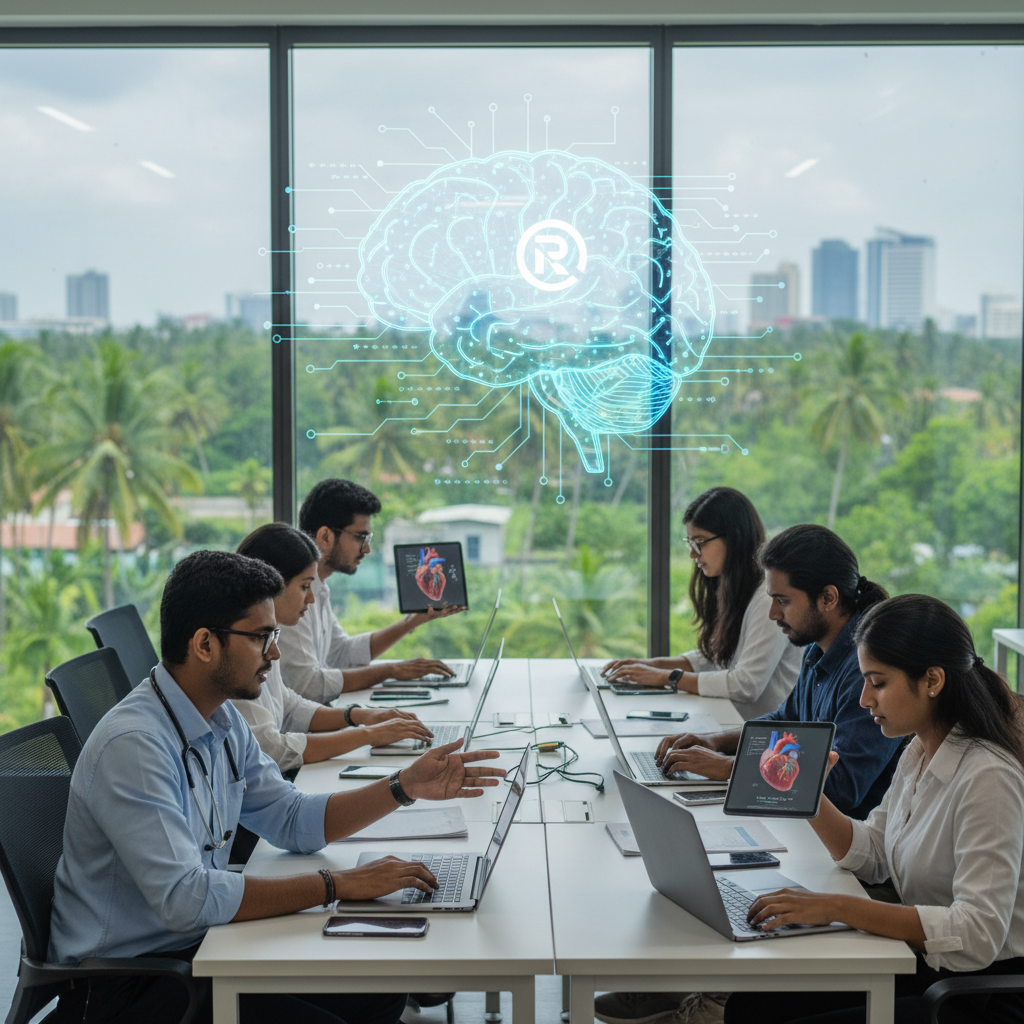
For a country like Sri Lanka, with its burgeoning tech sector and a significant diaspora of skilled developers, this evolution presents a double-edged sword. On one hand, the democratisation of advanced coding tools, powered by AI, could theoretically lower barriers to entry and accelerate innovation. Imagine a young developer in Jaffna, without access to high-end computing resources, leveraging Replit's cloud-based AI to prototype complex applications. The potential is certainly alluring.
On the other hand, there is the perennial concern of digital colonialism. Will these AI tools truly empower local creators, allowing them to build solutions tailored to Sri Lankan needs, or will they merely make us more reliant on proprietary platforms and models whose underlying biases and design philosophies originate thousands of miles away? This is not merely an academic question; it directly impacts our economic sovereignty and the unique flavour of our technological future.
Replit's CEO, Amjad Masad, has been vocal about his vision for a world where anyone can be a developer, aided by AI. In a recent interview, he stated, "Our goal is to make programming as intuitive as natural language. We believe AI is the key to unlocking creativity for billions, not just a select few." This is a grand pronouncement, certainly, but one that requires careful scrutiny. What does 'intuitive as natural language' truly mean when the 'natural language' models are predominantly trained on Western datasets and cultural contexts?
Consider the practical implications. Replit's AI tools, such as Ghostwriter, promise to write code, suggest improvements, and even generate entire functions based on natural language prompts. While impressive, the efficacy of these tools often depends on the clarity and specificity of the prompt, as well as the AI's understanding of the desired outcome. If the AI is primarily trained on codebases from Silicon Valley startups, how well will it understand the nuances of a Sinhala language processing application or a logistics system optimised for Sri Lanka's unique infrastructure challenges?