
The hype around AI-generated video has reached a fever pitch, and Pika Labs is often crowned the darling of this new, glittering age. Analysts, venture capitalists, and even some of my colleagues in the media are breathlessly declaring that the company, along with its rivals like Runway ML and Stability AI, is on the cusp of creating the 'YouTube of AI.' They envision a future where anyone, with a few text prompts, can conjure cinematic masterpieces and flood the internet with endlessly scrollable, algorithmically perfect content. But let me tell you, everyone's wrong about this, especially when you look at it from Seoul.
While the West focuses on democratizing video creation for the masses, a noble goal perhaps, the real game is being played elsewhere. Here in South Korea, our entertainment industry, a global powerhouse responsible for K-pop, K-dramas, and webtoons, is not just watching, it is actively reshaping what AI video means. We are not just thinking about user-generated content; we are thinking about creator-driven IP, and that is a fundamental difference.
Consider the recent buzz around Pika Labs' latest funding round, reportedly valuing the company north of $500 million. It is impressive, certainly. Their tools are getting better, faster, and more accessible. You can generate a 30-second clip with surprising fidelity now, a far cry from the glitchy, surreal outputs of just a year ago. But what exactly are people making with it? Mostly novelty clips, short animations, or experimental art. It is a playground, not yet a studio. The 'YouTube of AI' narrative implies a platform where individuals upload their AI-generated shorts, competing for eyeballs and ad revenue. This is a model built on volume and virality, a race to the bottom for attention.
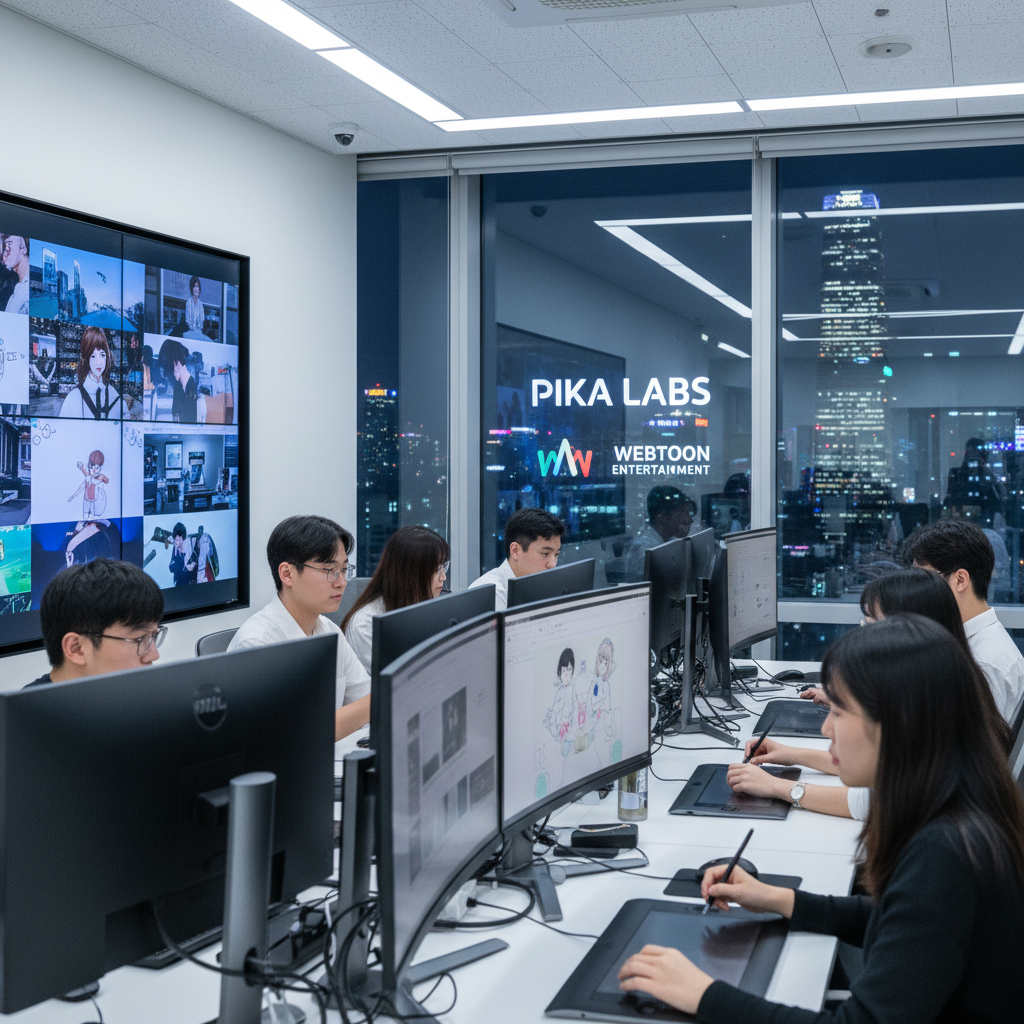
Seoul has a different answer. Our creative industries, particularly in webtoons and gaming, have long understood the power of serialized, narrative content and deeply engaged fanbases. Companies like Naver Webtoon and Kakao Entertainment are not just content platforms; they are IP factories, meticulously developing stories and characters that transcend media. A popular webtoon can become a hit K-drama, then a game, then merchandise. This is a vertically integrated content ecosystem, and AI video is being seen as a powerful new lever within it, not a standalone phenomenon.
“The Western approach to AI video feels like throwing paint at a wall and hoping something sticks,” says Dr. Min-jun Kim, a lead researcher at the Korea Advanced Institute of Science and Technology, or Kaist, specializing in generative media. “Here, we are designing the canvas, the brushstrokes, and the entire gallery experience from the outset. Our focus is on enhancing existing, proven intellectual property, not just generating new, ephemeral content.” Dr. Kim’s team is working on tools that can automatically animate webtoon panels into short-form video series, maintaining character consistency and narrative flow, a far more complex challenge than random prompt-to-video generation.
Indeed, the K-wave is coming for AI too. Imagine a scenario where a popular webtoon artist, instead of relying on a large animation studio, can use sophisticated AI tools developed by Naver or Kakao to generate high-quality animated adaptations of their work, maintaining their unique artistic style. This is not about replacing artists; it is about empowering them to scale their vision and reach new audiences faster and more efficiently. This is about production value and narrative continuity, not just novelty.
We are already seeing the early stages of this. In late 2025, a subsidiary of CJ ENM, one of South Korea’s largest entertainment conglomerates, quietly launched an internal AI studio focused on character animation and scene generation for pre-visualization in K-drama production. While they have not released public tools, industry insiders suggest their capabilities are rapidly advancing. “Our goal is to reduce the time and cost of early-stage production by up to 40 percent,” revealed Ms. Ji-yeon Park, Head of AI Content Innovation at CJ ENM, during a closed-door industry forum last month. “This allows our directors and writers to iterate on visual concepts much faster, ultimately leading to higher quality final products.” This is a pragmatic, business-driven application of AI video, far removed from the 'anyone can make a viral video' narrative.
Furthermore, the legal and ethical landscape for AI-generated content is far more mature here, driven by a strong emphasis on creator rights and intellectual property protection within our entertainment industry. While American companies are still grappling with copyright lawsuits from artists whose work was used to train models, Korean companies are proactively engaging with creators. They are developing licensing frameworks and compensation models that ensure artists are part of the AI-driven future, not just its victims. This is crucial for building trust and fostering a sustainable creative ecosystem. You can read more about the ongoing global discussions around AI and IP on Reuters Technology.
The 'YouTube of AI' vision, as championed by Pika Labs and others, is inherently flawed because it misunderstands the core value proposition of video. It is not just about moving images; it is about storytelling, emotion, and connection. While AI can generate visuals, it still struggles with the nuanced, culturally specific storytelling that captivates audiences. This is where human creativity, amplified by AI, becomes indispensable.
Consider the gaming industry, another Korean stronghold. Companies like NCSoft and Nexon are exploring AI video for dynamic cutscenes, character expressions, and even procedural world generation that reacts to player choices. This is not about creating a single video, but about generating interactive, personalized video experiences within vast virtual worlds. This is a level of complexity and integration that goes far beyond simple text-to-video prompts. According to a recent report by TechCrunch, the global gaming AI market is projected to reach $11.8 billion by 2030, with a significant portion driven by generative media applications.
So, while the Silicon Valley darlings are busy building a new kind of digital playground, complete with all the chaotic, uncurated content that implies, South Korea is building something else entirely. We are constructing sophisticated, AI-powered content engines designed to enhance, extend, and monetize established intellectual property. It is less about a free-for-all video platform and more about a highly curated, professionally driven content pipeline. This approach leverages our strengths in narrative, design, and entertainment production, ensuring that AI serves the creator, not the other way around. It is a vision that prioritizes quality, consistency, and sustainable value over fleeting virality. The race for the future of AI video is not just about who can generate the most clips; it is about who can tell the most compelling stories, and on that front, Seoul is playing a very different, and I believe, a much smarter game.