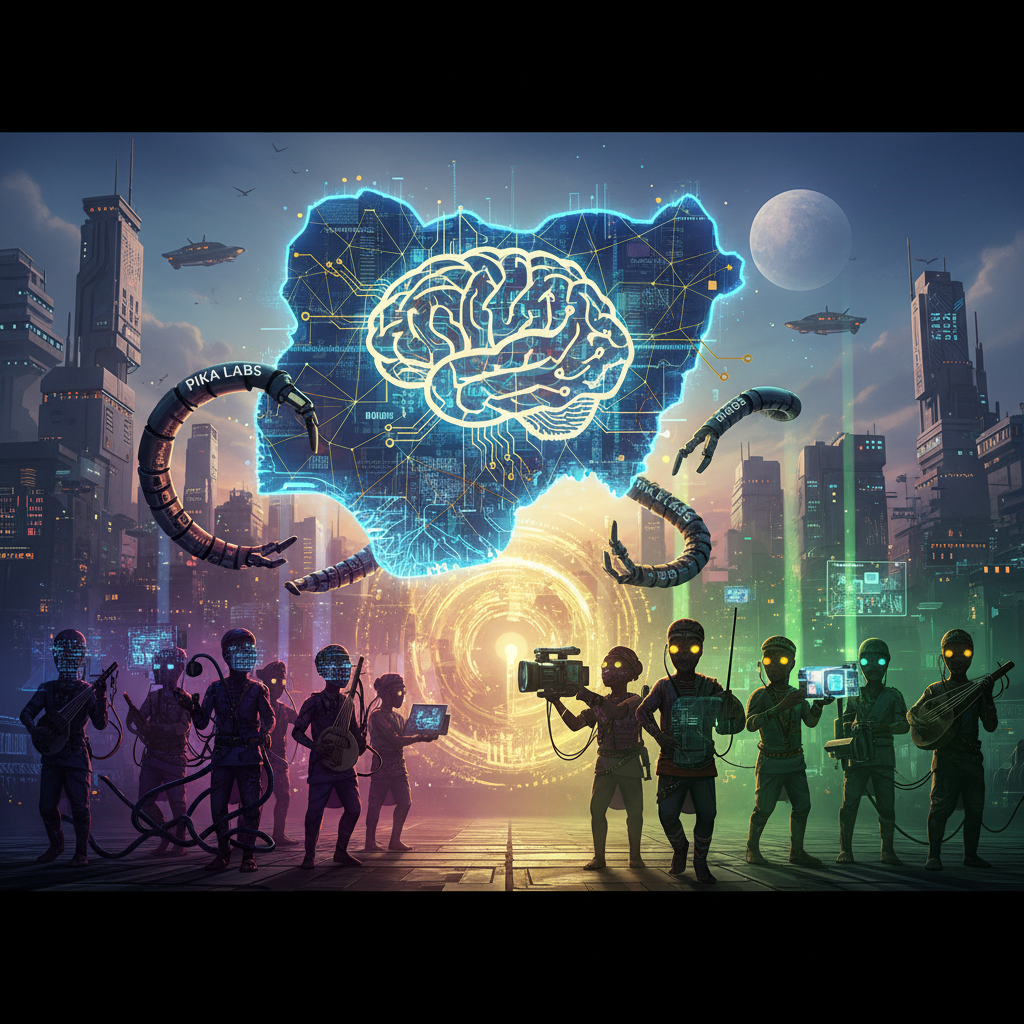
The buzz around Pika Labs, RunwayML, and the entire ecosystem racing to become the 'YouTube of AI-generated video' is deafening. From Lagos to London, tech bros are hailing it as the next frontier, a democratizing force that will unleash unprecedented creativity. Unpopular opinion: I am not buying it, not entirely. While the technology is undeniably impressive, my Nigerian instincts tell me we need to look beyond the shiny new toy and ask who truly benefits, especially here in Africa.
Imagine this: it is 2031. Nigeria is a global hub for AI-generated content. Not because we are building the foundational models, mind you, but because our vibrant culture, our stories, our very essence, has become the raw material, the 'prompt fuel' for algorithms developed thousands of miles away. A young boy in Ajegunle, armed with a cheap smartphone and a subscription to 'Pika Pro Africa', can generate a Nollywood-esque short film in minutes. He feeds the AI descriptions of bustling markets, intricate masquerade dances, and the dramatic flair of our everyday lives. The AI, trained on billions of data points, many scraped without consent from our digital footprints, churns out a visually stunning, if somewhat soulless, piece of content. This content then gets uploaded to a global platform, monetized, and the lion's share of the revenue flows back to the corporate headquarters in California or Beijing.
This is not a far-fetched dystopian fantasy. This is the logical extrapolation of current trends. The race to build the YouTube of AI video is not just about technology; it is about data ownership, cultural sovereignty, and who controls the narratives of the future. Pika Labs, with its intuitive interface and rapid iteration, is leading the charge, but Google's DeepMind and Meta's AI research divisions are not far behind, pouring billions into similar ventures. NVIDIA, of course, is laughing all the way to the bank, selling the GPUs that power this entire generative explosion. The question for us, for Nigeria, for Africa, is whether we will be active participants or merely passive content providers in this new digital economy.
The Mechanics of a Future Dominated by AI Video
How do we get to this 2031 scenario? The path is already being paved. Today, in April 2026, Pika Labs and its competitors are still refining their models. They are focusing on photorealism, consistent character generation, and longer, more complex scenes. Over the next five years, we will see several key milestones:
- Hyper-realistic Generative Models (2027-2028): Expect models to achieve near-perfect photorealism, making it almost impossible to distinguish AI-generated video from real footage. This will be fueled by massive datasets and advancements in diffusion models, perhaps even incorporating real-time feedback loops from human evaluators. Think of it as the GPT-4 moment for video, but with visual fidelity that will make your jaw drop. Companies like OpenAI and Google will be at the forefront, pushing the boundaries.
- Narrative AI Integration (2028-2029): The next step is not just generating clips, but entire narratives. AI will be able to understand plot structures, character arcs, and emotional beats. You will be able to prompt,