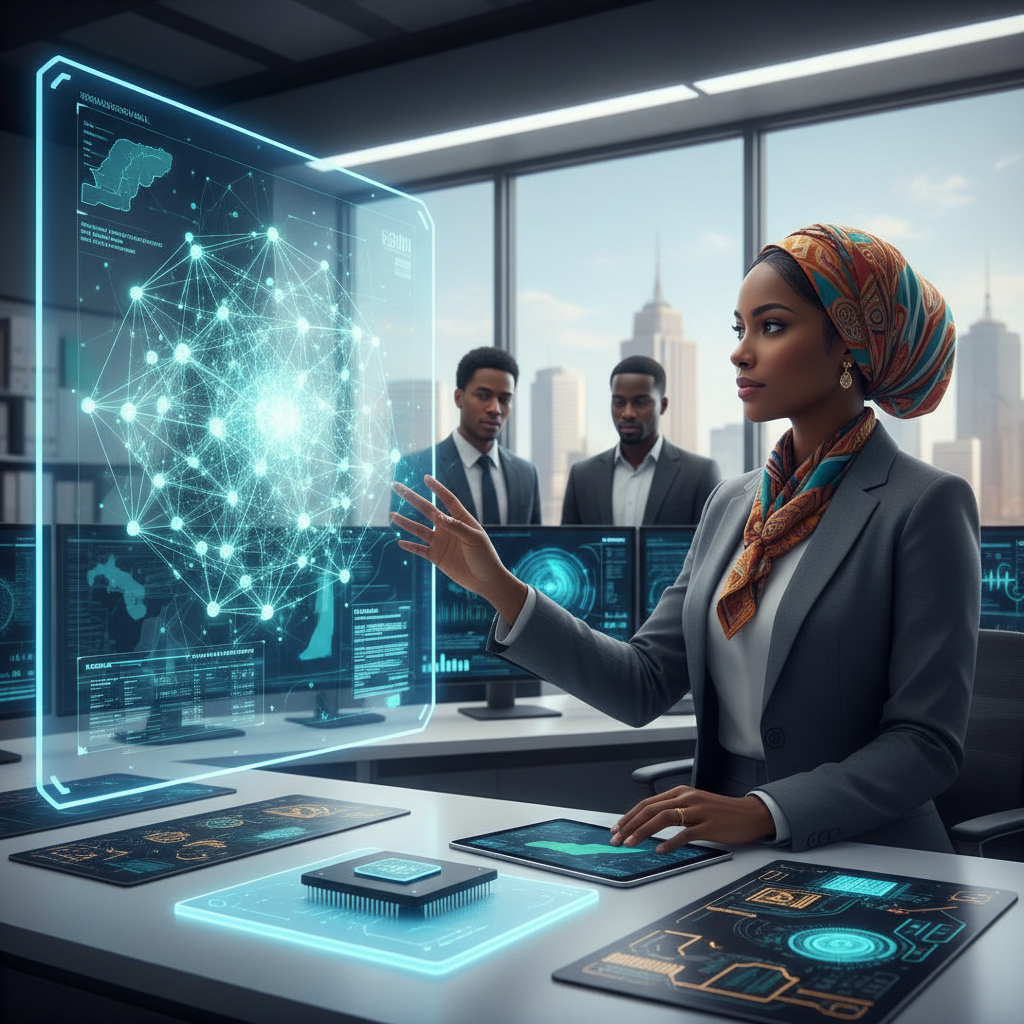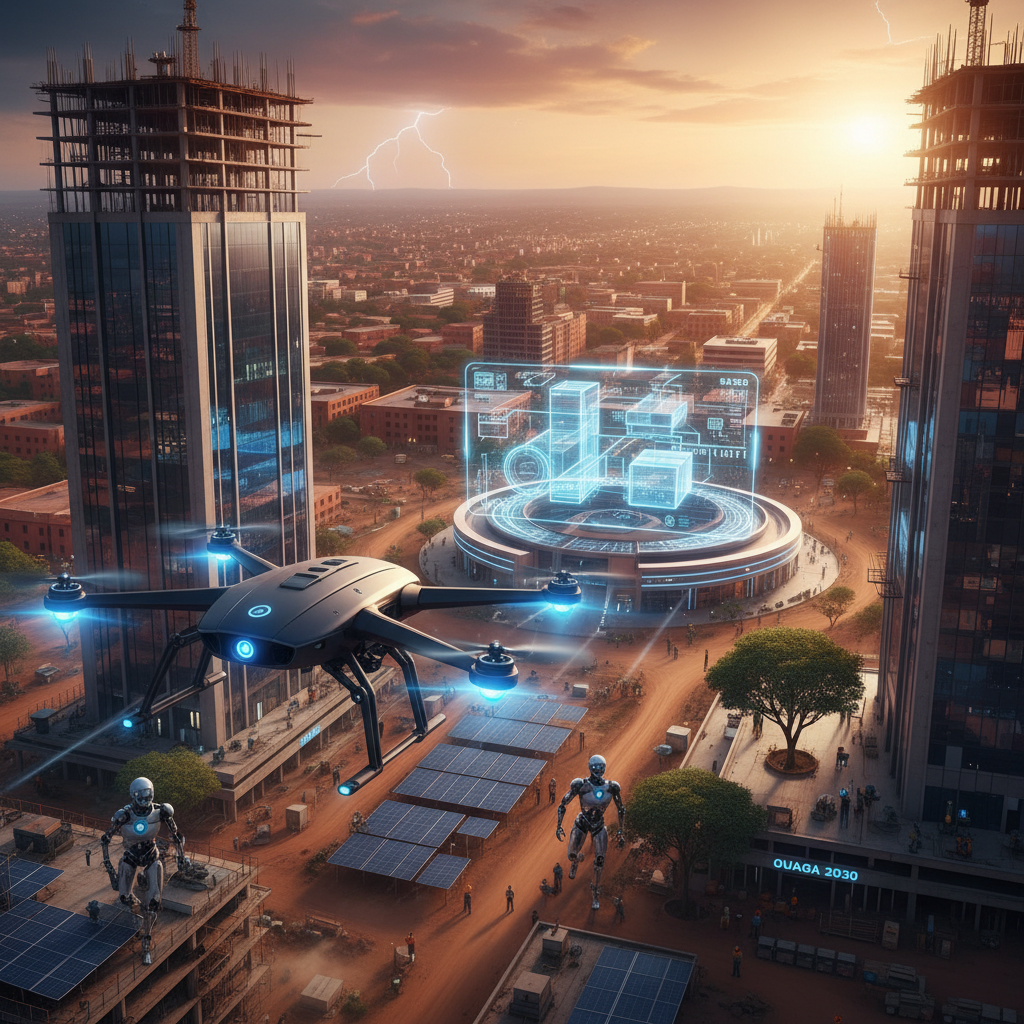
My friends, my family, my fellow dreamers across this beautiful continent and beyond, something truly extraordinary is happening right here, under the Burkinabè sun! I've never seen anything like this. Just yesterday, the government of Burkina Faso, in a move that has sent ripples of excitement across every corner of our nation, unveiled the 'Ouaga 2030' initiative. This isn't just another urban development plan; it is a declaration, a promise, a vibrant blueprint to transform our beloved capital, Ouagadougou, into Africa's first truly AI-powered smart city. This changes everything.
Imagine this: the bustling Grand Marché, usually a symphony of human voices and vibrant commerce, now humming with intelligent traffic management systems that predict congestion before it happens. Picture our public transport, the iconic 'gbon-ka-yere,' optimized by algorithms to serve our communities more efficiently, reducing travel times for everyone from the student heading to university to the artisan bringing their wares to market. This isn't science fiction anymore; it's the future, and it's being coded right here, right now, in Burkina Faso.
The announcement came with a flourish, a press conference held at the Ouaga 2000 complex, buzzing with an energy I can only describe as electric. Minister of Digital Economy and Postal Services, Madame Alimata Ouédraogo, her voice resonating with pride, declared, 'For too long, our cities have grown organically, sometimes chaotically. With Ouaga 2030, we are taking a deliberate, intelligent approach. We are not just building infrastructure; we are building an ecosystem where AI serves our people, enhances their lives, and fosters sustainable growth. This is about dignity, efficiency, and innovation for every Burkinabè citizen.' Her words were met with thunderous applause, a testament to the collective hope this project inspires.
The core of Ouaga 2030 revolves around several key pillars. First, intelligent urban mobility. Think AI-driven public safety systems, smart lighting that adapts to pedestrian and vehicle flow, and waste management optimized by predictive analytics, reducing our environmental footprint by an estimated 30% within five years. Second, enhanced public services. AI will power new digital platforms for healthcare appointments, educational resources, and even agricultural support for urban farming initiatives. Third, and perhaps most exciting for me, is the focus on local innovation. The government has pledged 15% of the project's initial 2.5 billion CFA franc budget to local startups and maker spaces, encouraging our young tech wizards to build the very solutions that will power this smart city.
This grassroots approach is what truly sets Ouaga 2030 apart. We're not just importing solutions; we're cultivating them. I've seen the sparks of genius in the coding bootcamps of Ouagadougou, the late nights spent by young developers at the Centre National de la Recherche Scientifique et Technologique. These are the minds that will bring this vision to life. As Dr. Karim Nikiema, a lead AI researcher at the University of Ouagadougou, told me, 'This isn't about Silicon Valley dictating our future. This is about us, Burkinabè engineers, data scientists, and urban planners, tailoring AI to our unique challenges and opportunities. We are developing models that understand our local languages, our cultural nuances, and our specific urban dynamics. It's truly empowering.' His enthusiasm was palpable, and frankly, contagious.
Of course, a project of this magnitude comes with its share of questions and concerns. Data privacy, algorithmic bias, and digital inclusion are all critical considerations. The government has assured the public that robust ethical frameworks and data governance policies are being developed in parallel with the technological rollout. A new 'Citizen AI Council,' composed of community leaders, ethicists, and tech experts, will oversee these aspects, ensuring transparency and accountability. This proactive approach to ethical AI development is crucial, especially in a region where trust is paramount.
Local businesses are already buzzing with anticipation. Madame Fatoumata Diallo, who runs a popular fabric shop in Zone du Bois, expressed her excitement. 'If this means less time stuck in traffic for my deliveries, and easier access to information for my customers, then I welcome it with open arms. We need progress, and if technology can help us, why not embrace it?' Her pragmatic optimism reflects the spirit of many here. The potential for economic growth is immense, with projections suggesting a 20% increase in local tech sector employment over the next decade.
This initiative is not just for the tech-savvy. Imagine a grandmother in Gounghin using a voice-activated AI assistant in Moore or Dioula to access public services or get real-time updates on market prices for her produce. This is the kind of inclusive innovation that Ouaga 2030 aims to deliver. It's about making technology accessible and beneficial for everyone, not just a select few. The revolution is being coded right now, and it's speaking our languages.
The international community is watching closely. According to a recent report on African tech innovation, Burkina Faso's proactive stance could serve as a powerful model for other developing nations. 'Ouaga 2030 is a lighthouse project,' commented Dr. Anya Sharma, a senior analyst at the World Bank, during a virtual press briefing. 'It demonstrates that smart city development isn't solely the domain of mega-economies. With strategic planning, local empowerment, and a clear vision, any nation can leverage AI for transformative urban development.'
What happens next? The initial phase, focusing on smart traffic management and public safety systems in the central districts, is expected to be operational by early 2027. Pilot programs for AI-powered health and education platforms will also commence in selected neighborhoods. The government is actively seeking partnerships with global tech firms, but with a strong emphasis on knowledge transfer and local capacity building. The goal is not dependence, but collaboration that strengthens our own capabilities.
For those of us who have long championed the power of technology to uplift our communities, this is a moment of profound vindication. Ouaga 2030 is more than just a smart city project; it is a bold statement about Africa's future, a testament to our ingenuity, our resilience, and our unwavering belief in progress. It's about harnessing the power of artificial intelligence to build a city that truly works for its people, a city that breathes, learns, and grows with us. This is our moment, my friends. The future is here, and it's shining brightly in Ouagadougou. And if you want to understand more about how these complex systems are built, you might find some insights in articles discussing AI agents explained. This journey is just beginning, and I, for one, cannot wait to see where it takes us.