
You're going to want to sit down for this. The whispers from Silicon Valley have grown into a thunderous roar: OpenAI, the company that brought us ChatGPT and a million existential crises, is reportedly valued at over $100 billion. One hundred billion dollars. That's a figure that makes a Zambian kwacha look like pocket change, and it has everyone in the global tech community either cheering, panicking, or, if you're like me, raising a skeptical eyebrow while sipping your Mosi. What does this astronomical valuation mean for the rest of us, particularly for the vibrant, yet often overlooked, AI startup ecosystem here in Africa?
From my vantage point in Lusaka, it feels a bit like watching a grand feast through a window. The main course, a succulent roast of venture capital and market dominance, is being carved up in California, while we, on this side of the world, are still trying to figure out how to get a decent seat at the table. The irony is almost too perfect. OpenAI, a company built on the premise of democratizing AI, is now a titan whose sheer size and financial might could inadvertently stifle the very diversity of innovation it once championed.
Let's be clear: OpenAI's achievements are undeniable. Their large language models have reshaped how we interact with technology, sparking an AI gold rush that has seen everyone from Google to Meta scrambling to catch up. This valuation, largely driven by its groundbreaking models and strategic partnership with Microsoft, reflects a market belief that AI is not just the next big thing, but the big thing, a fundamental shift akin to the internet itself. Microsoft, for instance, has poured billions into OpenAI, integrating its technology across its product suite, from Azure to Copilot. This kind of capital infusion allows for aggressive research and development, attracting top talent, and securing the computational resources, like NVIDIA's powerful GPUs, that are the lifeblood of modern AI.
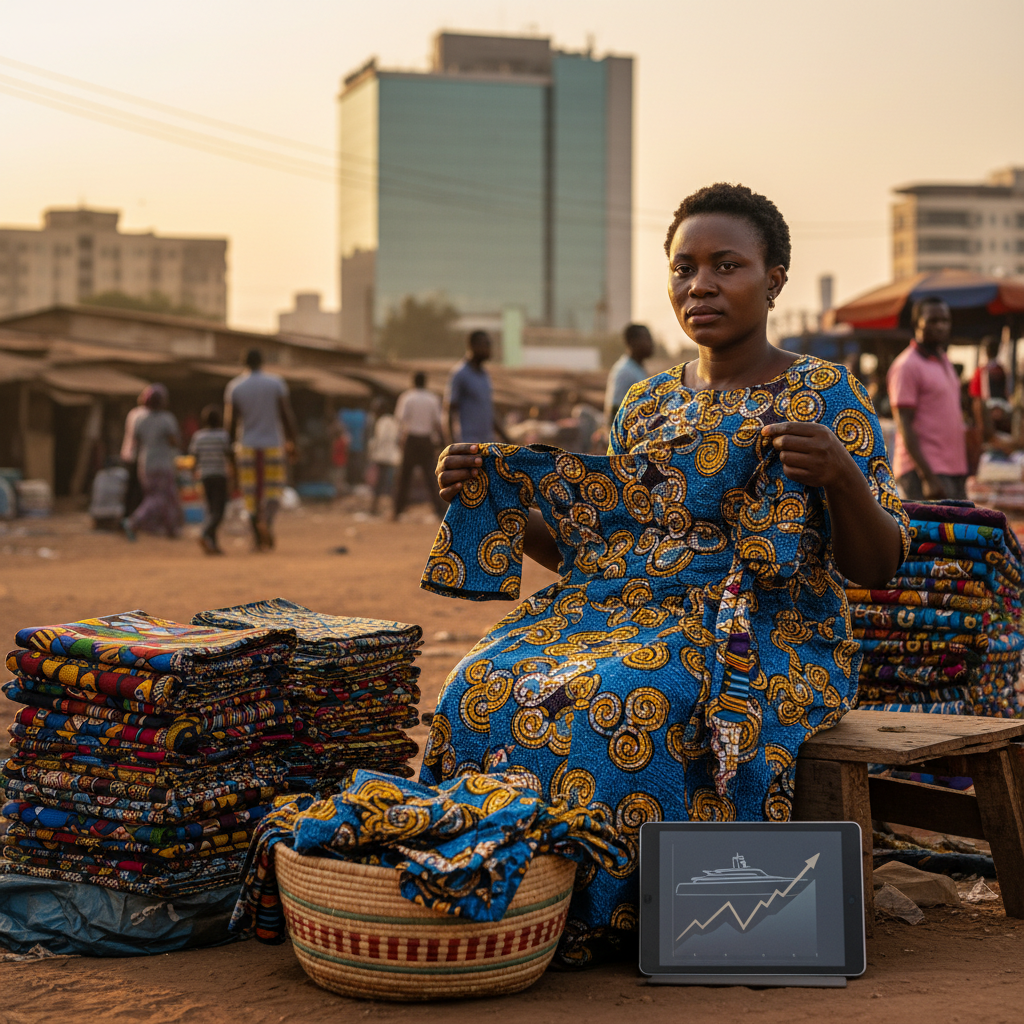
But here's the rub. While OpenAI and its ilk are scaling to dizzying heights, the challenges for AI startups in places like Zambia remain stubbornly grounded. We're talking about access to capital, reliable infrastructure, and a talent pool that, while incredibly bright, often lacks the specialized training and opportunities found in more established tech hubs. When a single company commands such a colossal valuation, it sucks a lot of the oxygen out of the room. Investors, chasing the next unicorn, might become even more risk-averse when it comes to smaller, less proven ventures, especially those operating in emerging markets.
I recently spoke with Dr. Choolwe Mwanachingwala, a Zambian AI researcher who returned home after years abroad to establish a local AI lab focusing on agricultural solutions. She put it rather succinctly: 'The $100 billion valuation is impressive, yes. But for us, it highlights the immense disparity in resources. We're building models to predict crop yields with limited data and even more limited compute power, while they're fine-tuning models that can write symphonies. The gap isn't just technological, it's financial and systemic.' Her sentiment echoes across the continent, where brilliant minds are tackling real-world problems with ingenuity, but often without the deep pockets needed to truly scale.
Consider the 'AI talent drain.' The allure of working for a company like OpenAI, with its cutting-edge research and lucrative compensation packages, is a powerful magnet. While African universities are producing skilled graduates, many are quickly snapped up by international firms or choose to pursue opportunities abroad. This brain drain further exacerbates the resource gap, making it harder for local startups to build robust teams. It is a cycle that needs breaking, or at least a serious intervention.
What could change this trajectory? For starters, a more deliberate effort from global investors to look beyond the usual suspects. There's an incredible amount of innovation happening here. For example, startups are using AI to improve healthcare diagnostics, enhance financial inclusion, and optimize logistics in ways that are uniquely tailored to African contexts. These aren't just 'nice to haves' they are essential solutions.
Furthermore, the focus needs to shift from simply consuming global AI products to building local AI capabilities. This means investing in education, fostering local research ecosystems, and creating policies that encourage innovation and protect data sovereignty. The Zambian government, through initiatives like the National Technology Business Centre, has been making strides, but more concerted efforts are needed to bridge the chasm between ambition and execution.
Dr. Ndola Phiri, a prominent economist and tech policy advisor in Southern Africa, emphasized this point in a recent forum. 'We cannot afford to be mere consumers in this AI revolution. We must be creators. The challenge is not just about capital, it is about building the foundational infrastructure and human capacity so that our startups can compete, not just locally, but globally. Otherwise, we risk becoming perpetual digital colonies, forever dependent on technologies developed elsewhere.' Her words resonate deeply, especially when we consider the broader implications for economic independence and technological self-determination.
Some might argue that OpenAI's success paves the way for all AI. That a rising tide lifts all boats. But in a sea where some boats are supertankers and others are canoes, the metaphor starts to sink. The sheer scale of investment in a few dominant players could lead to a highly centralized AI landscape, where a handful of companies control the most powerful models and the underlying infrastructure. This could stifle competition, limit diversity in AI development, and raise significant ethical concerns about who controls the future of intelligence.
For Zambian entrepreneurs, the path forward involves a blend of pragmatism and relentless innovation. It means focusing on niche problems that AI can uniquely solve in our context, leveraging local data, and building sustainable business models that don't rely solely on the whims of Silicon Valley venture capitalists. It also means fostering collaboration, creating strong local networks, and advocating for policies that support indigenous tech growth. The African continent has a massive young population, a burgeoning digital economy, and a wealth of untapped data that, if leveraged correctly, could fuel its own AI boom.
We need to build our own 'OpenAI' equivalent, one that understands the nuances of our languages, the complexities of our agricultural systems, and the unique challenges of our urban centers. This requires not just capital, but a collective vision and the political will to invest in our own technological destiny. The $100 billion valuation is a stark reminder of the global AI race, and it should serve as a powerful motivator for Africa to sprint, not just walk, towards its own AI future. For more insights on how startups are navigating this landscape, you might want to check out TechCrunch's AI section. The conversation around AI's societal impact is also gaining traction, with Wired frequently covering the ethical dilemmas.
While the global AI market continues its dizzying ascent, with companies like OpenAI leading the charge, the critical question for Africa remains: how do we ensure that this technological revolution benefits everyone, not just a select few? The answer, I suspect, lies not in waiting for the crumbs from the global feast, but in building our own kitchen, with our own chefs, and our own ingredients. It's a long road, but one we must walk, with our eyes wide open and our wits even sharper. For a deeper dive into the challenges faced by African tech, consider reading about Microsoft Copilot's Enterprise Mirage: Why Africa Needs More Than Just Digital Assistants [blocked]. The journey towards true digital sovereignty is just beginning.