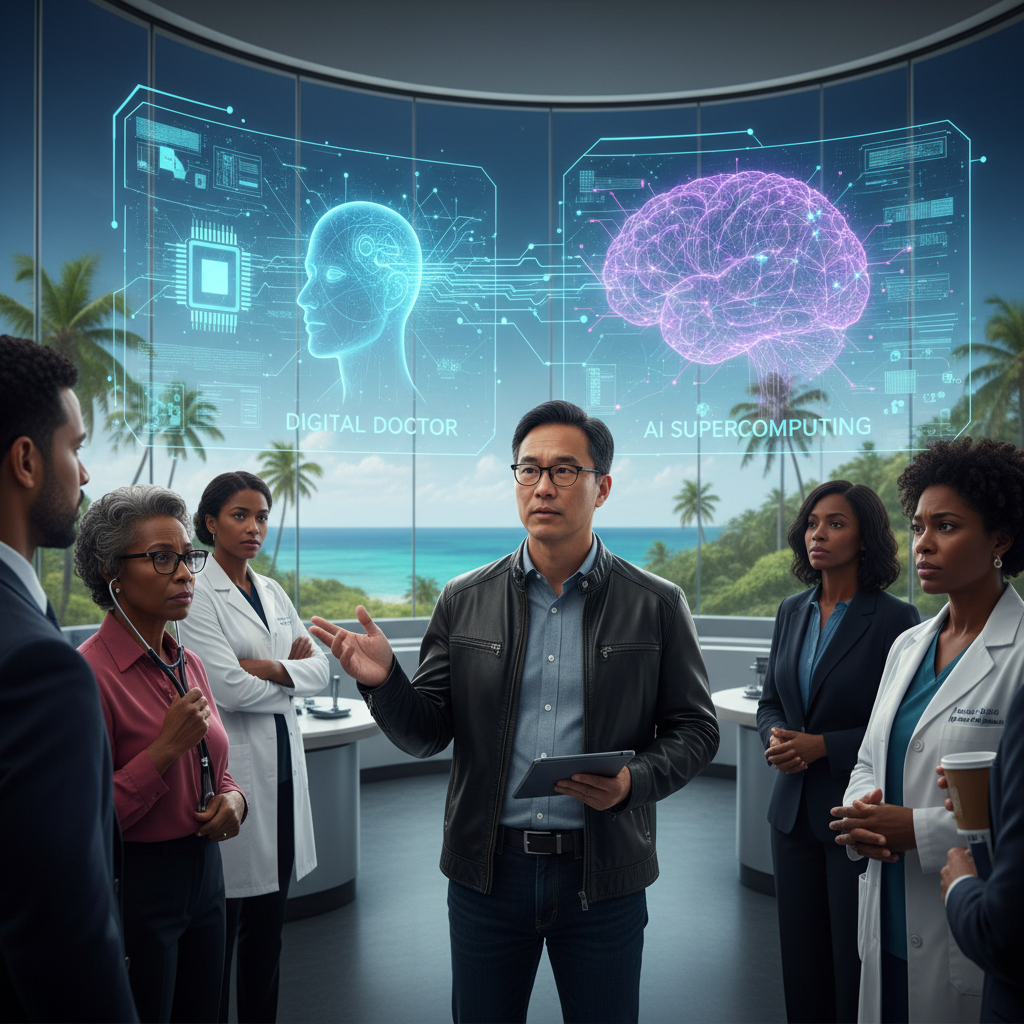

Alright, let's talk about this AGI business, this race to build a brain that can do everything we can, and then some. Every other day, it feels like another tech titan is declaring they're just around the corner from cracking the code. OpenAI, Google DeepMind, Anthropic, they're all in a mad dash, pouring billions into chips and algorithms, chasing this elusive dream. But what does this mean for us, especially when we start talking about something as critical as healthcare?
Here in Jamaica, we watch these developments with a mix of awe and a healthy dose of skepticism. We've got our own challenges, our own rhythms. The idea of an Artificial General Intelligence, a digital entity capable of diagnosing, treating, and even innovating in medicine, sounds like something out of a sci-fi flick. Yet, the big players are pushing hard, particularly in the realm of medical AI, and NVIDIA, bless their silicon souls, seems to be leading the charge with their specialized hardware and software platforms.
Jensen Huang, NVIDIA's CEO, has been quite vocal about the transformative power of AI in healthcare. He's not just selling chips anymore, he's selling a vision. A vision where AI can accelerate drug discovery, personalize treatments, and even assist in complex surgeries. Think about it: a supercomputer in every hospital, not just crunching numbers, but understanding symptoms, cross-referencing millions of medical records, and suggesting optimal care paths. It sounds like a godsend, especially for regions with limited access to specialized medical expertise, like parts of our own island.
NVIDIA's recent announcements, like their continued investment in platforms like BioNeMo and Clara, are not just about raw computing power. They're about creating an ecosystem where medical researchers and practitioners can leverage AI to solve problems that have stumped us for decades. BioNeMo, for instance, is designed to accelerate generative AI for drug discovery, allowing scientists to simulate molecular interactions at speeds previously unimaginable. This isn't just a fancy tool; it's a potential shortcut to finding cures for diseases that plague humanity, including those disproportionately affecting populations in the global south.
But here's where my Jamaican skepticism kicks in. While the promise is grand, the reality often has a way of being less equitable. Who gets access to these cutting-edge tools? Will a hospital in Kingston or Montego Bay be able to afford the infrastructure and expertise required to run these sophisticated NVIDIA-powered AI systems? Or will this advanced medical AI remain largely a luxury for the well-funded institutions in developed nations, further widening the healthcare gap?
Dr. Fei-Fei Li, co-director of Stanford's Human-Centered AI Institute, has consistently emphasized the importance of ethical considerations and equitable access in AI development. She once stated,