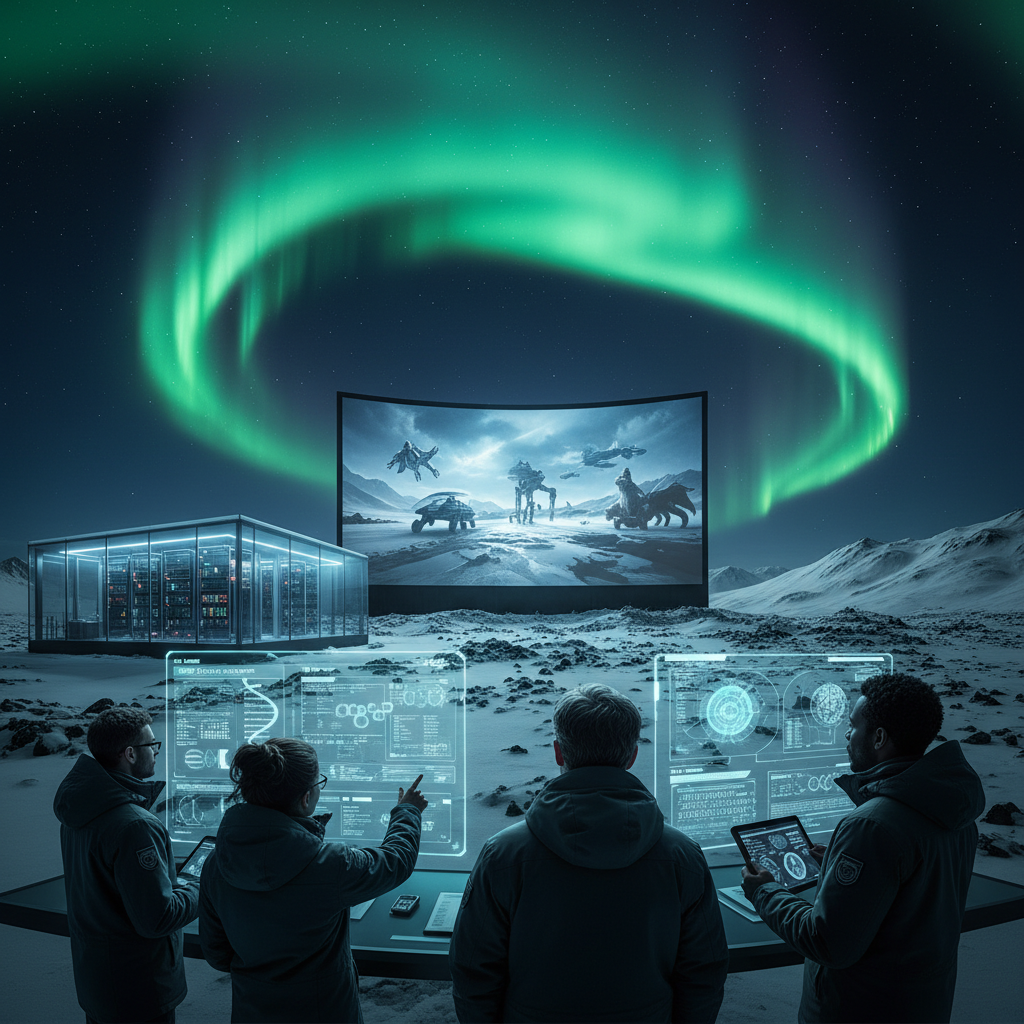

The wind howls outside my window here in Reykjavík, a familiar song that often sets the stage for a good story. We Icelanders, we know a thing or two about sagas, about tales passed down through generations, each word carefully chosen. So, when I hear the chatter from Hollywood, the whispers turning into shouts about AI-generated movies and TV shows, I can't help but wonder: what does this mean for the art of storytelling itself, and for us, perched on the edge of the Arctic, where creativity often blossoms in unexpected ways?
It feels like just yesterday we were marveling at AI's ability to write a decent poem or paint a passable picture. Now, the conversation has shifted dramatically. Companies like OpenAI and Google DeepMind are pushing the boundaries with models that can generate entire video clips from text prompts, complete with characters, dialogue, and even emotional arcs. The buzz is deafening. Is this the dawn of a new era for content creation, or the twilight for human artists?
For many in the film industry, the answer feels like a stark choice, a bit like standing between a volcanic eruption and a glacial flood. On one hand, the promise of efficiency is undeniable. Imagine a small production house, perhaps even one here in Iceland, being able to storyboard an entire series in hours, generate placeholder visuals, and iterate on scripts with unprecedented speed. This could democratize filmmaking, allowing voices from places like ours, often overlooked by the big studios, to tell their stories more easily. The cost savings could be immense, potentially opening up filmmaking to a wider array of creators and budgets.
However, the fear is palpable. I spoke with Elísabet Jónsdóttir, a veteran Icelandic screenwriter who has worked on both local productions and international collaborations. "It's a double-edged sword, Sigríður," she told me over a cup of strong coffee, her gaze drifting towards the harbor. "On one hand, the tools are fascinating. I've played with some of the script-generating AI myself, just for fun. It can spit out dialogue that's technically correct, but it lacks soul, that spark of human experience. It's like a beautiful shell without the pearl inside." She paused, stirring her coffee. "My biggest worry is that studios will see the cost savings and forget the value of human artistry. Will they choose a cheaper, soulless script over a more expensive, brilliant one?"
This sentiment is echoed globally. Reports from The Verge and TechCrunch frequently highlight the tension between Hollywood executives eager to embrace AI for its potential to streamline production and reduce costs, and the creative guilds fighting to protect human jobs and intellectual property. The Writers Guild of America and Sag-aftra, for instance, have been at the forefront of these discussions, negotiating for protections against AI replacing human writers and performers. They argue that while AI can be a tool, it should not be a replacement for the unique contributions of human talent.
Consider the recent developments from companies like Runway ML, which has been demonstrating increasingly sophisticated video generation capabilities. Their latest models can produce short, coherent scenes that are visually stunning. While not yet feature-film quality, the progress is rapid. Analysts from Reuters suggest that within two to three years, AI could be generating entire animated features, and within five, live-action films with minimal human intervention. This isn't just about special effects anymore; it's about the entire creative pipeline.
In the land of fire and ice, AI takes a different form. We have a unique relationship with technology, often driven by our environment. Our geothermal energy makes us an attractive location for data centers, and our small, close-knit society means innovation often has a very direct, human impact. I remember visiting a small studio in Akureyri last year, where a group of young filmmakers were experimenting with AI to generate background scenery for a short film. They weren't looking to replace artists, but to augment their capabilities, to bring fantastical Icelandic landscapes to life in ways that would otherwise be impossible on a shoestring budget. It was an inspiring sight, seeing technology used as a paintbrush, not a wrecking ball.
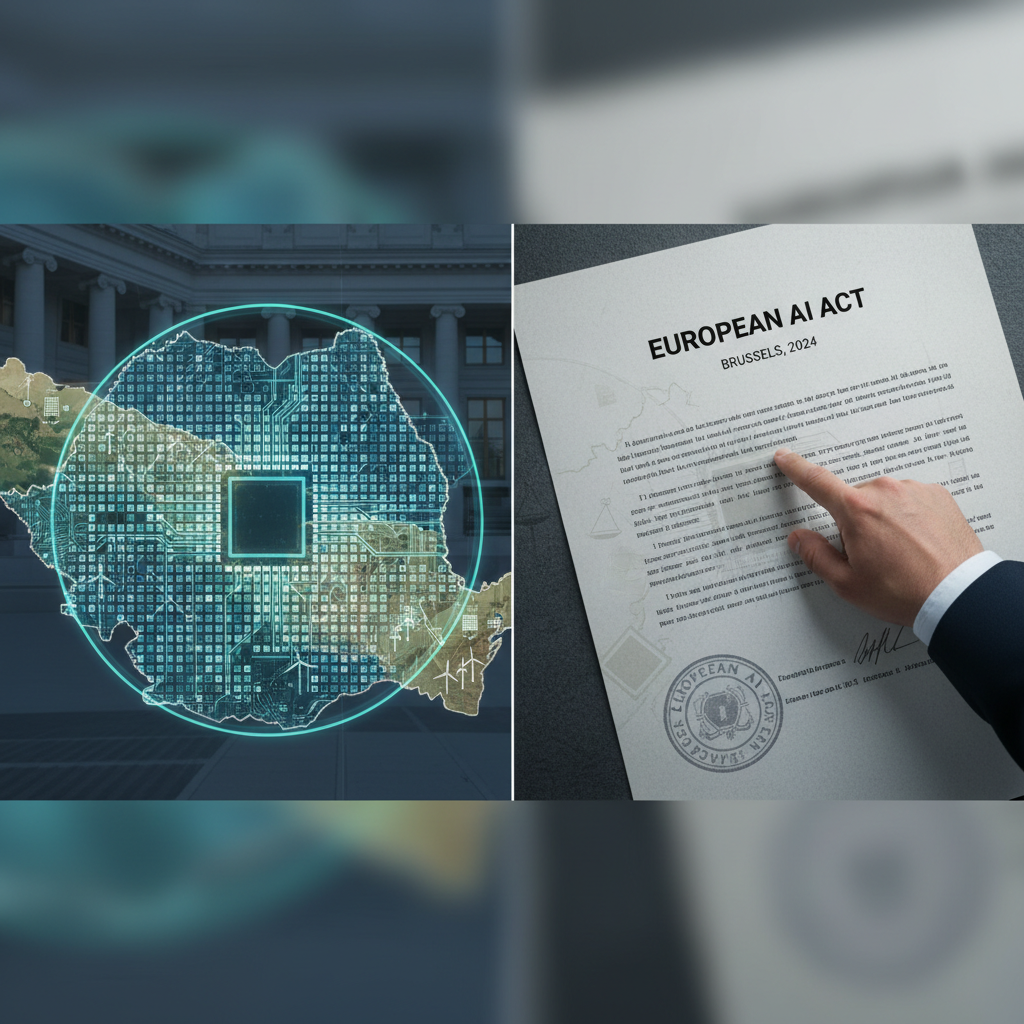
However, the ethical questions loom large. Who owns the copyright to an AI-generated script? If an AI is trained on millions of existing films and TV shows, is it plagiarizing? These are not abstract philosophical debates; they are real legal and economic challenges that could reshape the entire entertainment industry. The European Union's AI Act, for example, is attempting to grapple with some of these issues, but the pace of technological advancement often outstrips legislative efforts.
Even tech giants are divided. Sam Altman, CEO of OpenAI, has spoken about AI's potential to empower creators, but also acknowledged the societal shifts it will bring. Meanwhile, some studio executives, like Disney's former CEO Bob Iger, have expressed cautious optimism, seeing AI as a tool to enhance storytelling rather than diminish it. The key, it seems, lies in how we choose to wield this powerful new technology.
What does this mean for Iceland, a nation known for its vibrant arts scene and its deep connection to storytelling? Our story is unique. We have a rich tradition of oral histories, of sagas that have shaped our identity. The idea of an AI writing the next great Icelandic saga feels almost sacrilegious to some, a violation of that human connection. Yet, I also see the pragmatism, the desire to use every tool available to tell our stories to a wider world. Perhaps AI can help translate our rich cultural heritage into formats that resonate globally, without losing its essence.
I believe the answer isn't revolution or destruction, but evolution. Like any powerful tool, AI's impact depends on the hands that wield it. If we allow it to replace human creativity entirely, we risk a future of bland, algorithmically optimized content devoid of genuine emotion. But if we embrace it as a collaborator, a tireless assistant that handles the mundane, leaving humans free to focus on the truly creative, the truly human aspects of storytelling, then perhaps we can enter a golden age of narrative.
The challenge, as always, will be finding that delicate balance. It's a conversation that needs to happen not just in Hollywood boardrooms, but in every creative community, from the bustling streets of Los Angeles to the quiet, inspiring landscapes of Iceland. We must ensure that as the algorithms learn to tell stories, we humans don't forget how to listen, and how to feel. What will the next great saga be, and who will truly author it? Only time, and our choices, will tell. Perhaps a future Icelandic film, powered by geothermal energy and AI, will one day be nominated for an Oscar, a testament to this delicate dance between human and machine. For more on the ethical implications of AI in creative fields, see this analysis [blocked].