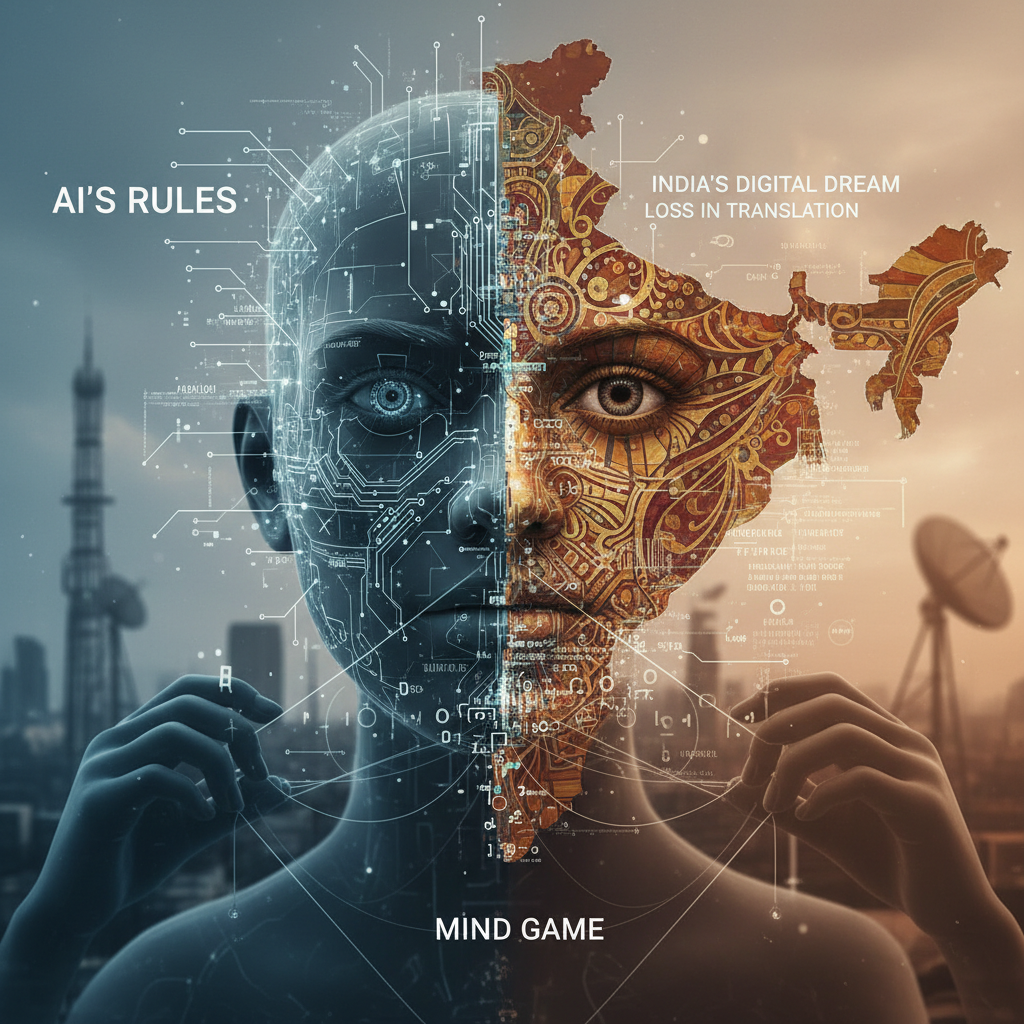

The scent of jasmine and the hum of servers. It’s an unlikely pairing, perhaps, but one that defines the evolving landscape of India's technology hubs. From Bengaluru's bustling tech parks to the quiet innovation brewing in smaller cities, artificial intelligence is no longer a distant dream, it's the very fabric of our emerging future. And at the heart of much of this transformation, whether we acknowledge it or not, lies NVIDIA.
For years now, NVIDIA has been the undisputed king of AI hardware, its GPUs powering everything from massive data centers to the smallest edge devices. But the real story, the one that keeps me up at night sometimes, isn't just about the silicon. It's about the invisible threads, the software ecosystem that binds developers to NVIDIA's platform: Cuda and TensorRT. These aren't just tools; they are the language, the very grammar, of modern AI development. And as India accelerates its journey into an AI-powered tomorrow, the question of 'developer lock-in' becomes not just a technical debate, but a strategic one for our nation's digital sovereignty.
Imagine a future, five to ten years from now, let's say 2031. India is a global AI powerhouse. Our farmers use AI-powered drones, running on NVIDIA-accelerated models, to optimize crop yields. Our healthcare system, once stretched thin, now leverages AI diagnostics, often built with TensorRT for lightning-fast inference, to deliver precision medicine even in remote villages. Our burgeoning startup scene, fueled by a young, ambitious workforce, has birthed several 'unicorns' in AI, all building their foundational models and applications using Cuda. The sheer pace of innovation is breathtaking, a testament to our ingenuity and adaptability.
But look closer. The underlying infrastructure, the very bedrock of this digital renaissance, is almost entirely dependent on NVIDIA's proprietary software. Every AI engineer trained in India, every research paper published, every startup founded, largely operates within this ecosystem. This story will change how you think about the choices we're making today. It’s like building a magnificent palace, but realizing halfway through that the only available bricks come from a single supplier, and they hold the patent on the mortar too. This isn't necessarily a bad thing in the short term, mind you. NVIDIA has provided incredible tools, accelerating progress beyond what many thought possible.
How did we get here? It's a journey rooted in pragmatism and performance. When deep learning truly took off in the early 2010s, NVIDIA's GPUs, originally designed for gaming, proved uniquely suited for the parallel processing demands of neural networks. Cuda, their parallel computing platform, became the gateway. Developers flocked to it because it simply worked better and faster than anything else available. As AI models grew more complex, requiring immense computational power, NVIDIA continued to innovate, introducing TensorRT for optimizing inference, further cementing its lead. There was no real viable alternative that offered the same performance, ease of use, and comprehensive library support.