
Right, so you've heard the buzz, haven't you? AI, the magic wand that's supposed to fix everything, is now digging into the earth. Literally. We're talking about AI in mining and natural resource management, a sector that, let's be honest, hasn't always been at the forefront of technological chic. But suddenly, everyone from NVIDIA to a host of plucky startups is talking about how algorithms will make exploration smarter, extraction cleaner, and safety paramount. My question, as always, is this: is it a genuine seismic shift, or just another bit of digital craic that'll fade faster than a Dublin summer?
Let's cast our minds back, shall we? For centuries, mining was a brutal, labour-intensive affair, often with devastating environmental consequences. The industrial revolution brought machinery, but the core principles remained much the same: find, dig, extract. The 20th century saw geological surveys become more sophisticated, but still, a lot of it was guesswork, intuition, and sheer brute force. Then came the digital age, bringing with it CAD software, advanced sensors, and better logistics. Each step was an evolution, not a revolution. We've seen cycles of boom and bust, often tied to global commodity prices, and the environmental impact has always been a thorny issue, particularly in places like Ireland where our peat bogs and mineral deposits have long been part of our economic and ecological story.
Fast forward to today, April 2026, and the narrative has shifted dramatically. The promise of AI is to take the guesswork out of the ground. Companies are deploying machine learning models to analyse seismic data, satellite imagery, and drilling logs, identifying potential deposits with far greater precision than human geologists ever could. This isn't just about finding new veins of gold or lithium, mind you. It's about optimising existing operations. Think predictive maintenance for colossal excavators, real-time analysis of ore grades to reduce waste, and autonomous vehicles navigating dangerous underground tunnels. The numbers are starting to stack up, too. A recent report by Reuters suggested that AI applications could reduce operational costs in mining by up to 20% in the next five years, primarily through efficiency gains and reduced downtime. That's not small potatoes, even for a sector accustomed to massive capital expenditure.
NVIDIA, the chip giant, is, of course, right in the thick of it. They're not just selling GPUs for training AI models, they're actively developing platforms like Earth-2, which, while primarily focused on climate modelling, lays the groundwork for complex geospatial AI. Imagine using that kind of computational power to simulate geological processes, predict rock stability, or even model groundwater flows around a mine. Jensen Huang, NVIDIA's CEO, has been quite vocal about the transformative potential. He recently stated, "The next industrial revolution will not be in factories, but in digital twins that simulate the physical world. Our platforms are enabling industries like mining to build these digital twins, making operations safer, more efficient, and more sustainable." It's a grand vision, isn't it? One that promises to turn the messy reality of digging holes in the ground into a pristine, data-driven ballet.
But let's not get carried away with the Silicon Valley fairy dust. There are real challenges and, dare I say, some rather Irish-sized doses of skepticism needed here. For starters, the data. Mining operations often span vast, remote areas, and collecting consistent, high-quality data from sensors in harsh environments is no mean feat. Then there's the integration of legacy systems. You're not just dropping an AI into a shiny new facility; you're often trying to bolt it onto operations that have been running for decades, if not centuries. It's like trying to teach an old dog new tricks, but the dog is a massive, multi-billion-euro industrial complex.
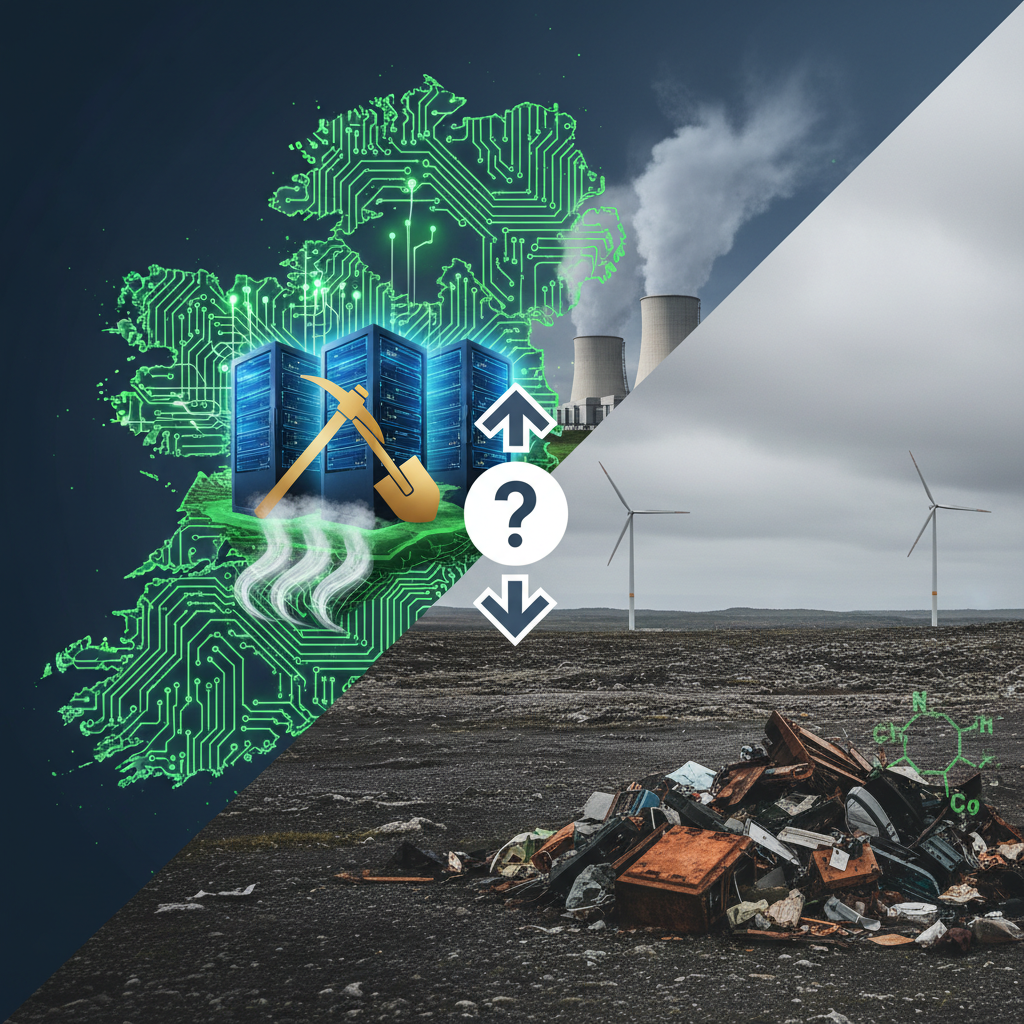
From an Irish perspective, this trend is particularly interesting. We've got a long history with mining, from the copper mines of Allihies in Cork to the lead and zinc mines in Tara, County Meath, which is one of Europe's largest. The environmental legacy of some of these operations is still felt today. So, when someone talks about 'sustainable extraction' through AI, my ears prick up, but my eyebrows remain firmly raised. Could AI help us manage the environmental impact of future resource needs, or even remediate past damages? Perhaps. Could it also make it easier to justify new, potentially damaging projects by wrapping them in a cloak of 'efficiency' and 'smart technology'? Absolutely. It's a double-edged sword, as most powerful technologies are.
Dr. Sarah O'Connell, a geologist and environmental scientist at University College Dublin, put it rather succinctly to me last week. "The promise of AI in mining is immense for efficiency and safety, but we must be vigilant," she cautioned. "The algorithms are only as good as the data they're fed, and if that data doesn't adequately capture environmental risks or community concerns, then AI simply optimises for profit, not for true sustainability. We need robust regulatory frameworks that demand transparency and accountability from these AI systems." Her point is a valid one. We've seen how algorithms can perpetuate biases in other sectors; what if they perpetuate environmental neglect in mining?
Then there's the human element. AI is touted to improve safety, which is undeniably a good thing in an industry with historically high accident rates. Autonomous vehicles and remote operations mean fewer people in harm's way. But it also means fewer jobs. The transition will require significant retraining and upskilling, and if not managed carefully, it could leave communities reliant on mining without viable alternatives. This is a conversation we've had before in Ireland, particularly with the decline of traditional industries. The craic is mighty in Irish AI, but we need to ensure it's not just for the few.
My verdict? AI in mining is far from a fad; it's the new normal. The economic incentives are too strong, and the technological capabilities are too compelling to ignore. The industry is ripe for disruption, and the efficiencies promised by AI, from exploration to processing, are genuinely transformative. However, and this is a big however, we need to approach it with a healthy dose of Irish pragmatism, not wide-eyed Silicon Valley optimism. The technology itself isn't inherently good or bad; it's how we choose to wield it. Will it be used to truly foster a more sustainable, safer industry, or merely to extract more, faster, with a digital veneer of responsibility? That, my friends, is the question we in Ireland, and indeed the world, must answer. The potential for good is there, but so is the potential for merely accelerating old problems with new tools. Only in Ireland would you find this blend of cautious optimism and deep-seated skepticism, a necessary balance as we navigate this new frontier.