
Oh, my friends, have you felt it? That electric hum in the air, the one that signals a seismic shift in the world of artificial intelligence? It is not just the spring breeze carrying the scent of blooming magnolias from Warsaw's Łazienki Park, it is the arrival of NVIDIA's Blackwell architecture, and let me tell you, it is a game changer. I have been following NVIDIA's journey for years, always impressed, but this, this feels different. It feels like the moment when a humble Polish pierogi gets a Michelin star, a true elevation of the craft!
First Impressions: A Glimpse into the Future
When I first saw the specifications for Blackwell, my jaw quite literally dropped. It is not just an incremental upgrade, it is a generational leap. Imagine the sheer computational muscle, the raw processing power packed into these chips. It is like comparing a reliable old Polski Fiat 126p to a brand new electric hypercar, the difference is just staggering. For us in Poland, with our burgeoning AI startups and research hubs, this is more than just hardware, it is a promise, a potential accelerator for our ambitions. The sheer scale of the Blackwell B200 GPU, with its 208 billion transistors, is almost incomprehensible. It is a testament to Jensen Huang's vision and NVIDIA's relentless pursuit of pushing the boundaries of what is possible. It is a technological marvel, no doubt about it.
Key Features Deep Dive: The Heart of the Beast
So, what makes Blackwell so special, you ask? Let us dive into the technical deliciousness. At its core, Blackwell introduces several groundbreaking innovations. First, there is the second generation Transformer Engine, which dynamically adapts to different data types, optimizing performance and precision for large language models, the very models that are powering so much of today's AI revolution. This is crucial for training models with trillions of parameters, a task that would have been impossible just a few years ago. Then we have the fifth generation NVLink, a high speed interconnect that allows multiple GPUs to communicate with each other at incredible speeds, creating a massive, unified compute environment. We are talking about 1.8 terabytes per second of bidirectional throughput between GPUs in a single server, which is mind boggling. This is what enables the GB200 Superchip, combining two B200 GPUs with a Grace CPU, to act as a single, incredibly powerful unit.
Another feature that caught my eye is the new RAS engine, for reliability, availability, and serviceability. This is often overlooked in the excitement of raw speed, but it is vital for enterprise deployments and continuous AI training. Imagine running a massive training job for weeks, only for it to crash due to a minor error. Blackwell aims to mitigate such issues, ensuring higher uptime and more efficient resource utilization. For companies here in Poland, especially those working on critical applications in healthcare or finance, this reliability is paramount. As Dr. Piotr Nowak, head of AI research at a leading Polish tech university, recently told me, "The stability and scalability of these new architectures are just as important as their raw speed. We need systems that can run complex experiments for extended periods without interruption, and Blackwell seems to deliver on that front."
What Works Brilliantly: Unlocking Unprecedented Scale
What truly shines with Blackwell is its ability to handle unprecedented scale. For the first time, we are looking at the possibility of training truly multimodal, trillion parameter models with relative ease. This is where the magic happens. Imagine AI systems that can not only understand language but also interpret images, videos, and even sensory data from the real world, all within a single coherent framework. This opens doors to advancements in robotics, scientific discovery, and personalized medicine that we could only dream of before. The enhanced FP8 and FP6 data formats, coupled with the new Tensor Cores, mean faster calculations with less memory footprint, which is a blessing for any AI developer. We are talking about a 30x performance improvement for LLM inference compared to Hopper, NVIDIA's previous generation. That is not just an upgrade, it is a revolution in processing speed.
From a Polish perspective, this means our startups, often constrained by budget and access to cutting edge hardware, could potentially achieve breakthroughs faster. Imagine a small team in Kraków, leveraging cloud access to Blackwell, developing a medical diagnostic AI that rivals those from Silicon Valley. This is the promise. "The Blackwell architecture is not just about raw power, it is about democratizing access to that power for researchers and innovators globally," said Anna Kowalczyk, CEO of a promising Polish AI startup focused on sustainable agriculture. "It allows smaller teams, like ours, to compete on a level playing field, pushing the boundaries of what is possible in AI without needing a supercomputer in our garage."
What Falls Short: The Elephant in the Server Room
Now, let us be Agnieszka for a moment and talk about the realities. While Blackwell is a technological marvel, it is not without its challenges, primarily its accessibility and cost. The sheer demand for NVIDIA's GPUs has created a bottleneck in the entire AI industry, and Blackwell will only intensify this. Getting your hands on these chips, especially in significant quantities, will be a monumental task. Prices are expected to be astronomical, placing them out of reach for many smaller players and even some larger institutions. This creates a potential divide, where only the wealthiest tech giants or well funded nations can truly leverage Blackwell's full potential.
Another concern, one that resonates deeply with my ethical considerations, is the sheer energy consumption. Powering these data centers, filled with Blackwell GPUs, will require immense amounts of electricity. While NVIDIA is working on efficiency, the scale of deployment means a significant environmental footprint. As a journalist from Poland, a country still grappling with its energy transition, I cannot help but wonder if we are building a future that is technologically advanced but environmentally unsustainable. This is a conversation we must have, and soon.
Comparison to Alternatives: The Race Continues
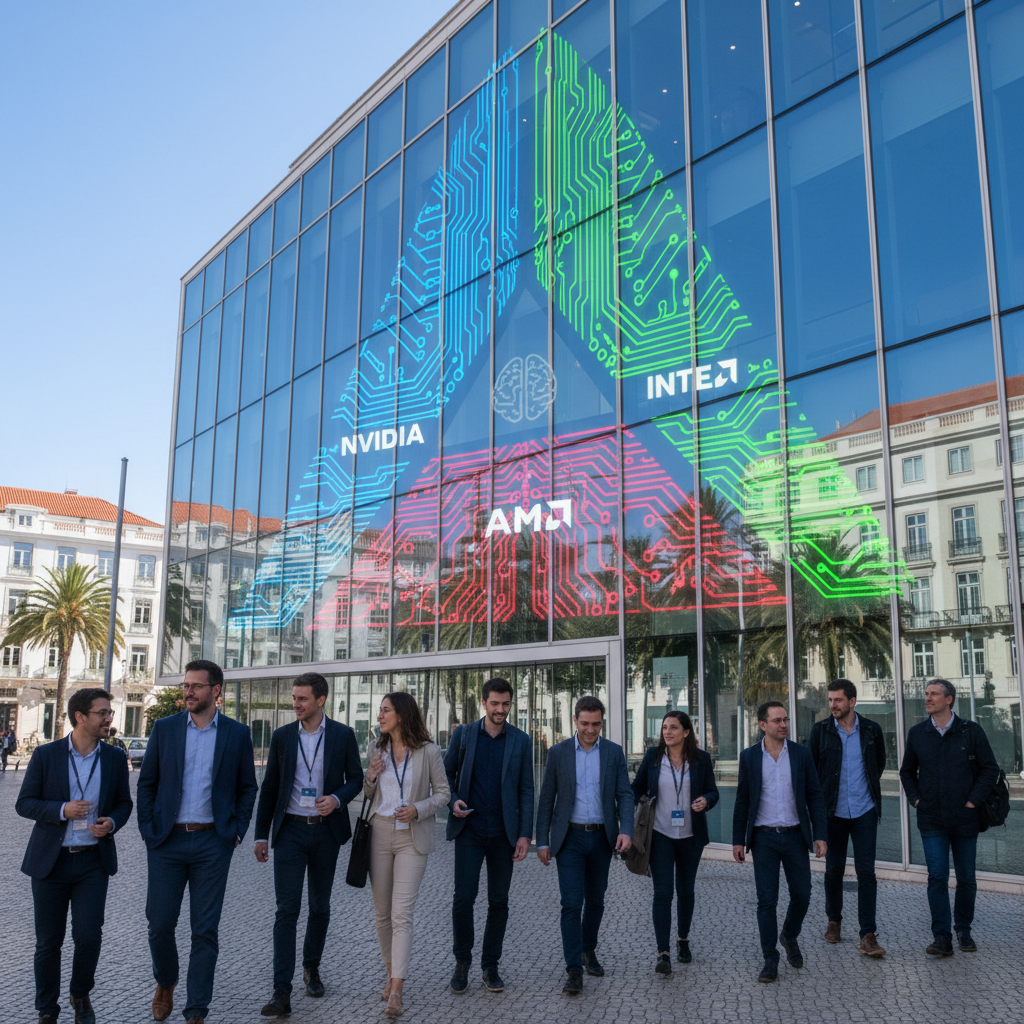
Of course, NVIDIA is not alone in this race. AMD is pushing its MI300X series, offering competitive performance and a more open software ecosystem. Intel, with its Gaudi accelerators, is also making strides, particularly in areas like cost efficiency and ease of integration into existing data center infrastructure. For many enterprises, these alternatives might offer a more balanced solution, especially if their workloads do not demand the absolute bleeding edge performance of Blackwell. Cloud providers are also diversifying their offerings, providing access to various accelerators, which gives users more choice. However, for pure, unadulterated AI training horsepower, NVIDIA's Blackwell currently stands alone at the top. The sheer ecosystem, the Cuda software platform, and the developer community built around NVIDIA are formidable advantages that competitors are still struggling to match. It is like comparing a well established, robust railway network to a brand new, albeit promising, single track line. The former simply has more reach and reliability, for now.
Verdict: A Powerful, Yet Complex, Future
So, what is the final verdict on NVIDIA's Blackwell architecture? It is undeniably a triumph of engineering, a monumental step forward in AI compute power. It promises to unlock new frontiers in artificial intelligence, enabling models and applications that were previously unimaginable. For our ambitious tech scene in Poland, this represents an incredible opportunity to accelerate our research and development, to put our mark on the global AI map. Poland's tech talent is Europe's best-kept secret, and with tools like Blackwell, that secret will not stay hidden for long.
However, we must approach this with eyes wide open. The challenges of accessibility, cost, and environmental impact are real and cannot be ignored. The dominance of a single company in such a critical technological domain also raises questions about market concentration and future innovation. We need to foster competition, encourage open standards, and ensure that the benefits of this incredible technology are shared broadly, not just hoarded by a select few. The future of AI, powered by Blackwell, is bright, but it is a future we must navigate carefully, with both innovation and responsibility as our guiding stars. The journey ahead is exhilarating, and I, for one, cannot wait to see where it takes us. For more insights into the evolving AI landscape, you can always check out TechCrunch's AI section or MIT Technology Review for deeper dives. And for a broader perspective on the business side of things, Bloomberg Technology is always a good read.